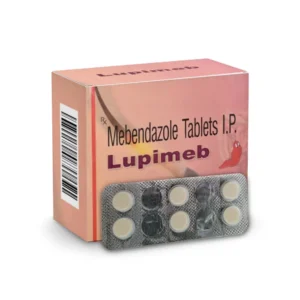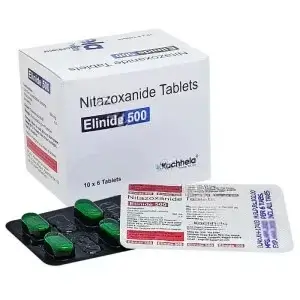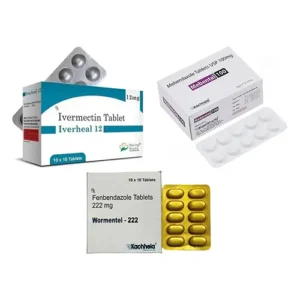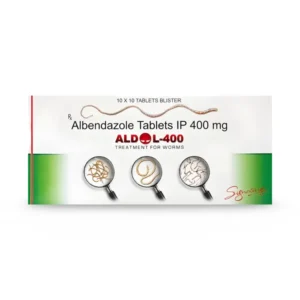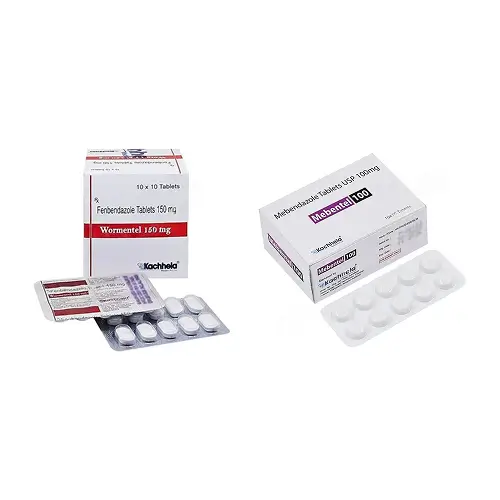
Fenbendazole 150+Mebendazole 100
Previous product
Fenbendazole 150+Mebendazole 500
$47.00 $131.00Price range: $47.00 through $131.00
Next product
Fenbendazole 150+Ivermectin 3
$71.00 $203.00Price range: $71.00 through $203.00
$31.00 $83.00Price range: $31.00 through $83.00
In Stock
In Stock
Fenbendazole 150+Mebendazole 100
| Pack Size | Price | Quantity | Add To Cart | |
|---|---|---|---|---|
| 1 Pack | $31.00 | |||
| 2 Pack/s | $56.00 | |||
| 3 Pack/s | $83.00 | |||
| Want to order in bulk / B2B price? Send Inquiry | ||||
Offer You Can't Resist
Free Shipping
Enjoy Free Shipping on Orders above AUD304 (USD199)
Estimate Shipping :
06 June - 13 June
23
Excellent service
Excellent service! My order was processed quickly and delivered on time. The medicines were well-packaged and exactly as described. Highly recommended.
 Australia
May 26, 2026
Last Updated on February 25, 2026

Description
Product Overview
This mixture comprises Fenbendazole (150mg) and Mebendazole (100mg), providing the most potent, dual-action antihelmintic treatment employed for the treatment and management of a diverse array of worms that cause parasites for both animals and human beings. Both of these agents attack intestinal parasites and can disrupt their ability to survive, which results in effective removal from the digestive tract.
It is ideal for people living or traveling to regions where there is a higher risk of worm infestation, such as areas of rural Australia or tropical climates, or locations with inadequate sanitation. This treatment aids in maintaining intestinal health, nutritional absorption, as well as general well-being.
Key Active Ingredients
- Fenbendazole (150mg)
A benzimidazole-class antihelmintic that interferes with the formation of microtubules in parasites. This results in imprisonment and even death. It is effective against whipworms, hookworms, roundworms, and specific tapeworms. - Mebendazole (100mg)
Another benzimidazole, but with a different mechanism. It blocks the parasite’s glucose intake, thereby starving the worm and ultimately killing it. It is effective against hookworms, pinworms, and threadworms.
Together, they can provide complementarity, which improves effectiveness and lowers the likelihood of re-infection.
Common Uses
The medication is prescribed to treat or prevent:
- Pinworm (Enterobius vermicularis)
- Roundworm (Ascaris lumbricoides)
- Hookworm (Ancylostoma duodenale, Necator americanus)
- Whipworm (Trichuris trichiura)
- Certain tapeworms (limited efficacy – consult a GP)
- Mixed worm infestations
- In close-contact settings (childcare and aged care facilities, sharing housing)
Although it is commonly used for human use in certain situations, the combination can also be extensively utilized in medical practices for animals with veterinary advice.
Dosage and Administration
| Age Group | Dose | Frequency | Notes |
| Adults | 1 tablet daily | 3 to 5 days (as directed) | Drink water and suck in after eating |
| Children 2–12 yrs | Dose varies by weight | Consult GP or pharmacist | The need for pediatric guidance |
| Pets (dogs/cats) | Veterinary use only | As prescribed by a vet | Animals should not be self-medicated. |
| Repeat dose | 2–3 weeks after initial course | Only if advised | Inhibits the spread of infection in settings with high risk |
Always follow the instructions of your pharmacist, doctor, or veterinarian. Don’t exceed the suggested dosage.
How It Works
Mebendazole and fenbendazole both are effective in interfering with the metabolism and cell structures of worms that are parasites. In contrast, fenbendazole hinders the polymerisation of tubulin and thereby affects the structure of parasites as well as reproduction. Mebendazole hinders the absorption of glucose and causes hunger and eventually death.
This double-action method helps to reduce the worm burden promptly and blocks the spread of strains that are resistant.
Benefits of This Combination
- Broad-spectrum efficacy
- It is suitable for both single and mixed infestations
- The development of resistance is reduced through dual actions
- It is generally well-liked
- Alternative to non-invasive treatment
- Ideal for clinical and prevention use
Safety Information
When properly used, this treatment is not suitable for every person. Always consult your doctor before starting deworming treatment.
Avoid Use If:
- If you are expecting or intending to become pregnant (especially during the first trimester)
- There is liver disease in your family or a significant impairment of your hepatic function.
- If you are sensitive to benzimidazoles, then it is a sign that you
- Certain anticonvulsants are prescribed, or anti-infectives (interactions can happen)
Use With Caution:
- During breastfeeding (limited data; consult GP)
- In children under 2 years
- If you are co-administering anti-epileptic medication (phenytoin and carbamazepine)
Possible Side Effects
The majority of side effects are minor and self-limiting. It is important to consult with your doctor in the event that they continue or get worse.
Common side effects include:
- Abdominal discomfort or bloating
- Nausea or flatulence
- Diarrhoea (usually mild and short-lived)
- Headache
- Dizziness
Rare but serious reactions:
- Allergic rash or itching
- Hepatic enzyme elevation
- Bone marrow suppression (extremely rare)
Check for indications of liver disease (yellowing of eyes or skin and bloody urine) or reactions to allergens, particularly during prolonged or high-dose therapy.
Storage and Handling
- Maintain the temperature in a temperature below 25°C Keep it far from the direct sun.
- Close tightly and keep dry
- Be sure to keep your pet away from pets and children
- Avoid using if the packaging has been damaged or the tablet looks modified
- Be sure to follow the guidelines on disposal to dispose of expired or unneeded medications. Follow the guidelines for expired or unused
Summary Chart
| Feature | Details |
| Active Ingredients | Fenbendazole 150mg, Mebendazole 100mg |
| Drug Class | Benzimidazole anthelmintics |
| Primary Use | Intestinal worm infestations |
| Suitable For | Adults, children (under supervision), veterinary |
| Common Worms Treated | Pinworms, roundworms, hookworms, whipworms |
| Frequency | Once daily for 3–5 days |
| Repeat Treatment | After 2–3 weeks (if advised) |
| Prescription Needed | Yes (human use) |
| Storage Temperature | Below 25°C |
Frequently Asked Questions (FAQs)
- What does this medication treat?
It is used to treat a range of intestinal parasitic worm infections, such as hookworms and pinworms, and roundworms, both in human beings and animals. - How long does it take to work?
The majority of patients experience relief in 2 to 3 days. Clearance may take longer. The second dose is administered within a period of 2 to 3 weeks to prevent any re-infestation. - Can children take this medication?
Yes, it is possible only with medical supervision. Dosing can be based on weight when it comes to children younger than. - Can I take this while pregnant?
No. This is usually avoided when pregnant, particularly in the initial trimester. Be sure to talk with your GP before you start. - Should I deworm regularly even without symptoms?
If you live in a high-risk area, deworming prevention every 6-12 months is recommended; however, not before consulting with an expert in healthcare. - What happens if I miss a dose?
Do it as quickly as you can remember. If you’re close to your next dose, don’t take the one you missed. Do not double-up. - Is it safe for pets too?
Yes, both drugs are extensively utilized in the field of medical veterinary. But, only use them with the guidance of a veterinarian, since doses for animals vary. - Can I take this with food?
Yes. Also, taking it after or before meals can reduce stomach discomfort and improve digestion. - What lifestyle steps help prevent reinfection?
Clean your hands frequently, keep up with the hygiene of your nails, refrain from going into areas with a lot of contaminants, and wash your linen/clothing regularly. - Can it be taken with other medications?
Make sure to consult your physician. Certain anti-epileptic and anti-fungal medicines might interfere with their metabolism or absorption.
Final Thoughts
This Fenbendazole 150mg + Mebendazole 100mg combination is a highly effective dual-action treatment for deworming that is effective in both prevention and treatment. For human or vet use, this product improves intestinal health and aids in stopping the cycle of reinfections within high-risk environments.
If used with caution and medical advice, it is a solid defense against parasite diseases in both cities as well as rural Australia. Make sure you follow the guidelines for dosage and hygiene to maximize the benefit of deworming.
Additional Information
| Manufacturer | Healing Pharma, India, Kachhela Medex Pvt.Ltd |
|---|---|
| Pharmaceutical | Tablet/s |
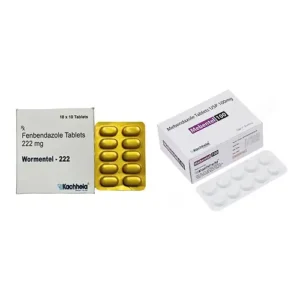
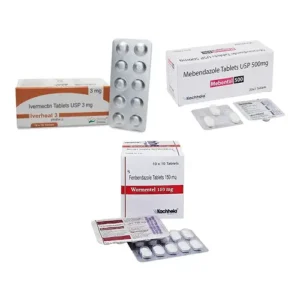
| Tablet/s | Wormentel 150mg (Fenbendazole) = 60 Pills, Mebentel 100mg (Mebendazole) = 60 Pills |
Related products