
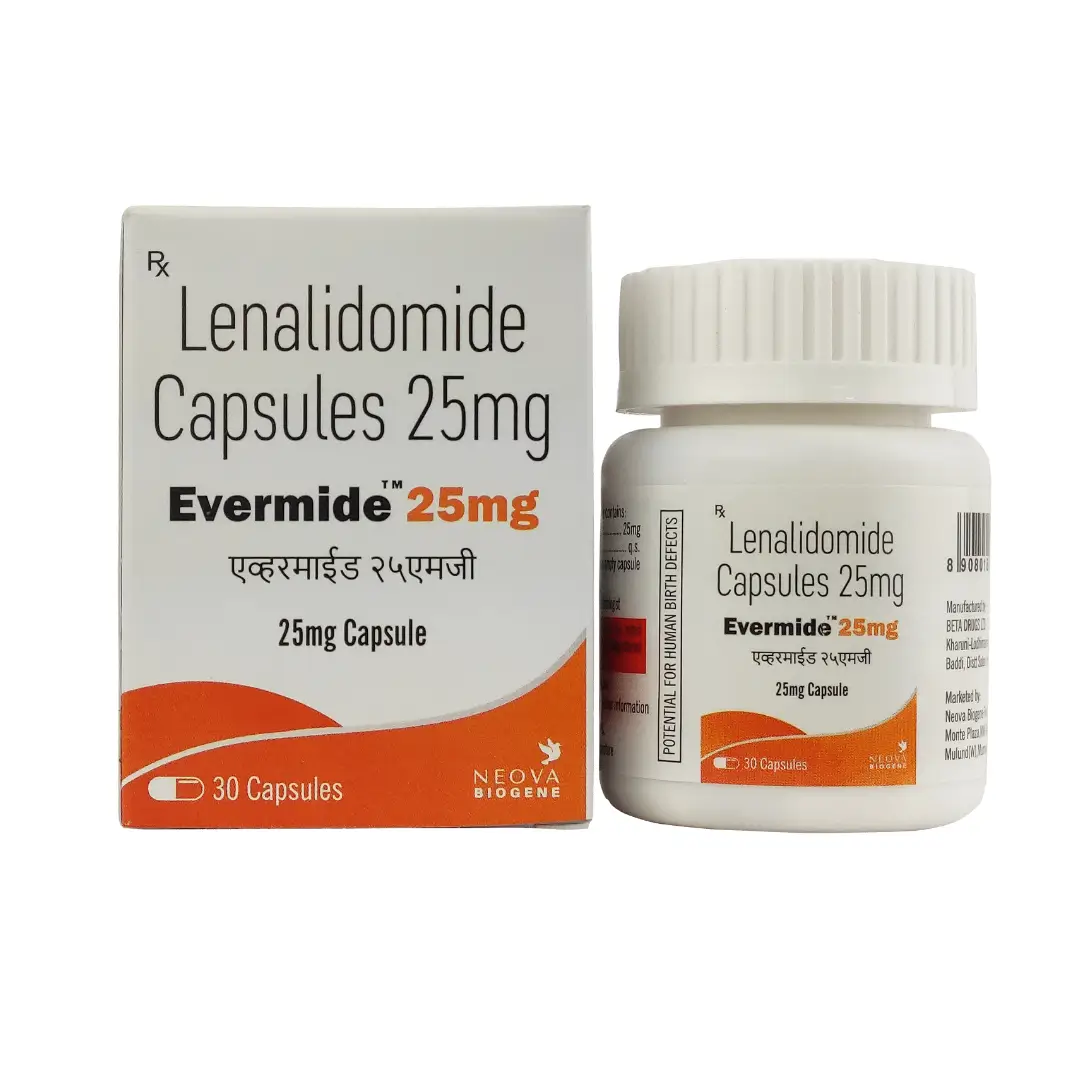
Evermide 25mg (Lenalidomide)
Previous product

Lonopin 20mg Injection (Enoxaparin)
A$56.15 A$175.48Price range: A$56.15 through A$175.48
Next product

Cefix 100mg (Cefixime)
A$92.65 A$266.72Price range: A$92.65 through A$266.72
A$258.30 A$701.90Price range: A$258.30 through A$701.90
In Stock
In Stock
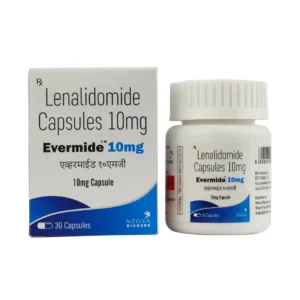
Evermide 25mg (Lenalidomide)
| Pack Size | Price | Quantity | Add To Cart | |
|---|---|---|---|---|
| 30 Capsule/s | A$258.30 | |||
| 60 Capsule/s | A$491.33 | |||
| 90 Capsule/s | A$701.90 | |||
| Want to order in bulk / B2B price? Send Inquiry | ||||
×
Sorry!! Out of Stock
Sorry! Evermide 25mg (Lenalidomide) is out of stock
Please click below to view other similar medications.
View All Lenalidomide Products
Offer You Can't Resist
Free Shipping
Enjoy Free Shipping on Orders above AUD304 (USD199)
Estimate Delivery :
18 October - 25 October
30
Great customer service
Great customer service and a straightforward ordering process. I’m very satisfied
 Australia
September 28, 2026
Last Updated on December 06, 2025

Description
What Is Evermide 25 mg?
Evermide 25 mg, a prescribed medication that contains lenalidomide, an anti-inflammatory medication used to treat some types of blood cancer. Lenalidomide is part of a group of medications that regulate the immune system and also stop the growth of cancerous cells.
The most common reasons for prescribing it are to treat conditions like:
- Multiple myeloma (a cancer of plasma cells in bone marrow)
- Myelodysplastic Syndromes (MDS) is a class of diseases caused by weakly developed blood cells
- Mantle cell lymphoma (a type of non-Hodgkin lymphoma)
Evermide can boost blood count as well as reduce cancer cell proliferation and improve immune reaction.
How Does Evermide (Lenalidomide) Work?
Lenalidomide can be used in many ways to fight cancer:
- Immune modulation: It increases the activity of T cells as well as natural killer (NK) cells that combat cancerous cells.
- Anti-angiogenesis: It blocks the development of new blood vessels, which are required for tumor growth.
- Direct tumor suppression: It triggers the death of cancerous cells (apoptosis) and stops their growth.
- Cytokine regulation: The protein signaling is altered in cancer-related inflammation.
Together, these systems assist in stopping the growth of cancer and enhancing patient outcomes.
Who Should Use Evermide 25 mg?
The medication is recommended for those who suffer from:
- Multiple Myeloma: Most often, they are added to other chemotherapy medications or steroids.
- Myelodysplastic Syndromes: For patients who have a deletion of the 5q chromosomal anomaly.
- Mantle Cell Lymphoma: Most often in patients who are experiencing relapses or who have been resistant to treatment.
It is usually as part of a wider treatment program that is under the supervision of an oncologist.
Dosage and Administration
- The usual dosage is used orally, once a day, whether or not food is included.
- The usual dose is 25 mg, but the exact dosage and timing will vary based on the disease being treated, the patient’s health state, and the effectiveness of treatment.
- The treatment cycles typically last between 21 and 28 days. They are with rest intervals as prescribed by the physician.
- Take capsules as they are, without breaking or chewing.
- Follow your physician’s advice attentively.
- Never alter or discontinue your medication without consulting a medical professional.
Important Safety Information
- Pregnancy warning: Lenalidomide can cause severe birth defects or the death of a baby who has not yet been born. Females who are pregnant or are likely to become pregnant should avoid taking Evermide. Males who have female partners with the potential to have children should use efficient contraception.
- Blood monitoring: It is important to have regular blood tests for monitoring blood count and to detect possible negative effects in the early stages.
- Risk of blood clots: Patients have a higher chance of developing deep vein thrombosis (DVT) or embolisms in the pulmonary system. The use of blood thinners is often recommended to decrease the chance.
- Infection risk: The medication can reduce the number of white blood cells and increase the risk of contracting infections.
- Other precautions: Liver and kidney function must be checked, and any indications of allergic reactions or symptoms that are unusual should be reported promptly.
Possible Side Effects
The most common side effects are:
- Fatigue and weakness
- Low blood cell counts (anemia, neutropenia, thrombocytopenia)
- Diarrhea, constipation, or nausea
- Rash or skin irritation
- Swelling of hands or feet
- Fever or signs of infection
Severe side effects that require immediate medical attention:
- Severe allergic reactions (rash, difficulty breathing, swelling)
- Blood clots (pain, redness, swelling in limbs, chest pain)
- Unusual bleeding or bruising
- Severe infections (fever, chills, sore throat)
Monitoring During Treatment
Patients who are taking Evermide have regular follow-up appointments for:
- Complete blood count (CBC) to monitor red cells, white cells, and platelets
- Kidney and liver function tests
- Monitoring for side effects and complications
- Evaluation of response to treatment by images and tests for other diagnostics
Frequently Asked Questions (FAQs)
-
What conditions does Evermide treat?
Evermide is used to treat multiple myeloma, certain myelodysplastic diseases, and mantle cell lymphoma. This is usually after other therapies have failed or are part of a combination therapy.
-
How should I take Evermide?
Consume Evermide precisely as directed, typically once a day in combination with or without food. Take the capsules in their entirety and don’t alter dosage without consulting your doctor.
-
Can women take Evermide during pregnancy?
No. Evermide is extremely teratogenic and could cause birth defects or even miscarriage. It is recommended that women avoid having babies during treatment, and for a minimum of four weeks following treatment.
-
What are the common side effects?
The symptoms of fatigue, blood loss, vomiting, diarrhea, as well as swelling, rash, and itch, are typical. The majority of adverse effects are manageable with the assistance of your physician.
-
Do I need blood tests while on Evermide?
Yes, Regular blood testing is crucial to keep track of the level of blood cells as well as organ functions, as well as to avoid serious problems.
-
Is there a risk of blood clots?
Yes, people taking Evermide are more likely to have blood clots. The doctor might suggest blood thinners in order to decrease this chance.
-
Can I take other medications with Evermide?
Discuss with your doctor all medications and supplements you’re taking to stay clear of dangerous interactions.
-
What should I do if I miss a dose?
If you are unable to take your dose, do it when you can remember within the same day. Take two doses in one go. Consult your physician if you are not sure.
Tips for Patients on Evermide
- Always notify your medical team regarding any other medical conditions.
- Use effective contraception during treatment.
- Inform the doctor of any indications of bleeding, infection, or any unusual symptoms as soon as you notice them.
- Keep track of all appointments scheduled to ensure proper monitoring.
- Beware of activities that could increase the chances of bleeding or injury.
- Drink plenty of water and consume an appropriate diet that supports your general well-being.
Conclusion
Evermide 25 mg (Lenalidomide) is an effective medication that is used for the treatment of severe blood cancers, such as myelodysplastic or multiple myeloma syndromes. It helps by strengthening the immune system and preventing cancer growth, and increasing the patient’s outcomes.
Although it is efficient, Evermide requires careful medical monitoring due to its possible negative side effects, as well as its explicit pregnancy cautions. Patients should adhere to the prescribed treatment regimen as well as attend regularly scheduled monitoring and discuss any concerns with their medical professionals.
Related products








Recently Viewed

Reviews
There are no reviews yet.