
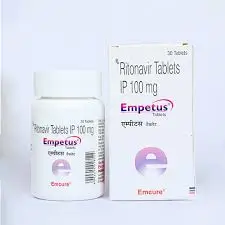
Empetus (Ritonavir)
Previous product
Vonaday (Lamivudine/Tenofovir/Efavirenz)
A$120.00 A$268.75Price range: A$120.00 through A$268.75
Next product
Nuace (Darunavir/Ritonavir)
A$180.00 A$470.00Price range: A$180.00 through A$470.00
A$50.00 A$125.00Price range: A$50.00 through A$125.00
In Stock
In Stock
Empetus (Ritonavir)
| Pack Size | Price | Quantity | Add To Cart | |
|---|---|---|---|---|
| 30 Tablet/s | A$50.00 | |||
| 60 Tablet/s | A$90.00 | |||
| 90 Tablet/s | A$125.00 | |||
| Want to order in bulk / B2B price? Send Inquiry | ||||
×
Sorry!! Out of Stock
Sorry! Empetus (Ritonavir) is out of stock
Please click below to view other similar medications.
View All Ritonavir Products
Offer You Can't Resist
Free Shipping
Enjoy Free Shipping on Orders above AUD304 (USD199)
Estimate Shipping :
23 July - 30 July
37
Professional
Very professional online pharmacy with great customer support and fast delivery
 Australia
June 25, 2026
Last Updated on December 05, 2025

Description
Empetus is a drug that contains Ritonavir and acyclovir, which is a vital medication for the treatment of HIV/AIDS. It was initially developed to be an antiretroviral (ARV) by itself. Ritonavir is now primarily employed to act as a pharmaceutical enhancer, also known as a “booster,” to boost the efficacy of various HIV medications.
In slowing down the metabolism of drugs that are used in conjunction, Empetus assists in maintaining higher dosages within the body, enhancing the effectiveness and ease of use for patients. This article explains the drug’s pharmacology and uses, dose, benefits of the drug, adverse effects, and safety precautions for Empetus (Ritonavir), providing an extensive overview for health professionals and patients.
What is Empetus?
Empetus is a brand-name version that contains Ritonavir, a drug known as a protease inhibitor (PI). It was initially approved to treat HIV disease in the latter part of 1990. The Ritonavir drug has grown in use it is given. It still has antiviral effects; however, its principal function is to act as a boost for protease inhibitors, or integrase inhibitors such as Lopinavir, darunavir, and atazanavir.
Every Empetus capsule or tablet typically includes 100mg of Ritonavir. The drug may be sold in an oral solution, in addition, based on the manufacturer.
How Does Empetus (Ritonavir) Work?
Ritonavir works in two ways:
-
as a Protease Inhibitor
- Within HIV therapy, the protease acts as an enzyme required by the virus to grow and reproduce.
- Ritonavir inhibits this enzyme and prevents HIV from maturing into particles that are capable of infecting fresh cells.
- The antiviral effects slow the development of HIV and aid in the recovery of immune function.
-
as a Pharmacokinetic Booster
- Ritonavir effectively blocks it to block the CYP3A4 liver enzyme, which is responsible for the metabolism of many HIV drugs.
- If taken in conjunction with other ARVs such as lopinavir as well as darunavir, Ritonavir increases its plasma concentration and half-life.
- This enables smaller dosages, fewer pills that are needed, and greater effectiveness in reducing viral infection.
Modern practice suggests that the ability to boost the effectiveness of Ritonavir is its primary goal, and it is a vital element of the boosted protease inhibitor (bPI) regimens.
Key Indications of Empetus
Empetus (Ritonavir) is used for the treatment of the HIV-1 virus, specifically as a part of combination antiretroviral treatment (cART). Empetus is not used on its own.
Common clinical indications include:
- Boosting lopinavir (as in Kaletra)
- Boosting darunavir, atazanavir, or saquinavir
- A part of the salvage treatment for patients suffering from multidrug-resistant HIV
- In select post-exposure prophylaxis (PEP) or prevention of mother-to-child transmission (PMTCT) regimens
Ritonavir can also be used as part of Hepatitis C therapy protocols (e.g. for example, to increase paritaprevir); however, it is not as common.
Dosage and Administration
The precise dosage of Empetus will depend on the medication being boosted. Ritonavir cannot be given as an individual therapy.
Example Dosages:
- With Lopinavir: 100mg of ritonavir once a day (as part of a fixed-dose combination)
- With Darunavir: 100mg of ritonavir taken once every two days (depending on the regimen)
- With Atazanavir: 100mg once daily
Administration Tips:
- Consume together with meals to increase absorption and lessen the gastrointestinal negative effects
- Tablets and capsules must be taken entirely
- Oral solution (for kids or for special circumstances) can be unpleasant to taste and must be mixed with juice or food to hide the flavors
It is essential to maintain consistency in timing to maintain steady drug levels and avoid resistance.
Benefits of Using Empetus (Ritonavir)
- Enhances other ARVs, making ARVs more efficient
- Reducing the pill burden by allowing lower dosages of other drugs
- Enhances adherence to treatment through reduced dosage schedules
- Proven track record in treatment-experienced and naïve patients
- An excellent option for patients who suffer from an inability to take other drug classes
Empetus, in conjunction with enhanced regimens, aids in getting an unremarkable viral load, which is a major objective of HIV treatment.
Side Effects of Empetus (Ritonavir)
Although Ritonavir is powerful, it can be associated with side effects that can vary from minor to severe.
Common Side Effects:
- Nausea and vomiting
- Diarrhea
- Abdominal discomfort
- Headache
- Taste changes
- Loss of appetite
- Fatigue
Metabolic Effects:
- Hyperlipidemia (increased cholesterol and triglycerides)
- Insulin resistance
- Fat redistribution (lipodystrophy)
Serious Side Effects (Less Common):
- Hepatotoxicity (liver toxicity)
- Pancreatitis
- Allergic reactions (rash, swelling, difficulty breathing)
- QT prolongation (affecting heart rhythm)
Patients who are on long-term regimens that boost their metabolism have frequent tests of blood to check the liver’s function, levels of lipids, as well as glucose tolerance.
Drug Interactions
Ritonavir is a drug with the potential to be a great likelihood of drug interactions because of its powerful inhibition of CYP3A4 and CYP2D6 enzymes.
Common Interacting Drugs:
- Sedatives (e.g., midazolam, triazolam)
- Antiarrhythmics (e.g., amiodarone)
- Statins (simvastatin, lovastatin)
- Anticonvulsants (e.g., phenytoin, carbamazepine)
- Rifampicin (contraindicated)
- Oral contraceptives (reduced effectiveness)
Inform your physician regarding any medication you’re using, such as herbs like St. John’s Wort, which can lower the efficacy of ritonavir.
Special Precautions and Contraindications
Use with Caution In:
- Liver disease or hepatitis
- Diabetes
- Patients with cardiovascular risk factors
- Elderly patients (risk of polypharmacy)
Contraindications:
- Known hypersensitivity to ritonavir or excipients
- Concurrent use with contraindicated drugs (see above)
- Severe hepatic impairment
Pregnancy and Lactation:
- Ritonavir has been classified as category B (animal research shows there is no risk; however, the data for humans are limited)
- A lot of times, it is utilized in Protocols for PMTCT, and with positive results
- It is not generally recommended for mothers with HIV, regardless of the treatment
Storage and Stability
- Storage temperature at 25°C (77°F) and excursions allowed between 15 and 30°C
- Avoid excessive moisture or heat
- Be sure to keep it out of the reach of young children
- Oral solutions may need refrigeration (refer to label)
Monitoring Parameters
Patients on Empetus should undergo:
- Liver function tests (AST, ALT, bilirubin)
- Lipid profile (cholesterol, triglycerides)
- Blood glucose monitoring
- Electrocardiogram (ECG) in at-risk individuals
- Regular HIV viral load and CD4 count assessments
Monitoring is a way to ensure that the medication is effective and well-tolerated as time passes.
Final Thoughts
Empetus (Ritonavir) is a fundamental component of antiretroviral therapy in modern times and not just because of its own power, however, due to its unparalleled capability to improve the effectiveness of other HIV medications. Its function as a pharmacokinetic booster has transformed HIV treatment, providing the development of more efficient, practical, and lasting treatment regimens.
While there may be some negative side effects and an intricate interaction profile, however, its medical value is still immense, particularly in the most resource-constrained environments where fixed-dose boosters are common.
Patients must use Empetus in the exact manner prescribed, do not miss dosages, and be open with health professionals about related symptoms or medications. If you are consistent in your use and monitoring, Empetus can play a crucial role in assisting people suffering from HIV to lead longer and healthier lives.
Additional Information
| Active Ingredient: | Ritonavir |
|---|---|
| Indication: | HIV infection |
| Manufacturer: | Emcure Pharmaceuticals Ltd. |
| Packaging: | 30 tablets in 1 bottle |
| Strength: | 100mg |
| Delivery Time: | 7 To 15 days |
Related products







Reviews
There are no reviews yet.