
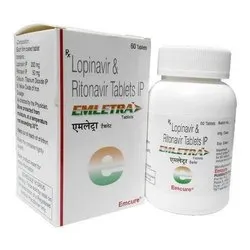
Emletra (Lopinavir/Ritonavir)
Previous product
Brivasign 50mg (Brivaracetam)
A$49.13 A$154.42Price range: A$49.13 through A$154.42
Next product
Vardegra 20mg (Vardenafil)
A$70.19 A$210.57Price range: A$70.19 through A$210.57
A$129.15 A$335.51Price range: A$129.15 through A$335.51
In Stock
In Stock
Emletra (Lopinavir/Ritonavir)
| Pack Size | Price | Quantity | Add To Cart | |
|---|---|---|---|---|
| 60 Tablet/s | A$129.15 | |||
| 120 Tablet/s | A$238.65 | |||
| 180 Tablet/s | A$335.51 | |||
| Want to order in bulk / B2B price? Send Inquiry | ||||
×
Sorry!! Out of Stock
Sorry! Emletra (Lopinavir/Ritonavir) is out of stock
Please click below to view other similar medications.
View All Lopinavir/Ritonavir Products
Offer You Can't Resist
Free Shipping
Enjoy Free Shipping on Orders above AUD304 (USD199)
Estimate Delivery :
10 October - 17 October
46
Medicines Online offers a user-friendly
With Modalert 200mg Tablets, my sleep and anxiety problems were removed and brain power increased. Thank you so much…!!!
 Australia
February 22, 2025
Response from Modalertaustralia
Thank you so much for sharing your experience! We’re glad to hear Modalert 200mg has supported your daily alertness and overall routine. Your feedback means a lot to us. For best results, always use the medication as directed and consult a healthcare professional for any concerns. We’re always here if you need assistance.
Last Updated on December 05, 2025

Description
Emletra is a fixed-dose antiretroviral medicine that contains the drugs Lopinavir (200mg) and Ritonavir (50mg). It is part of the group of medications that are known as protease inhibitors (PIs) and is employed to treat and prolong the treatment of HIV-1 infections together with antiretroviral drugs.
This article provides detailed information on Emletra, including the mechanism of action, uses in clinical practice, dosage, advantages, adverse effects, and safety measures, in order to assist patients and healthcare professionals in making an informed decision regarding HIV treatment.
What Is Emletra?
Emletra is an oral antiretroviral treatment (ART) which combines two pharmaceutical active ingredients:
- Lopinavir: A powerful HIV-1 protease inhibitor, which inhibits the enzyme that is needed for HIV replication.
- Ritonavir: It was originally designed as a protease inhibitor, but now it is used as it is primarily a boost to pharmacokinetics. It enhances the efficacy of lopinavir because it blocks liver enzymes which would normally breakdown it down too fast.
The combination can help maintain the effective levels of the drug in the bloodstream as well as impede the growth that causes the HIV. Emletra is produced in the form of it is a mixed tablet that improves adherence, cutting down on the amount of pills.
How Does Emletra Work?
Emletra operates by stopping the actions of HIV protease, the enzyme that is essential for the virus’s replication and mature. If this enzyme is not present, HIV can’t produce viral particles that are functional, which results in an inactive, non-infectious virus that is not able to replicate.
- Lopinavir directly blocks the protease enzyme.
- Ritonavir, at small doses, increases the lopinavir level by inhibiting Cytochrome P450 3A4 (CYP3A4) enzymes in the liver.
Together, they guarantee the longer-lasting and stable inhibition of viral replication and reduce the amount of virus in a patient, as well as improving the function of the immune system.
Indications: What Is Emletra Used For?
Emletra is primarily used in:
- Treatment for HIV-1 in children and adult patients of the age of a specified weight, or height (depending upon national guidelines)
- Second-line therapy or rescue therapy for patients who exhibit difficulty or an inability to tolerate first-line regimens of ART
- Sometimes, they are used in conjunction with antiretrovirals from other categories that include:
- Nucleoside reverse transcriptase inhibitors (NRTIs)
- Integrase inhibitors (INIs)
- Non-nucleoside reverse transcriptase inhibitors (NNRTIs)
Note: Emletra does not provide a cure for HIV; however, it can help combat the disease, enhance living quality, and lower the risk of HIV transmission.
Dosage and Administration
Usual adult dose of Emletra:
- Lopinavir 400mg / Ritonavir 100mg (2 tablets of Emletra) twice daily, or
- Certain patients might be recommended 800mg/200mg each day in accordance with the treatment history, as well as tolerance levels and the viral load.
Pediatric dosing: Based on body weight or area. Emletra can be utilized in young children who are older than 2 years or in accordance with the guidelines of the nation’s HIV treatment protocols.
Administration tips:
- Consume with food for better absorption.
- Take a full glass of water; don’t crush or chew.
- Follow a strict regimen to reduce virus resistance.
Benefits of Emletra
- Potent Viral Suppression
The combination of ritonavir and lopinavir is extremely efficient at reducing the amount of viral infection to undetectable levels when it is taken regularly along with other ART medications. - Boosted Drug Levels
Ritonavir increases the effectiveness of lopinavir, which means fewer doses as well as more long-lasting antiviral effects. - Improved Immune Recovery
The reduction in HIV-mediated destruction is a benefit to CD4 cells, aiding in the restoration of the function of the immune system over time. - Convenient Formulation
Fixed-dose combination reduces the burden of the pill, increasing compliance. - Proven in Second-Line Therapy
The drug is beneficial for patients who are resistant to first-line NNRTI regimens. - Reduced Risk of HIV Transmission
Reducing the viral load decreases the chance of transmitting HIV through sexual relationships or to the unborn child.
Side Effects of Emletra
Though generally well tolerated, Emletra may cause some negative side effects, especially during the initial days of treatment and when doses are rearranged.
Common side effects:
- Diarrhea
- Nausea
- Vomiting
- Abdominal discomfort
- Fatigue
- Headache
- Changes in lipid levels (cholesterol, triglycerides)
Less common but serious side effects:
- Pancreatitis
- Hepatotoxicity (elevated liver enzymes, liver damage)
- QT prolongation or other cardiac arrhythmias
- Hyperglycemia or new-onset diabetes
- Fat redistribution (lipodystrophy)
- Elevated bilirubin levels
Allergies (rash and swelling difficulty breathing) are not common, but they require immediate medical attention.
Contraindications and Precautions
Contraindicated in:
- Patients who suffer from significant hepatic impairment
- A known hypersensitivity reaction to lopinavir, Ritonavir, or any other component of the formulation
- The use of concurrently with other medications that are dependent on CYP3A for clearing (e.g., the use of statins, sedatives, and ergot derivatives)
Caution in:
- Patients with liver disease, heart rhythm disorders, or diabetes
- People taking medication that could interfere with CYP3A4
- For breastfeeding or pregnant women, Emletra can be administered under medical supervision as a part of the PMTCT (prevention of transmission from mother to child) strategy.
Drug Interactions
Emletra, particularly due to Ritonavir, is a drug with a large possibility of interactions between drugs, mainly because of CYP3A4 suppression.
The medications that can interact with each other include:
- Antifungals (ketoconazole, voriconazole)
- Antiepileptics (phenytoin, carbamazepine)
- Hormonal contraceptives
- Sedatives or anesthetics
- Statins (especially simvastatin and lovastatin)
- Anti-TB drugs like rifampin (contraindicated due to reduced lopinavir levels)
It is essential to give the complete list of your current medication to your doctor before you begin Emletra.
Use in Pregnancy and Breastfeeding
- Pregnancy: Emletra is considered an effective medication for pregnant women under the supervision of a medical professional. Emletra is a part of a variety of federal guidelines on the prevention of transmission from mother to child (PMTCT).
- Breastfeeding: WHO encourages breastfeeding among pregnant women with HIV who are on ART in environments with limited resources. However, Emletra could be transferred into the breastmilk. The decision-making process must be tailored depending on the location or guidelines, as well as the viral suppression status.
Storage Instructions
- Keep at room temperatures and away from extreme humidity and heat.
- Avoid refrigerating or freezing.
- Store in the original container and away from children’s reach.
Monitoring and Follow-up
Patients with Emletra have regular monitoring as well as lab tests:
- Viral load testing: Every 3 months for the suppression
- CD4 count monitoring: Particularly in the early phase of treatment
- Liver function tests and lipid profile
- Blood sugar levels in patients at risk of diabetes
- ECG monitoring if patient is on other QT-prolonging drugs
Patient Counseling Points
- Adherence is crucial in order to avoid resistance to drugs and ensure the suppressive effects of the virus.
- Consume Emletra in conjunction with your meals to get the maximum outcomes.
- Tell your doctor about any signs or symptoms of liver disorders.
- Don’t share or stop medicines without consulting a physician.
- Make sure you use barriers (condoms) regularly to avoid HIV transmission regardless of suppressed levels of viral burden.
Frequently Asked Questions (FAQs)
- Can Emletra cure HIV?
No. Emletra is a treatment for HIV infection, but it isn’t an effective cure. It should be administered for the rest of your life along with other ART drugs. - What happens if I miss a dose?
Do it as quickly as you can remember. However, should it be close to your next dose, don’t take the dose you skipped. Don’t double the dosage. A frequent absence of doses may cause the failure of treatment. - Can I drink alcohol while on Emletra?
It is recommended to reduce the consumption of alcohol since Emletra, as well as alcohol, may cause liver damage. - Will I need to take Emletra forever?
The ART program is a lifetime commitment. Emletra can be maintained or modified based on test results, your resistance profiles, and side effects. - Is Emletra the same as Kaletra?
Yes, they both have the same active ingredients, ritonavir and lopinavir. But Emletra is a branded or generic formulation made by different firms.
Conclusion
Emletra (Lopinavir/Ritonavir) remains a vital part of HIV therapy, especially in patients who require second-line treatment options. The ability of Emletra to suppress the replication of HIV, improve immunity, and increase compliance to treatment with its co-formulated structure makes it an effective treatment option in the combat against HIV.
Additional Information
| Active Ingredient: | Lopinavir/Ritonavir |
|---|---|
| Indication: | HIV infection |
| Manufacturer: | Emcure Pharmaceuticals Ltd. |
| Packaging: | 60 Tablets in bottle |
| Strength: | 250mg |
| Delivery Time: | 7 To 15 days |
Related products



Reviews
There are no reviews yet.