
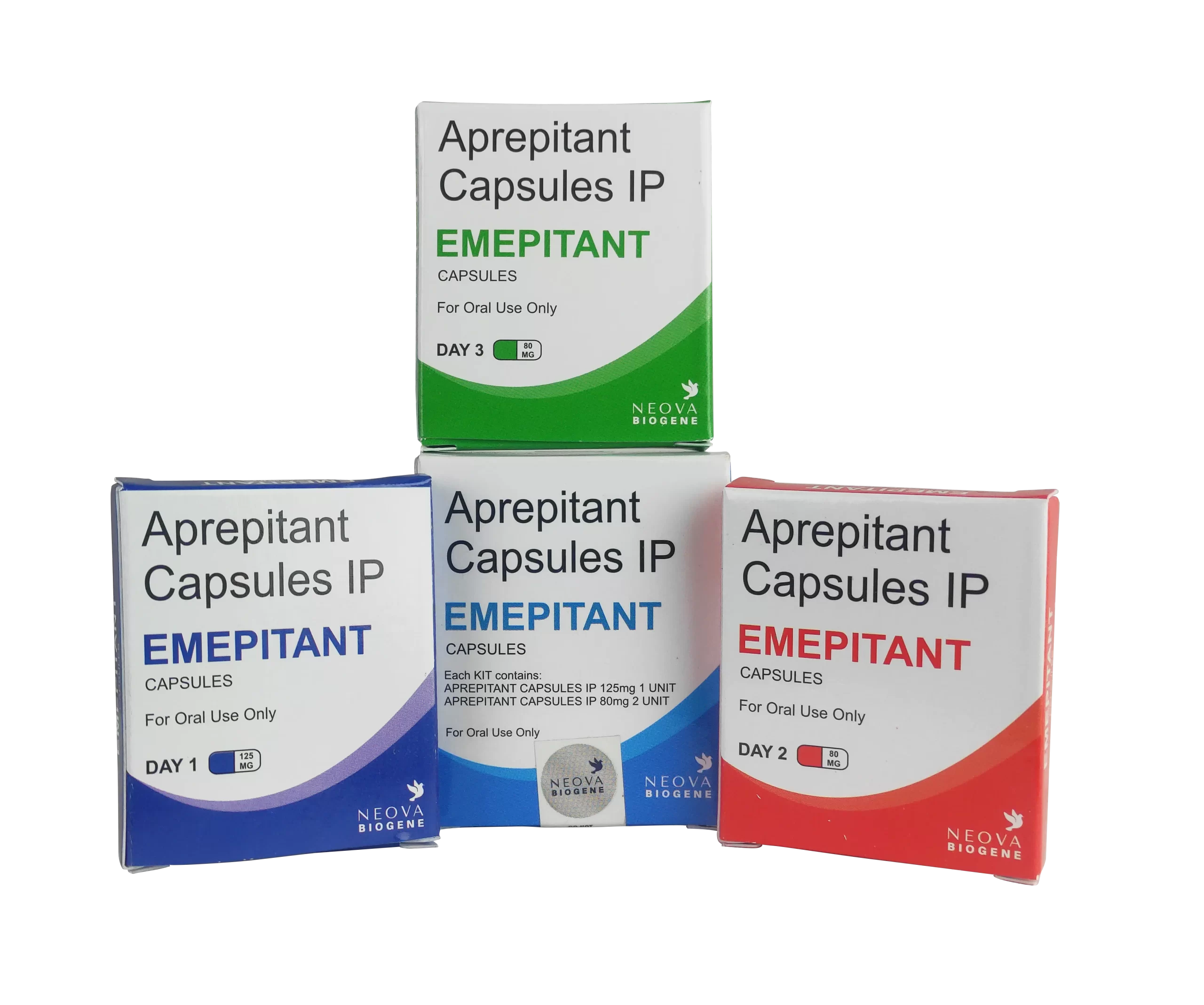
Emepitant (Aprepitant)
Previous product
Mesacol 500mg Suppository (Mesalamine)
A$40.00 A$97.00Price range: A$40.00 through A$97.00
Next product
Biomezole 20mg (Omeprazole)
A$15.00 A$28.00Price range: A$15.00 through A$28.00
A$23.00 A$56.00Price range: A$23.00 through A$56.00
In Stock
In Stock
Emepitant (Aprepitant)
| Pack Size | Price | Quantity | Add To Cart | |
|---|---|---|---|---|
| 1 Pack | A$23.00 | |||
| 2 Pack/s | A$39.00 | |||
| 3 Pack/s | A$56.00 | |||
| Want to order in bulk / B2B price? Send Inquiry | ||||
×
Sorry!! Out of Stock
Sorry! Emepitant (Aprepitant) is out of stock
Please click below to view other similar medications.
View All Aprepitant Products
Offer You Can't Resist
Free Shipping
Enjoy Free Shipping on Orders above AUD304 (USD199)
Estimate Shipping :
06 September - 13 September
25
Secure Packaging
My order was packaged carefully and arrived in good condition. The whole process was handled professionally, and communication was excellent. Thank you for the great service
 Australia
August 18, 2026
Last Updated on December 05, 2025

Description
Vomiting and nausea are among the most uncomfortable symptoms experienced by those who undergo chemotherapy, surgery, or radiation treatment. The symptoms have a significant impact on your quality of life as well as the degree of compliance with treatment. Medical science has provided various antiemetic (anti-nausea) medications, of which are most effective of its kind are Emepitant and its active ingredient Aprepitant.
The blog below will explore the specifics regarding the Emepitant (Aprepitant)–what it is, how it operates in the event of use, and how it’s administered, the effects it may cause, warnings, as well as its function in today’s medical practice.
What is Emepitant (Aprepitant)?
Emepitant is a branded version that is a derivative of Aprepitant, an effective neurokinin-1 (NK1) receptor antagonist. It’s a drug employed to stop (not to treat) nausea or vomiting that is caused by:
- Chemotherapy (particularly highly and moderately emetogenic types)
- Surgery (postoperative nausea and vomiting)
Aprepitant can be utilized as a mixture regimen along with other antiemetics like 5HT3 antagonists (like Ondansetron) and corticosteroids (like Dexamethasone).
Mechanism of Action: How Does Emepitant Work?
Aprepitant is a selective inhibitor selectively blocks the action of substances P, which is a neuropeptide implicated in the vomiting reflex pathway. Substance P is a ligand for receptors NK1 within the brain, specifically in the area postrema of the vomiting center (area Postrema). Through blocking these receptors:
- Emepitant stops delayed-phase nausea as well as vomiting that typically occur within 24 to 72 hours following chemotherapy.
- It improves the efficacy of medications that are effective in their initial stage (within the initial 24-hour period).
The simplest way to describe it is that Emepitant shuts off the cerebral “vomiting signal” prior to it developing fully.
Indications: What is Emepitant Used For?
-
Chemotherapy-Induced Nausea and Vomiting (CINV)
Chemotherapy medications such as cisplatin, Cyclophosphamide, as well as doxorubicin may seriously irritate the gastrointestinal tract as well as the brain’s vomiting centers. Emepitant works best for:
- Highly emetogenic chemotherapy (e.g., cisplatin-based regimens)
- Moderately emetogenic chemotherapy (e.g., carboplatin, irinotecan)
Emepitant typically is part of the 3-drug antiemetic regimen consisting of:
- Aprepitant (Emepitant)
- A 5-HT3 antagonist (e.g., Ondansetron)
- Dexamethasone
-
Postoperative Nausea and Vomiting (PONV)
General anesthesia is a common component of surgery. Typically causes nausea and vomiting in recuperation. Emepitant may be given prior to or after surgery in order to decrease the risk.
-
Off-label Uses (under medical supervision)
- Radiotherapy-induced nausea
- Refractory nausea not responsive to other treatments
Dosage and Administration
Chemotherapy-Induced Nausea and Vomiting:
Typical adult dosing schedule:
- Day 1 (before chemotherapy): 125 mg orally
- Day 2 & 3: 80 mg once daily
Administration tips:
- Administer Emepitant an hour before beginning chemotherapy on Day 1.
- Consume the capsules completely, whether or not you eat.
- Use the entire antiemetic protocol in accordance with the instructions.
Postoperative Nausea and Vomiting:
- 40 mg, single dose administered by mouth in the 3rd hour before the anesthesia
Always speak with your doctor or surgeon about personalized dosage adjustments.
Combination Therapy: The Antiemetic Trio
To ensure effective CINV Prevention, Emepitant is not used by itself. The most effective protocol typically includes:
| Drug | Class | Target phase |
| Emepitant | NK1 receptor antagonist | Delayed phase |
| Ondansetron | 5-HT3 antagonist | Acute phase |
| Dexamethasone | Corticosteroid | Both phases |
Each drug operates through a different route and creates a synergistic result, as well as reducing the chances of nausea and vomiting.
Benefits of Emepitant (Aprepitant)
- Eliminates the need for emergency medication
- Enhances the living quality in the course of chemotherapy and recovery
- Enhances adherence to chemotherapy
- Targets delayed nausea that is more difficult to control
- Secure to use for oral administration at home
Side Effects of Emepitant
Although Emepitant generally is well-handled, some may suffer:
Common Side Effects:
- Fatigue or weakness
- Constipation or diarrhea
- Hiccups
- Headache
- Dizziness
- Indigestion or abdominal pain
Less Common But Serious:
- Hypersensitivity reactions (rash, itching, swelling)
- Liver function changes (increased liver enzymes)
- Interaction-related side effects (see below)
Seek out a medical professional immediately if you experience persistent or acute signs.
Drug Interactions
Aprepitant’s metabolism is through its CYP3A4 process. This means it may interact with various drugs either by raising or decreasing their levels in the blood.
Drugs that may interact with Emepitant:
- Warfarin: Reduced anticoagulant effect
- Oral contraceptives: Reduced effectiveness — alternate contraception advised
- Benzodiazepines (e.g., midazolam): Increased sedation
- Corticosteroids: Emepitant increases plasma levels — dose adjustment needed
Tell your doctor about any medication, as well as supplements that you’re taking, prior to taking Emepitant.
Precautions and Warnings
Liver Impairment
Take care when using Emepitant in those suffering from moderate or extreme liver impairment since metabolism might be affected.
Pregnancy and Breastfeeding
- Pregnancy: Only use if necessary. Animal research shows no harm; however, human research is generally limited.
- Breastfeeding: The safety of the product isn’t established yet. Consult your physician.
Pediatric Use
Aprepitant has been approved for certain aged children. Only use under medical surveillance.
Storage and Handling
- Place in a storage container at room temperature (15-30°C)
- Place your items in a dry location in a dry, cool place away from moisture and temperatures
- Be sure to keep it out of the reach of young children
- Avoid using expired medications
Frequently Asked Questions (FAQs)
-
Is Emepitant a chemotherapy drug?
No. Emepitant isn’t chemotherapy. It’s an antiemetic employed to avoid adverse effects from chemotherapy. It is not used to treat cancer itself.
-
Can I take Emepitant with food?
Yes, Emepitant is a drug that can be used with or without food. It should, however, be administered precisely as prescribed, particularly before chemotherapy.
-
Will it help if I already feel nauseous?
Emepitant’s purpose is to stop nausea, but it does not treat it after it has begun. Antiemetics for rescue, like Metoclopramide or Ondansetron, could be prescribed in these instances.
-
Is Emepitant addictive?
No, the answer is no, Emepitant is not an addiction that can be made habitual or addicting.
Conclusion
Emepitant (Aprepitant) represents a significant advancement in the treatment of vomiting and nausea due to surgery and chemotherapy. It targets specifically the NK1 receptors. This drug addresses the previously difficult-to-treat nausea that is prolonged–and permits patients to go through vital treatments such as chemotherapy more comfortably and securely.
Although it is not free of side reactions and possible interactions with drugs, if used properly under the supervision of a medical professional, Emepitant is safe, efficient, and dramatically increases the patient’s outcomes. If you’re taking medication that could trigger nausea, consult your doctor regarding whether or not Emepitant is the right choice for you.
Additional Information
| Pack Size | 1 Pack, 2 Pack/s, 3 Pack/s |
|---|
Related products
Reviews
There are no reviews yet.