
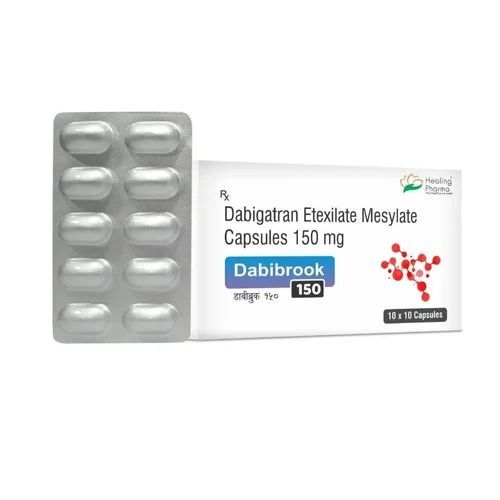
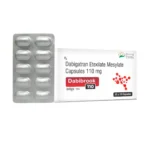
Dabibrook 150mg (Dabigatran)
Previous product
Dabibrook 110mg (Dabigatran)
$58.00 $142.94Price range: $58.00 through $142.94
Next product
Distinon 60mg (Pyridostigmine)
$34.00 $110.00Price range: $34.00 through $110.00
$75.00 $182.25Price range: $75.00 through $182.25
In Stock
In Stock
Dabibrook 150mg (Dabigatran)
| Pack Size | Price | Quantity | Add To Cart | |
|---|---|---|---|---|
| 100 Capsule/s | $75.00 | |||
| 200 Capsule/s | $135.00 | |||
| 300 Capsule/s | $182.25 | |||
| Want to order in bulk / B2B price? Send Inquiry | ||||
×
Sorry!! Out of Stock
Sorry! Dabibrook 150mg (Dabigatran) is out of stock
Please click below to view other similar medications.
View All Dabigatran Etexilate Products
Offer You Can't Resist
Free Shipping
Enjoy Free Shipping on Orders above AUD304 (USD199)
Estimate Delivery :
01 October - 08 October
33
Such a helpful company
Such a fantastic, professional site…I get exactly what I need in perfect timing..at great prices!!
 Australia
February 8, 2025
Response from Modalertaustralia
Thank you so much for your kind words! We’re delighted to hear you’re happy with our service, timely delivery, and pricing. Providing a smooth and professional experience is always our goal. We truly appreciate your support!
Last Updated on November 29, 2025

Description
Fast-Acting, Direct Oral Anticoagulant (DOAC) for Safer Blood Thinning
Dabibrook 150mg comprised of Dabigatran Etexilate is a direct oral anticoagulant (DOAC) used for the treatment of strokes, Deep vein thrombosis (DVT) as well and pulmonary embolism (PE), as well as embolisms in the systemic circulation, for patients who are who are at risk for abnormal bleeding.
A more recent alternative to warfarin, Dabibrook provides the benefit of predictable blood thinning and dietary limitations that are less restrictive, as well as no need for routine INR testing, and a lower risk of causing serious bleeding in the right dosage. It is typically used in Australia for patients suffering from atrial fibrillation that isn’t valvular (AF) or those recovering from orthopaedic surgery.
What Is Dabibrook 150mg?
Dabibrook is a prescribed oral anticoagulant with 150 mg of Dabigatran etexilate, which is a drug that is converted by the body into the active Dabigatran. It acts by stopping the enzyme thrombin–an important enzyme that is responsible for the conversion of fibrinogen into fibrin, which is what causes blood clots.
It’s classed as a Direct Thrombin inhibitor and is part of the new blood thinners, which reduce the possibility of clot formation and do not require regular blood tests.
Dabibrook 150mg – Quick Product Facts
| Feature | Description |
| Active Ingredient | Dabigatran etexilate mesilate 150mg |
| Drug Class | Direct thrombin inhibitor (DOAC) |
| Form | Oral capsule |
| Primary Uses | Stroke prevention, DVT/PE treatment & prevention |
| Prescription Required | Yes |
| Australian Availability | Yes – via prescription |
| Standard Dose | 150mg twice daily |
| Age Group | Adults only |
| Monitoring Needed | No routine INR monitoring |
| Storage | Storage below 25°C. Keep the original packaging |
How Does Dabigatran Work?
Dabigatran hinders Factor IIa (thrombin), blocking the last step in the process of coagulation that occurs when fibrin makes blood clots. This stops the formation of new blood clots as well as the growth of existing ones and reduces the chance of:
- Stroke with ischemia during atrial fibrillation
- PE or DVT following surgery, or even after previous incidents
- Emboloma systemic for high-risk people
In contrast to warfarin, it operates in the same controlled manner that has very few interactions with food items or other drugs.
When Is Dabibrook Prescribed?
✅ Primary Indications:
- Preventing strokes and embolism for patients suffering from non-valvular atrial fibrillation.
- Treatment and prevention of deep vein thrombosis (DVT)
- Pulmonary embolism (PE) management
- Clot prevention after hip or knee replacement surgery
Dabibrook can be utilized in the short or long term in accordance with the health condition and the risk variables.
How to Take Dabibrook 150mg
Always Follow your doctor’s guidelines.
- Consume one capsule two times a day (every 24 hours), whether with or without food.
- Take a full swallow of water. Don’t chew, swallow, or crush – don’t open, chew, or break it.
- Do it exactly the same doses every day, to ensure regular blood levels.
| Use Case | Typical Dose |
| AF-related stroke prevention | 150mg twice daily |
| DVT/PE treatment | 150mg once daily, one day after the initial anticoagulant parenteral treatment. |
| DVT/PE prevention post-op | 120-150 mg twice or once each day, depending on the patient’s conditions |
If you don’t take your dose, make sure you take the missed dose within six hours any other, skip and go on as normal.
Timeline of Effectiveness
| Timeframe | What to Expect |
| 1–2 hours | Peak plasma concentration (rapid onset) |
| Ongoing | Continuous stroke/clot prevention |
| 1–3 days after stopping | Anticoagulant effect diminishes |
Safety, Precautions & Monitoring
Although it isn’t required for regular INR testing, similar to warfarin, periodic kidney function tests are required, particularly for:
- Elderly patients
- Those with chronic kidney disease (CKD)
- People who are taking any blood-thinning medications
Important:
- Do not recommend for people who have mechanical valves for their heart.
- Do not use if you have a significant risk of bleeding or an active bleeding disorder
- Take care when you have recently undergone surgery, trauma, ulcers, or liver diseases.
Potential Side Effects
Common Side Effects:
- Indigestion or stomach discomfort
- Minor bleeding (nosebleeds, gums, bruising)
- Fatigue
- Diarrhoea
Serious But Rare:
- Major bleeding (gastrointestinal, internal)
- Spinal or epidural hematoma (if used with spinal procedures)
- Severe allergic reactions (rash, swelling, anaphylaxis)
Get immediate help if you notice abnormal bleeding, nausea, black stool, or if you are coughing up blood.
Storage Instructions
- Store in original blister packaging—moisture-sensitive
- Maintain at or below 25°C
- Be sure to avoid transferring capsules into a different container
- Make sure that the items are out of Children’s reach
Frequently Asked Questions (FAQs)
-
What is Dabibrook 150mg used for?
Dabibrook can be used to help prevent strokes and blood clots for people suffering from atrial fibrillation, as well as to help treat or stop PE and DVT.
-
How does it differ from warfarin?
In contrast to warfarin, Dabigatran isn’t a requirement for INR tests as it is a safer drug with fewer drug and food interactions, as well as acting more consistently.
-
Is Dabibrook safe long-term?
Yes, it is specifically designed to be used for a longer period of time, specifically for AF patients. It is accompanied by continuous surveillance of kidney function.
-
Can I open the capsule if I have trouble swallowing?
No. Dabigatran is to be consumed completely. In the event of opening the capsule, it can increase the chance of bleeding. It also decreases its effectiveness.
-
What happens if I stop taking it suddenly?
The sudden stop can raise your chance of having a stroke or the formation of clots. Always consult your doctor before stopping.
-
Can I drink alcohol while on Dabibrook?
Moderate consumption is usually healthy, but excessive alcohol consumption raises the risk of bleeding. Consult your doctor.
-
Is there a reversal agent if bleeding occurs?
Yes. In hospital settings, idarucizumab (Praxbind) is an option to counter the effects of Dabigatran in emergencies.
-
Can I take other medications with Dabibrook?
Some medicines—especially NSAIDs, antiplatelets, or SSRIs—can increase bleeding risk. Always inform your doctor.
-
Does Dabibrook affect physical activity?
No, do not, however, avoid contact sports or other high-risk activities, which could result in injury or bleeding.
-
Is it safe during pregnancy or breastfeeding?
It is not recommended to use it unless it is essential. Dabigatran is a drug that crosses the placenta and can create a threat to the foetus.
Final Thoughts
Dabibrook 150mg (Dabigatran) is part of the latest generation of oral anticoagulants offering effective protection against strokes as well as blood clots–without the burden of regular INR testing or restrictions on diet.
If you’re dealing with atrial fibrillation as well as healing from PE or DVT, as well as stopping post-operative clots from forming, Dabibrook is the newest, reliable option, which can be easily integrated into your daily routine with fewer issues.
Additional Information
| Active Ingredient: | Dabigatran Etexilate |
|---|---|
| Indication: | Used to Prevent Blood Clots |
| Manufacturer: | Healing Pharma, India |
| Packaging: | 10 Capsules in 1 Strip |
| Strength: | 150mg |
| Delivery Time: | 7 To 15 days |
Related products

Reviews
There are no reviews yet.