
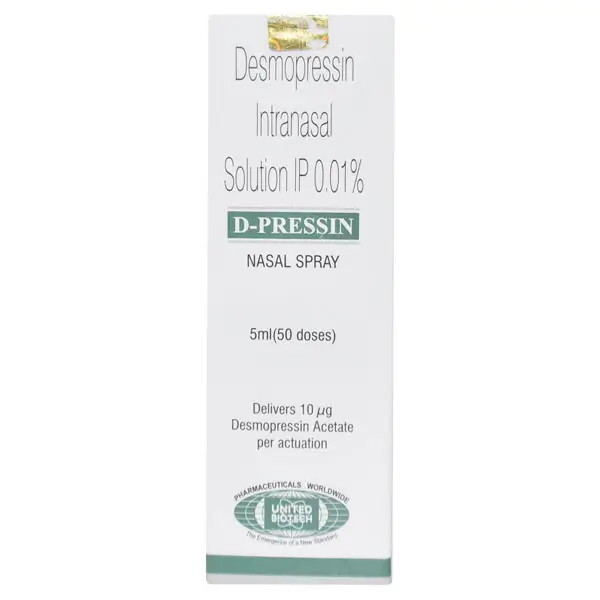
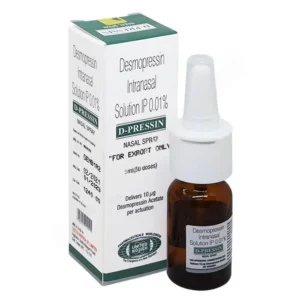
D-Pressin Nasal Spray 5ml (Desmopressin)
Previous product
Vertiron 25mg (Cinnarizine)
A$26.00 A$65.00Price range: A$26.00 through A$65.00
Next product

Daonil 5mg (Glibenclamide)
A$36.00 A$85.00Price range: A$36.00 through A$85.00
A$40.00 A$215.00Price range: A$40.00 through A$215.00
In Stock
In Stock
D-Pressin Nasal Spray 5ml (Desmopressin)
| Pack Size | Price | Quantity | Add To Cart | |
|---|---|---|---|---|
| 1 Nasal Spray | A$40.00 | |||
| 3 Nasal Spray | A$110.00 | |||
| 6 Nasal Spray | A$215.00 | |||
| Want to order in bulk / B2B price? Send Inquiry | ||||
×
Sorry!! Out of Stock
Sorry! D-Pressin Nasal Spray 5ml (Desmopressin) is out of stock
Please click below to view other similar medications.
View All Desmopressin Products
Offer You Can't Resist
Free Shipping
Enjoy Free Shipping on Orders above AUD304 (USD199)
Estimate Shipping :
02 September - 09 September
26
Last Updated on November 30, 2025

Description
The need for water is crucial to our lives. However, in certain conditions, the body’s capacity to hold and regulate the amount of water is greatly affected. This is where D-Pressin nasal spray, which is a synthetic variant of the hormone natural vasopressin, is crucial.
Incorporating Desmopressin acetate is extensively used to treat central diabetes insipidus, nighttime Enuresis (bedwetting), as well as when it is used to treat bleeding disorders, such as mild haemophilia A and von Willebrand’s disease.
We’ll explain how the spray functions, what it is for, how to apply it safely, and the things you have to know prior to applying the spray.
What is D-Pressin Nasal Spray?
D-Pressin Nasal Spray is an intranasal prescription-only formula made of Desmopressin, which is a synthetic analogue to the hormone antidiuretic hormone (ADH), also known as arginine vasopressin.
It aids the body in:
- Reduce excessive urination
- Retain water in the kidneys
- Control bedwetting in children and adolescents
- Raise factor VIII levels in bleeding disorders
Each bottle has 5ml of solution. The product delivers numerous doses of nasal spray. The solution is usually given every day, either once or twice, according to the dosage.
How Desmopressin Works: A Closer Look
Desmopressin is a chemical that acts on the vasopressin receptor V2 within the kidneys and promotes the reabsorption of water from urine back to the bloodstream.
Mechanism of Action:
- mimics the natural ADH and reduces the output of urine
- Enhances the retention of water by concentrating urine
- In the case of bleeding disorders, the hormone triggers the release of clotting factor VIII as well as Von Willebrand factor
It isn’t able to increase blood pressure, nor does it activate V1 receptors in a significant way, which makes it safe for the majority of patients.
Therapeutic Uses of D-Pressin Nasal Spray
D-Pressin is most commonly used for these conditions:
-
Central Diabetes Insipidus
A rare condition in which the body is deficient in vasopressin, leading to:
- Excessive urination (polyuria)
- Extreme thirst (polydipsia)
- Risk of dehydration
Desmopressin reduces loss of water and reduces the amount of urine and returning the balance of fluids.
-
Nocturnal Enuresis (Bedwetting)
Children over six years old, with primary nighttime Enuresis, Desmopressin:
- Reduces overnight urine production
- Improves sleep quality
- Reduces social or emotional stress
This isn’t a cure; however, it is a very successful short- and medium-term option, especially when behavioral methods alone aren’t sufficient.
-
Bleeding Disorders (Adjunct Use)
To treat mild types of:
- Haemophilia A
- Type 1 von Willebrand Disease
Desmopressin is a medication that can temporarily boost the level of clotting factor, particularly prior to surgery or dental work. It also helps prevent an injury.
Note: Nasal spray is not widely utilized in Australia currently (IV and SC have been the preferred). However, it is a viable option when injectable options aren’t suitable.
Dosing Guide: How to Use D-Pressin Nasal Spray
General Instructions
- Follow your physician’s precise prescription
- The pump is primed before its first time of use
- Inject the proper amount of sprays into your nostril(s) as directed
- Don’t inhale very deeply for a long time–let the spray cover the nasal the nasal lining
Common Doses by Indication
| Indication | Usual Starting Dose |
| Central Diabetes Insipidus | 1 spray (10–20 mcg) once or twice daily |
| Nocturnal Enuresis | 1 spray (10 mcg) at bedtime |
| Bleeding Disorders | Variable; specialist dosing required |
Note: The strength of the spray and its distribution may differ slightly depending on the brand or manufacturer.
What to Expect: Treatment Outcomes
- In diabetes insipidus: A dramatic reduction in thirst and the volume of urine in just a couple of 24 hours
- In bedwetting: Reduced frequency of wet nights. Some children notice the results within the first week.
- In bleeding disorders: The effect of a temporary elevation in clotting factors fades after 8 to 12 hours
Possible Side Effects of D-Pressin
Desmopressin is well tolerated by most people, provided it is used in a proper manner. But some suffer:
Common Side Effects:
| Symptom | Management |
| Headache | Mild, often resolves spontaneously |
| Nasal congestion | Use alternate nostril, monitor |
| Nausea | Take at consistent times |
| Abdominal pain | Rare and usually dose-related |
Serious Risks: Hyponatraemia
Desmopressin could result in extremely low levels of sodium (hyponatraemia) if water consumption isn’t controlled.
Watch for:
- Confusion
- Headache
- Vomiting
- Seizures (in severe cases)
This is more likely in:
- Children
- Elderly
- Patients drinking excessive fluids (“water intoxication”)
How to Avoid It:
- Limit the intake of fluids one hour before and for 8 hours after the dose
- Do not drink or consume high-sodium food items
- Blood tests are required regularly if the long-term side effects
Who Should Avoid D-Pressin Nasal Spray?
Beware of or avoid using for the following situations:
- Hyponatraemia or electrolyte imbalance
- Moderate to severe kidney disease
- Heart failure or uncontrolled hypertension
- Psychogenic polydipsia (habitual over-drinking)
Do not recommend young children younger than 6 for enuresis treatment.
Drug Interactions
Desmopressin is a drug that interacts with:
| Drug Type | Effect or Risk |
| NSAIDs | Increased risk of water retention |
| SSRIs or TCAs | Increased hyponatraemia risk |
| Carbamazepine | Potentiates antidiuretic effect |
| Lithium | Reduces desmopressin effectiveness |
Inform your doctor about any medications or supplements that you’re taking.
Tips for Proper Nasal Spray Use
✅ The primer should be used before the first time (spray until an even mist forms)
✅ Move your head slightly forward
✅ Don’t sniff your nose hard — gentle breathing is recommended.
✅ Alternate nostrils if using long-term
✅ clean the nozzle regularly
If you suffer from nose congestion, you can switch to tablets for oral use as well as sublingual melt formulations (consult with your doctor before making any changes).
Storage & Handling
- Keep it in storage at a temperature below 25°C
- Do not freeze
- Make sure the bottle is upright
- Don’t put your food in the freezer. Make sure that the items are out of Children’s reach
- Recycle any solution that is not used within two months from the date of opening.
Availability in Australia
D-Pressin Nasal Spray (Desmopressin 10 mcg/dose) is:
- TGA-approved
- Could be listed on PBS as a condition that is eligible (like central diabetic insipidus)
- On prescription in most pharmacies, or through hospital supplies
Consult your GP or paediatrician, haematologist, or endocrinologist to determine the correct type of form and brand.
D-Pressin Spray at a Glance
| Feature | Detail |
| Active Ingredient | Desmopressin Acetate |
| Strength | 10 mcg/spray (approx.) |
| Volume | 5 ml bottle |
| Route | Intranasal |
| Onset of Action | 30–90 minutes |
| Duration of Action | 6–12 hours (varies by dose) |
| Main Uses | Diabetes insipidus, bedwetting, bleeding disorders |
| Key Risk | Hyponatraemia (low sodium) |
Final Word: Why D-Pressin Matters
No matter if you’re battling the effects of a rare disorder such as central diabetes insipidus or you’re trying to help your child overcome sleep-wetting at night, D-Pressin Nasal Spray provides a specific, efficient hormone-based treatment.
It’s a process that needs careful handling, careful hydration monitoring, and regular medical reviews. However, when utilized appropriately, it has the potential to drastically increase the quality of living through the control of conditions that could be demanding, disorienting, and even hazardous.
Additional Information
| Pack Size | 1 Nasal Spray, 3 Nasal Spray, 6 Nasal Spray |
|---|
Related products



Reviews
There are no reviews yet.