
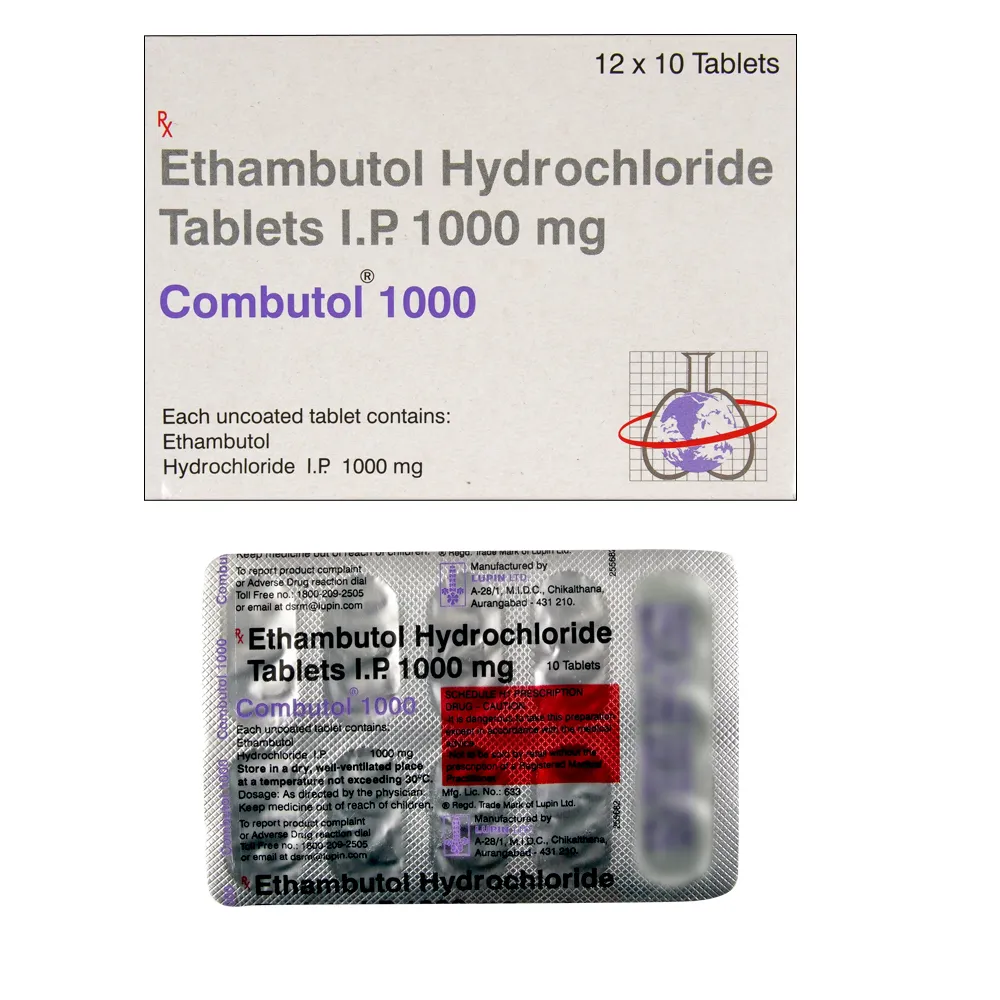
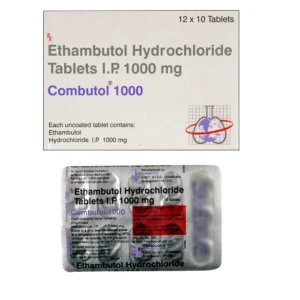
Combutol 1000mg (Ethambutol)
Previous product
Combutol 800mg (Ethambutol)
A$11.55 A$31.77Price range: A$11.55 through A$31.77
Next product
Liv 52 (Ayurvedic)
A$9.70 A$20.58Price range: A$9.70 through A$20.58
A$13.00 A$36.10Price range: A$13.00 through A$36.10
In Stock
In Stock
Combutol 1000mg (Ethambutol)
| Pack Size | Price | Quantity | Add To Cart | |
|---|---|---|---|---|
| 30 Tablet/s | A$13.00 | |||
| 60 Tablet/s | A$25.99 | |||
| 90 Tablet/s | A$36.10 | |||
| Want to order in bulk / B2B price? Send Inquiry | ||||
×
Sorry!! Out of Stock
Sorry! Combutol 1000mg (Ethambutol) is out of stock
Please click below to view other similar medications.
View All Ethambutol Products

Offer You Can't Resist
Free Shipping
Enjoy Free Shipping on Orders above AUD304 (USD199)
Estimate Shipping :
19 July - 26 July
47
Last Updated on November 28, 2025

Description
Combutol 1000mg can be described as an antibiotic that contains Ethambutol, typically employed as part of the treatment in combination to treat tuberculosis (TB). In Australia, Combutol is a prescription drug under the supervision of a medical professional to fight Mycobacterium tuberculosis by preventing the growth of bacteria and thereby reducing resistance. It’s an important medicine in multi-drug regimens to provide effective treatment and decrease the chance of developing drug-resistant TB strains.
What is Combutol 1000mg?
Combutol includes Ethambutol Hydrochloride 1000 mg, which belongs to the group of antibiotics called antimycobacterial drugs. It hinders the formation of mycobacterial cell walls, stopping bacterial replication as well as the spread. The majority of patients are treated in conjunction with other medications against TB for better efficacy and to prevent resistance.
How Does Combutol Work?
Ethambutol is a drug that targets the arabinogalactan-synthesizing process inside the cell wall of mycobacteria by blocking the enzyme arabinose polymerase. This disrupts the cell wall, rendering the bacteria unable to live and grow. Combivir’s ability to halt bacteriostatic activity aids the immune system in eliminating this infection with greater efficiency when combined with other TB medications.
Uses of Combutol 1000mg
Combutol is used in the majority of cases for:
- The treatment of tuberculosis is active when combined with other TB medicines like isoniazid, rifampicin, and pyrazinamide
- The prevention of resistance to drugs when undergoing TB treatment
- Treatment for Mycobacterium Avium Complex (MAC) infection in some instances
Dosage and Administration
- The typical adult dosage in the form of Combutol amounts to 15-25 mg/kg daily or split in two doses. In the majority of adults, this is roughly 1000 mg daily.
- The duration of treatment typically is six months or more, according to your medical condition and response.
- Be sure to ensure that you take Combutol precisely as directed by your doctor.
- It is a good option to take in combination with food or without, but eating it with food can help reduce gastric discomfort.
Combutol Compared to Other First-Line Anti-TB Drugs
| Drug | Mechanism of Action | Common Dose | Major Side Effects | Role in TB Therapy |
| Combutol (Ethambutol) | Inhibits cell wall synthesis (arabinogalactan) | 15-25 mg/kg daily | Optic neuritis, rash, GI upset | Prevents resistance; bacteriostatic |
| Isoniazid | Inhibits mycolic acid synthesis | 5 mg/kg daily | Peripheral neuropathy, liver toxicity | Primary bactericidal agent |
| Rifampicin | Inhibits RNA synthesis | 10 mg/kg daily | Liver toxicity, orange discoloration | Primary bactericidal agent |
| Pyrazinamide | Disrupts membrane metabolism | 15-30 mg/kg daily | Liver toxicity, gout, rash | Shortens treatment duration |
Who Should Use Combutol?
Combutol can be prescribed for:
- Patients who are diagnosed with active tuberculosis
- People who undergo multi-drug therapies to reduce resistance
- Patients who suffer from specific mycobacterial conditions that are not tuberculous
- Patients who require strict medical surveillance for possible adverse effects
Precautions and Warnings
- Patients should be subject to regularly scheduled eye exams because of the possibility of opto-neuritis (vision issues).
- Be cautious when using this medication in patients suffering from impaired renal function; dosage adjustments could be required.
- Do not recommend using it in pregnancies if the potential benefits outweigh any risk.
- Tell your physician about any history of allergic reactions or kidney or liver problems.
- Be sure not to miss doses, as this can lead to the development of resistance.
Possible Side Effects
The most common side effects can be:
- Visual disruptions like blurred vision or shifts in color perception
- Neuropathy in the peripheral region (tingling or weakness in the feet or hands)
- Rash or itching
- Nausea, vomiting, or abdominal discomfort
- Elevated liver enzymes
If you notice unexpected changes to your vision or have severe reactions, get urgent medical care.
Storage Instructions
- Conserve Combutol at room temperatures and between 15°C and 30°C.
- Place your items in a dry location and away from direct sunlight.
- Be sure to keep it out of the reach of young children.
- Use only after the expiry date
10 Unique “What, How, Why” FAQs
-
What is Combutol 1000mg used to treat?
It’s used to treat tuberculosis and to prevent resistance in combination treatment.
-
How does Ethambutol work against TB bacteria?
It blocks the production of the cell wall, weakening it and stopping the growth of bacterial cells.
-
Why must Combutol be combined with other TB medications?
To reduce resistance and enhance the effectiveness of treatment.
-
What are the risks of optic neuritis?
The condition can lead to vision issues such as blurred vision or color blindness that require regular checking.
-
How long does TB treatment with Combutol typically last?
Most often, it is 6 months or more based on the severity and reaction.
-
Can I take Combutol with food?
Yes, Food can indeed relieve stomach pain, but it is advisable to take it along with or without food.
-
What should I do if I miss a dose?
Do it as quickly as you can remember, unless it’s close to the next dose. Do not duplicate.
-
Why is regular eye check-up important during Combutol therapy?
To detect the early signs of optic neuritis and to prevent irreparable damage to the eye.
-
What other side effects should I watch for?
The stomach discomfort or jaundice needs to be promptly reported.
-
Is Combutol safe during pregnancy?
The use of this medication should be limited to cases of need and if prescribed by a medical professional.
Final Thoughts
Combutol 1000mg (Ethambutol) plays an essential role in the efficient treatment of tuberculosis in Australia. The targeted effect, when combined with the other anti-TB medications, aids in preventing bacterial resistance and enhances the outcomes of patients. Due to the possibility of negative side effects, specifically in relation to the eyes, careful surveillance by a doctor is crucial during the course of treatment.
Related products

Recently Viewed

Reviews
There are no reviews yet.