
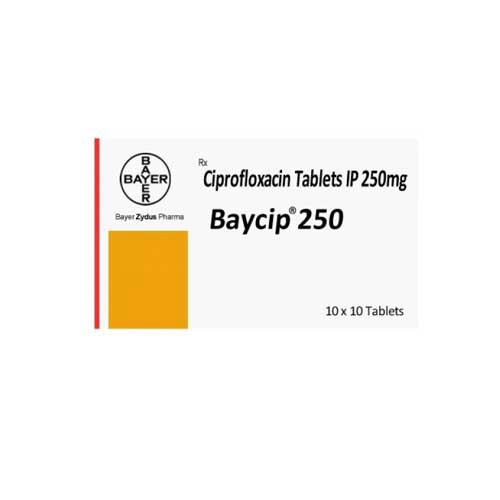
Baycip 250mg (Ciprofloxacin)
Previous product

Tadarise 5mg (Tadalafil)
A$19.30 A$51.34Price range: A$19.30 through A$51.34
Next product
Baycip 500mg (Ciprofloxacin)
A$25.00 A$45.00Price range: A$25.00 through A$45.00
A$10.00 A$24.00Price range: A$10.00 through A$24.00
In Stock
In Stock
Baycip 250mg (Ciprofloxacin)
| Pack Size | Price | Quantity | Add To Cart | |
|---|---|---|---|---|
| 30 Tablet/s | A$10.00 | |||
| 60 Tablet/s | A$18.00 | |||
| 90 Tablet/s | A$24.00 | |||
| Want to order in bulk / B2B price? Send Inquiry | ||||
×
Sorry!! Out of Stock
Sorry! Baycip 250mg (Ciprofloxacin) is out of stock
Please click below to view other similar medications.
View All Ciprofloxacin Products


Offer You Can't Resist
Free Shipping
Enjoy Free Shipping on Orders above AUD304 (USD199)
Estimate Delivery :
10 October - 17 October
50
Excellent service overall
Smooth checkout, quick dispatch, and secure delivery. Excellent service overall
 Australia
October 1, 2026
Last Updated on November 13, 2025

Description
Overview
Baycip 250mg is an oral antibiotic that contains Ciprofloxacin, which is part of the fluoroquinolone class, and is utilized for treating a variety of bacterial diseases. It’s particularly effective at treating infections of the urinary tract as well as the respiratory system, digestive tract, and certain conditions of the skin and soft tissue diseases.
The potent, broad-spectrum effect can make it an ideal choice to treat both infections that are acquired from the community as well as hospital-based diseases, and is prescribed when weaker antibiotics do not work or aren’t suitable.
What Is Ciprofloxacin?
Ciprofloxacin can be described as an artificial fluoroquinolone antibiotic that operates by blocking the replication of DNA in bacterial cells and thereby preventing the bacteria from reproducing and causing spread.
A dose of 250mg is recommended. The medication is typically used to treat moderate to mild illnesses and is often used with other medicines for more severe illnesses.
Key Benefits of Baycip 250mg
✔ Rapid Bacterial Elimination
The target is bacteria on the DNA level, which reduces the symptoms of infection quickly.
✔ Broad-Spectrum Activity
It is effective for Gram-negative as well as some Gram-positive bacteria.
✔ Treats Multiple Infections
It is used in the respiratory, urinary, skin, and GI systems.
✔ Oral Convenience
The tablet is easy to swallow and allows the treatment at home without needing hospitalization.
✔ Hospital-Grade Strength
Most often, first-line antibiotics are not effective.
Common Infections Treated
Baycip 250mg is commonly used to treat:
- Urinary tract infections (UTIs)
- Bronchitis & pneumonia
- Sinus infections (sinusitis)
- Gastrointestinal infections (e.g. traveller’s diarrhoea)
- Skin and soft tissue infections
- Prostatitis
- Ear infections (especially otitis externa)
How Ciprofloxacin Works
Baycip 250mg interferes with two essential enzymes in bacterial metabolism–DNA topoisomerase IV and gyrase, both of which are vital in bacterial DNA replication, repair, and transcription.
It stops bacteria from reproducing and ultimately leads to their death.
Mechanism of Action Table
| Action | Effect on Bacteria |
| Inhibits DNA gyrase | Stops the coiling of DNA by bacteria and replication |
| Blocks topoisomerase IV | Interrupts cell division in bacterial cells |
| Disrupts protein synthesis | Causes bacterial cell death |
| Bactericidal activity | It kills bacteria, rather than slowing the growth of bacteria |
Dosage & Administration
- Typical Dose: One tablet (250mg), taken every 12 hours
- Duration: Between 3 and 14 days, depending on the type of infection and intensity
- Method: Suck in whole, either with or without food
⚠️ do not take with dairy items such as calcium or iron supplements since they can decrease absorption.
Who Should Take Baycip 250mg?
Baycip 250mg can be used for:
- Adolescents and adults over 12 years old
- People suffering from mild to moderate bacterial infections
- Patients who require an oral treatment step down for IV antibiotics
- Patients who travel need treatment for diarrheal infections
Who Should Not Use It?
Avoid using Baycip 250mg if you:
- Are you sensitive to Ciprofloxacin or any other quinolone antibiotics
- Do you have a history of tendon ruptures or tendonitis caused by the quinolones
- If you are pregnant or nursing (consult your physician)
- Use tizanidine or antacids or any supplements that contain calcium, zinc, magnesium, or iron (can react with)
- Do have a history of seizures or QT prolongation
Side Effects
Although generally tolerated, a few patients may be affected by:
- Nausea or diarrhoea
- Headache or dizziness
- Insomnia or restlessness
- Joint pain or tendon sensitivity
- Sensitivity to sunlight
💡 You should report any pain in your tendon and seizures or severe itching to your physician immediately.
Drug Interactions
Baycip could interact with:
- Tizanidine (can cause dangerously low blood pressure)
- Antacids or supplements containing iron, calcium, zinc, or magnesium
- Theophylline (increased risk of toxicity)
- NSAIDs (may raise seizure risk)
For a better chance of avoiding issues, use Baycip 2 hours before or 4 hours following any antacid or supplement.
Storage Instructions
- Keep it in storage in a cool, dry place below 30°C
- Stay clear of moisture and direct sunlight
- Make sure that the items are out of Children’s reach
- Use only after the expiry date of the package.
FAQs – What, How, Why
-
What is Baycip 250mg used for?
It can treat many bacteria-related infections like UTIs, respiratory infections, and gastrointestinal diseases.
-
How fast does Ciprofloxacin work?
Many people start feeling better in between 24 to 72 hours, but the complete course must be finished.
-
Why can’t I take dairy with Ciprofloxacin?
Dairy products can bond with medicine and hinder its absorption, which makes it less efficient.
-
What happens if I miss a dose?
You should take it as soon as you remember. If you’re nearing the time to take your next dose, take the dose that was missed–don’t overdose.
-
Can I take Baycip for a cold or flu?
No. The treatment only targets bacteria, but not viral infections like influenza and colds.
-
How long should I take Baycip 250mg?
Following the instructions of your physician. A typical course of treatment lasts between 3 to 14 days according to the nature of your infection.
-
What should I avoid while taking Baycip?
Do not drink alcohol, use tanning beds, or exercise in a vigorous way (due to risk of tendon damage) or drive when feeling dizzy.
Additional Information
| Manufacturer | Bayer Pharmaceuticals Pvt Ltd. |
|---|---|
| Pharmaceutical | Tablet/s |
| Strength | 250 mg |
| Pack Size | 30 Tablet/s, 60 Tablet/s, 90 Tablet/s |
Related products










Reviews
There are no reviews yet.