
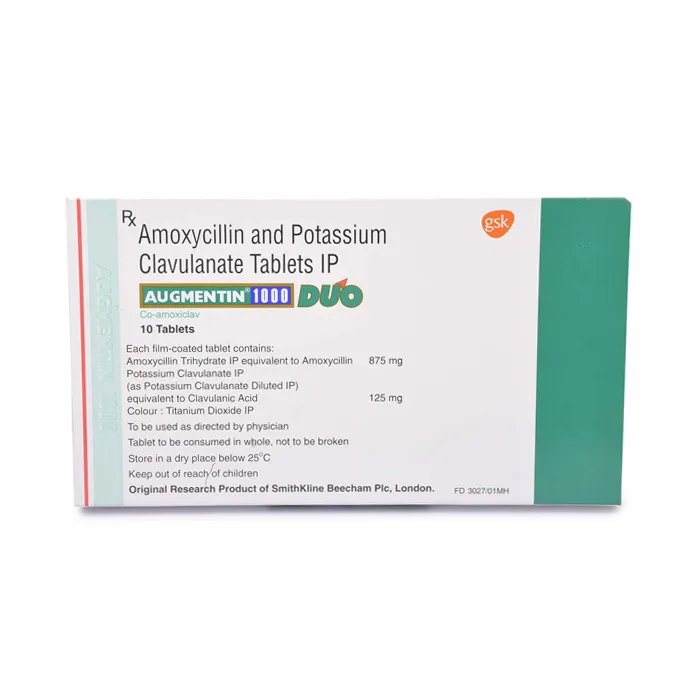
Augmentin Duo 1000mg (Amoxicillin/Clavulanic acid)
Previous product
Augmentin Duo 625mg (Amoxicillin/Clavulanic acid)
A$32.00 A$85.00Price range: A$32.00 through A$85.00
Next product
Azee 250mg (Azithromycin)
A$38.00 A$70.00Price range: A$38.00 through A$70.00
A$65.00 A$180.00Price range: A$65.00 through A$180.00
In Stock
In Stock
Augmentin Duo 1000mg (Amoxicillin/Clavulanic acid)
| Pack Size | Price | Quantity | Add To Cart | |
|---|---|---|---|---|
| 30 Tablet/s | A$65.00 | |||
| 60 Tablet/s | A$125.00 | |||
| 90 Tablet/s | A$180.00 | |||
| Want to order in bulk / B2B price? Send Inquiry | ||||
×
Sorry!! Out of Stock
Sorry! Augmentin Duo 1000mg (Amoxicillin/Clavulanic acid) is out of stock
Please click below to view other similar medications.
View All Amoxicillin/Clavulanic Acid Products
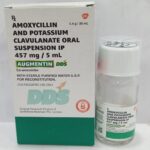
Offer You Can't Resist
Free Shipping
Enjoy Free Shipping on Orders above AUD304 (USD199)
Estimate Shipping :
02 September - 09 September
20
Easy to use and helpful
Great result…!! Happy by using Waklert 50 mg, It was 100% effective. I am happy to use this product… Thank you Modalertaustralia 🙂
 Australia
January 4, 2025
Response from Modalertaustralia
Thank you for sharing your experience! We’re glad to hear Waklert 50 mg worked well for you and that you’re happy with the results. Your feedback means a lot to us. Please continue using the medication as directed and consult a healthcare professional if you have any questions.
Last Updated on November 09, 2025

Description
What is Augmentin Duo 1000 mg?
Augmentin Duo 1000 mg is a multi-spectrum antibacterial consisting of a mixture of two potent substances:
- Amoxicillin (875 mg): A penicillin-class antibiotic that eliminates bacteria by stopping them from creating cell walls.
- Clavulanic acid (125 mg): beta-lactamase inhibitor, which shields amoxicillin from bacterial enzymes.
This is what makes Augmentin efficient against a broad variety of bacteria, including those that normally resist penicillin antibiotics.
How It Works
Certain bacteria make enzymes known as beta-lactamases that destroy specific antibiotics such as amoxicillin. Clavulanic acid inhibits these enzymes and allows amoxicillin to stay active and destroy the bacteria. This makes Augmentin a “beta-lactam/beta-lactamase inhibitor” combination.
Common Indications
Doctors recommend Augmentin Duo 1000 mg to treat a variety of bacteria-related illnesses that include:
- Respiratory tract infections (bronchitis, pneumonia)
- Sinus infections (sinusitis)
- Ear infections (otitis media)
- Skin and soft tissue infections (cellulitis, abscesses)
- Urinary tract infections (UTIs)
- Dental infections (tooth abscess, gum infections)
- Bone and joint infections
Dosage and Administration
Formulation:
- Each tablet has 875 mg of amoxicillin + 250 mg of clavulanic acid
Standard Adult Dose:
- 1 tablet (1000 mg) every 12 hours (twice each day), typically lasting 5-10 days depending on the intensity and severity of the infection.
How to Take It:
- Consume along with your meal to ease stomach discomfort and increase digestion.
- Suck whole- Do not chew or crush.
- Make sure you complete the entire course even if your symptoms begin to improve.
Who Should Take It
Augmentin Duo 1000mg is a dose that is usually used to treat:
- Adults and teenagers (usually with a body weight greater than 40kg)
- Patients suffering from severe to moderate illnesses
- The individuals who were previously unable to respond to only amoxicillin
Who Should Not Take It
Beware of taking Augmentin if you are:
- Are allergic to cephalosporins and penicillins
- Are you a victim of symptoms of the liver, or jaundice due to antibiotics
- Are suffering from severe kidney problems (dose adjustments or another medication may be needed)
Possible Side Effects
Common (more than 1 in 10 people):
- Diarrhea
- Nausea
- Soft stools
Less Common:
- Vomiting
- Skin rash
- Headache
- Dizziness
Rare but Serious:
- Allergic reactions (rash, itching, swelling, breathing difficulty)
- Liver inflammation (hepatitis, jaundice)
- Severe diarrhea due to Clostridium difficile infection
- Seizures (in extremely high doses, or renal impairment)
If you notice an extreme rash, difficulties breathing, or persistent diarrhea, discontinue the medication and consult a doctor immediately.
Drug Interactions
- Allopurinol: This increases the likelihood of developing a rash.
- Methotrexate: Risk of toxicity increases
- Oral contraceptives: May reduce effectiveness
- Anticoagulants (like warfarin): Could influence the blood clotting process
Be sure to inform your physician of any medications or supplements you’re taking.
Precautions and Monitoring
- Kidney and liver function could require monitoring when prolonged or when used for patients suffering from organ disease.
- Get plenty of fluids in order to keep well hydrated.
- Place tablets in a cool, dry place below 25°C (77°F). Keep them free of moisture.
Use in Special Populations
Pregnancy and Breastfeeding:
- The majority of people are considered to be safe in pregnancy (Category B)
- It is safe to use while nursing, but be aware that it could cause diarrhea in infants.
Children:
- Augmentin Duo tablets of 1000 mg are not advised for kids younger than 12 years or weighing less than 40kg. Children’s formulations (like syrups) can be used in place.
Frequently Asked Questions
- Can I drink alcohol with Augmentin Duo?
Yes, absolutely, however, with caution. Alcohol has no direct effect on the medication, but it can cause stomach upset and dizziness.
- What if I miss a dose?
You should take it as soon as you remember. If it’s getting close to your next dose, you can skip the one you missed. Don’t double-up.
- How long does it take to work?
The majority of people experience improvement within 2-3 days; however, the complete program must be followed to prevent relapses or resistance.
- Is it safe for long-term use?
It’s rarely used for long periods of time. Long-term use can increase the chance of adverse reactions, particularly associated with liver function or the imbalance of gut bacteria.
Key Takeaways
| Feature | Details |
| Active ingredients | Amoxicillin 875 mg + Clavulanic acid 125 mg |
| Dose | 1 tablet every 12 hours (standard adult) |
| Duration | 5–10 days (varies by infection) |
| Food | Take with food |
| Common uses | Respiratory, skin, urinary, dental infections |
| Side effects | Diarrhea, nausea, rash |
| Caution | Allergies, liver/kidney issues, drug interactions |
| Safe in pregnancy | Yes, with medical guidance |
| Alcohol | Allowed in moderation |
Final Thoughts
Augmentin Duo 1000 mg is a potent, well-studied antibiotic for combating a wide range of infections, particularly when amoxicillin resistance is a problem. Although it is very effective, it’s essential to use it precisely as directed, be aware of any unusual negative side effects, and finish all of the course, even if you start feeling better.
Always speak with your physician prior to introducing or stopping any medicine.
Additional Information
| Manufacturer | Glaxo SmithKline Pharmaceuticals Ltd |
|---|---|
| Pharmaceutical | Tablet/s |
| Strength | 1000 mg |
| Pack Size | 30 Tablet/s, 60 Tablet/s, 90 Tablet/s |
Related products





Recently Viewed
Reviews
There are no reviews yet.