
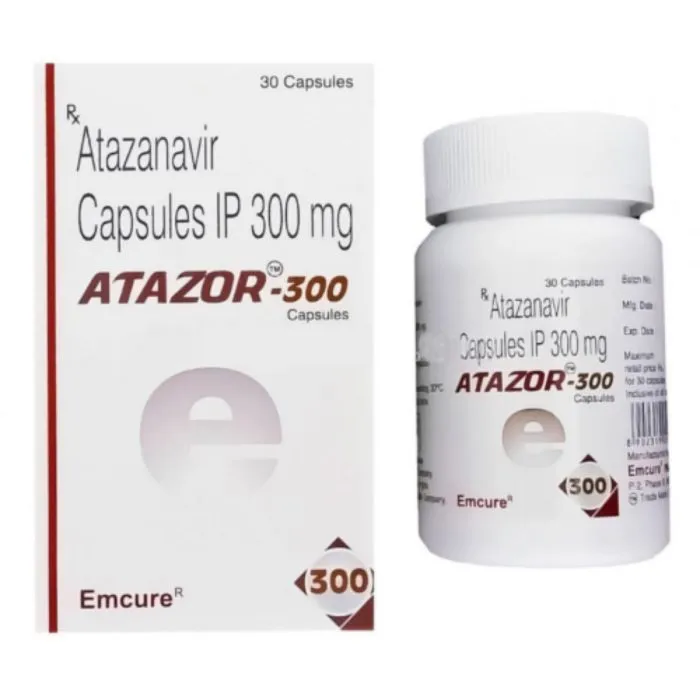
Atazor (Atazanavir)
Previous product
Prosteride 5mg (Finasteride)
$30.00 $81.00Price range: $30.00 through $81.00
Next product
Efcure 600mg (Efavirenz)
$89.00 $250.00Price range: $89.00 through $250.00
$80.00 $205.00Price range: $80.00 through $205.00
In Stock
In Stock
Atazor (Atazanavir)
| Pack Size | Price | Quantity | Add To Cart | |
|---|---|---|---|---|
| 30 Capsule/s | $80.00 | |||
| 60 Capsule/s | $150.00 | |||
| 90 Capsule/s | $205.00 | |||
| Want to order in bulk / B2B price? Send Inquiry | ||||
×
Sorry!! Out of Stock
Sorry! Atazor (Atazanavir) is out of stock
Please click below to view other similar medications.
View All Atazanavir Products
Offer You Can't Resist
Free Shipping
Enjoy Free Shipping on Orders above AUD304 (USD199)
Estimate Shipping :
28 August - 04 September
32
Fast Support
Customer support was excellent. My questions were answered promptly and the team was very helpful throughout the process. The order was handled efficiently and professionally
 Australia
August 15, 2026
Last Updated on October 31, 2025

Description
What is Atazor?
Atazor is a drug that contains atazanavir, an antiretroviral medicine employed in treating Human Immunodeficiency Virus (HIV) disease. It’s part of the group of medicines known as protease inhibitors, which aid in controlling HIV by stopping HIV from spreading throughout the body.
Atazanavir is typically used as a part of a combination treatment to manage HIV and improve the immune system, as well as reduce the risk of HIV-related complications.
How Does Atazor Work?
Atazanavir is a drug that blocks its pro-HIV-1 protease, which is essential to the process of replication. In blocking this enzyme, Atazor prevents the virus from generating infectious particles and reduces the level of viral burden within the bloodstream.
This aids in maintaining the strength of the immune system, which slows the development of HIV into Acquired Immunodeficiency Disorder (AIDS).
Why is Atazor Prescribed?
Atazor is prescribed to treat:
- The management of HIV-1 infections among adolescents and adults who are 3 and over.
- Most often, antiretrovirals are used along with other medicines as part of a highly active antiretroviral therapy (HAART).
- The reduction of HIV within the body, enhancing health as well as reducing HIV the risk of HIV transmission.
Dosage and Administration
Recommended Dosage
- The recommended dosage for adults can be 300 mg per day and is often used in conjunction with cobicistat or ritonavir for a boost in its effects.
- The dosage can differ for children, based on weight, body mass and physical activity.
Administration Instructions
- Consume Atazor orally along with your food in order to increase absorption.
- Drink the tablets completely and with water. Don’t crush or chew.
- Do this at the same time every day to ensure regular levels of the drug.
Important Notes
- Monitoring regularly by a health care professional is vital to evaluate the effectiveness of any medication and its side effects.
- The strictness of the prescribed regimen is essential to prevent resistance.
Safety and Side Effects
The most common side effects can be:
- The appearance of jaundice, or the yellowing of eyes and skin (due to an increase in the amount of bilirubin)
- Nausea and vomiting
- Diarrhea
- Headache
- Rash
Rarely do you experience serious side effects; however, they can result in severe reactions to allergies or liver disorders. It is imperative to seek medical attention immediately in the event of symptoms like an extreme rash, breathing problems, or recurring abdominal discomfort.
Precautions and Contraindications
- Discuss with your physician any liver diseases or other medical issues.
- Atazor can interact with a variety of medicines; be sure to provide a complete medicine list to your doctor.
- Do not recommend during pregnancy unless the benefits outweigh the risks.
- Do not use certain medicines like rifampicin, St. John’s Wort, as they can affect its effectiveness.
Atazor (Atazanavir) Key Details
| Feature | Details |
| Active Ingredient | Atazanavir |
| Drug Class | Protease inhibitor |
| Dosage Form | Oral tablets |
| Typical Dose | 300 mg once daily (with booster) |
| Indications | HIV-1 infection management |
| Administration Route | Oral |
| Common Side Effects | Jaundice, nausea, headache, diarrhea |
| Precautions | Liver disease, drug interactions |
| Storage | Keep it below 30°Celsius, and protect it from water |
Frequently Asked Questions (FAQs)
-
What is Atazor used for?
Atazor combats HIV-1 through a blockade of viral replication.
-
How should I take Atazor?
Do it every day in conjunction with your food. Take it precisely as directed by your physician.
-
Can Atazor cure HIV?
No, the answer is no, it aids in controlling HIV; however, it does not eliminate the virus.
-
What are common side effects?
Eyes and skin yellowing, nausea, vomiting, and headaches.
-
Can I take Atazor during pregnancy?
Ask your physician for advice. It can only be utilized when the benefits are greater than the potential risks.
-
Are there drug interactions?
Yes, Atazor is indeed a drug that interacts with a variety of medicines; consult your health physician.
-
What if I miss a dose?
Take it as quickly as you can, unless you are close to your next dose. Avoid taking two doses.
-
Can Atazor cause jaundice?
Yes, an increase in bilirubin can result in skin yellowing as well as eyes.
-
How is Atazor stored?
Keep it in a cool, dry location within 30°C and away from moisture.
-
Is Atazor safe for children?
It’s approved for use for children 3 years old and over under the supervision of a medical professional.
Conclusion
Atazor (Atazanavir) has an essential role in the efficient treatment of the HIV-1 infection, improving the outcomes of patients by decreasing viral load as well as supporting the immune system. Strict compliance with the regimen prescribed and routine medical checks are crucial to maximise the benefits of this drug and minimize risks.
If you or your relative is suffering from HIV, you should consult with your physician about including the drug atazanavir in your treatment regimen.
Related products
Reviews
There are no reviews yet.