
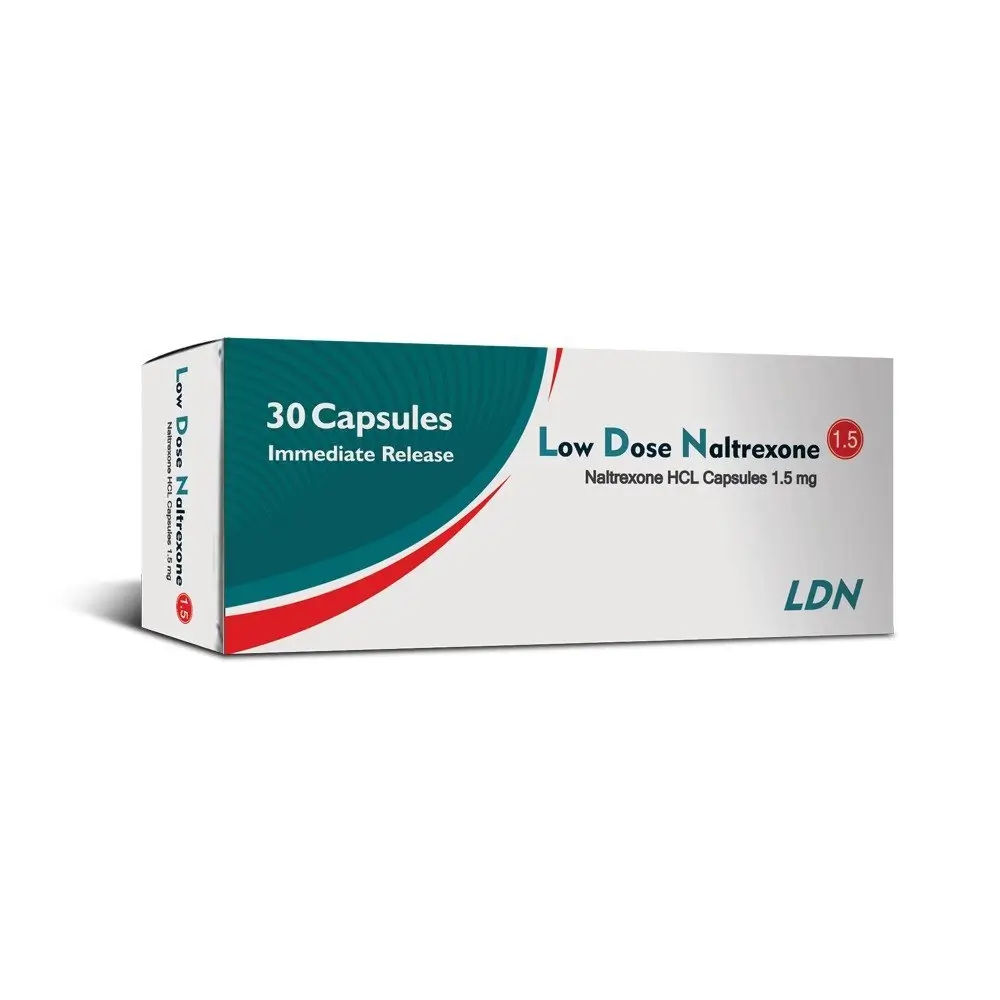
LDN 1.5mg (Naltrexone)
Previous product

Lamotrig 100mg DT (Lamotrigine)
A$35.00 A$83.70Price range: A$35.00 through A$83.70
Next product
LDN 3mg (Naltrexone)
A$48.00 A$159.00Price range: A$48.00 through A$159.00
A$33.00 A$105.00Price range: A$33.00 through A$105.00
In Stock
In Stock
LDN 1.5mg (Naltrexone)
| Pack Size | Price | Quantity | Add To Cart | |
|---|---|---|---|---|
| 60 Capsule/s | A$33.00 | |||
| 120 Capsule/s | A$58.00 | |||
| 240 Capsule/s | A$105.00 | |||
| Want to order in bulk / B2B price? Send Inquiry | ||||
×
Sorry!! Out of Stock
Sorry! LDN 1.5mg (Naltrexone) is out of stock
Please click below to view other similar medications.
View All Naltrexone Products
Offer You Can't Resist
Free Shipping
Enjoy Free Shipping on Orders above AUD304 (USD199)
Estimate Delivery :
17 October - 24 October
20
Excellent service overall
Smooth checkout, quick dispatch, and secure delivery. Excellent service overall
 Australia
October 1, 2026
Last Updated on April 19, 2026

Description
LDN 1.5mg (Low Dose Naltrexone): A Comprehensive Guide
LDN 1.5mg, or Low Dose Naltrexone, is an antidepressant that is receiving more interest due to its potential advantages in the treatment of various chronic diseases that include autoimmune disorders, as well as chronic pain and some neurological diseases. Contrary to the typical more powerful doses of naltrexone prescribed to treat alcohol and opioid dependency, LDN is prescribed at significantly lower dosages, generally in the range of 1.5mg to 4.5mg per day.
This article will give an in-depth overview of LDN 1.5mg, what it does, what it is, how it operates, and what it is used for, the most common dosage guidelines, safety concerns, as well as other information, in order to assist you with understanding this exciting therapeutic possibility.
What is LDN 1.5mg?
LDN is shorthand for LDN stands for Low Dose Naltrexone, a medication originally designed with higher dosages (typically 50mg) to treat addiction. When doses are higher, the drug is an opioid antagonist and blocks opioid receptors to block the high euphoric effects of drugs or alcohol.
When doses are low, for instance, 1.5mg, LDN has a distinct effect. It blocks the opioid receptor for about a couple of hours and then causes an increased body’s own manufacturing of endorphins as well as Enkephalins – peptides that manage the immune system, pain, and mood.
The immune system’s modulation and the increase are the foundation for the potential benefits of LDN for treating many diseases.
How Does LDN Work?
The specific mechanisms that cause LDN are still being investigated. However, several key outcomes have been seen:
- Immune System Modulation: LDN can reduce inflammation through influencing the activities of microglia, the immune cells located in the brain, as well as the nervous system cells that are involved in chronic inflammation.
- Increased Endorphin Production: Through temporarily blocking opioid receptors, LDN causes the body to make greater amounts of natural opioids that may improve mood and reduce feelings of pain.
- Anti-inflammatory Properties: LDN could reduce proinflammatory Cytokines and may promote a more well-balanced immune system.
Due to these functions, LDN is thought to aid in regulating immune reactions that are abnormal, which are associated with autoimmune conditions, as well as reduce chronic pain and fatigue.
Common Conditions Treated with LDN 1.5mg
While LDN has not been specifically approved for all of these purposes by regulatory bodies, it’s clinical evidence and new research suggest its use off-label for a variety of conditions:
- Multiple Sclerosis (MS): Patients have reported improvements in symptoms with reduced fatigue as well as improved mobility.
- Fibromyalgia: LDN could help ease general pain as well as improve sleep quality.
- Crohn’s Disease and Other Inflammatory Bowel Diseases: LDN has been linked to decreased inflammation as well as relief from symptoms.
- Chronic Fatigue Syndrome (CFS): Benefits could include improved endurance and lower pain.
- Autoimmune Disorders: Lupus, the rheumatoid joint, as well as Hashimoto’s thyroiditis, can be helped by immune modulation.
- Cancer Supportive Care: A few studies are looking at the role of LDN in improving overall quality of life as well as the immune response among cancer patients.
- Neuropathic Pain: The effect of LDN on microglial cells can help reduce pain related to nerves.
Dosage and Administration of LDN 1.5mg
- Typical Dose Range: 1.5mg from 4.5mg each day, generally consumed at night.
- Starting Dose: Most healthcare professionals begin patients at 1.5mg and then gradually increase doses based on the patient’s response and tolerance.
- Administration: Oral capsules, tablets, or pills are typically taken on an empty stomach.
- Duration: LDN is typically used in the long term; however, treatment duration depends on the severity of the disease and reaction.
Since LDN needs compounding into small doses, it’s usually recommended by health professionals who are familiar with the off-label usage of LDN.
Potential Side Effects
LDN is generally well-tolerated at small doses. Its side effects tend to be temporary and mild, but they can be:
- Sleep Disturbances: The vivid dream or the insomnia, particularly at night.
- Digestive Issues: Nausea, abdominal cramping, or constipation.
- Headaches
- Mood Changes: Very rarely, patients complain of an increase in anxiety or irritation.
The majority of side effects disappear when dose adjustments are made, or by altering the timing or frequency of the dosage.
Safety and Precautions
- Not Suitable for Everyone: Anyone who is currently taking opioids must stay clear of LDN since it inhibits opioid receptors and may trigger withdrawal symptoms.
- Pregnancy and Breastfeeding: The safety information available is not extensive, so use of this product during breastfeeding or during pregnancy must be done under supervision from a physician.
- Pre-existing Liver Conditions: Naltrexone metabolism is controlled by the liver. As a result, people suffering from liver disease require constant monitoring.
- Interactions: The LDN drug can interact with different medicines, such as opioids, and some immune-modulating medications.
Always speak with your doctor before beginning LDN to confirm that it’s appropriate for your personal health requirements.
Why Take LDN 1.5mg at Night?
LDN is usually taken before the time of bed because its blockade of the opioid receptor lasts only for a short period of time. If you use it during the night, the short-term blockade occurs with your body’s production of endorphins. It also enhances the rebound effect, which promotes the release of more endorphins.
How to Obtain LDN 1.5mg
Since standard naltrexone pills are sold in doses of 50mg, LDN at 1.5mg requires the use of a special compounding process by pharmacies. It is essential to purchase LDN from a reliable provider that is able to create precisely the dosage.
The Growing Interest in LDN
The rising acceptance of LDN can be attributed to its effectiveness as a low-cost and moderately risky option for treating difficult chronic diseases with few treatment options. A lot of patients have reported improved levels of quality of life, less discomfort, and lessening symptoms, but without the serious adverse effects that are common to immunosuppressive medications.
The research continues to increase the understanding of LDN’s advantages, and even though larger-scale clinical trials are necessary, evidence from the present and reports from anecdotes are encouraging.
Summary
LDN 1.5mg (Low Dose Naltrexone) is a distinct drug that offers pain- and immune-modulating capabilities. The medication is prescribed off-label to treat autoimmune disorders, as well as chronic pain as well as inflammation, by stimulating the body’s opioid system while reducing inflammation.
Important points to keep in mind:
- LDN differs from standard-dose Naltrexone works differently.
- It’s taken in extremely tiny doses. It is usually taken during the evening.
- The side effects are typically only temporary and mild.
- The procedure requires a prescription as well as specially trained compounding.
- Make sure to use it under the supervision of a physician, particularly if you’re using other medicines.
If you’re considering LDN 1.5mg in your treatment plan, talk with your doctor regarding whether this is appropriate for your situation.
Additional Information
| Active Ingredient: | Naltrexone |
|---|---|
| Indication: | Opioid Dependence, Alcohol dependence |
| Manufacturer: | Centurion Laboratories Pvt. Ltd. |
| Strength: | 1.5mg |
| Packaging: | 10 Capsules in 1 Strip |
| Delivery Time: | 7 To 15 days |
Related products





Reviews
There are no reviews yet.