

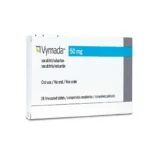
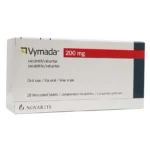
Vymada 100mg (Sacubitril/Valsartan)
Previous product

Vymada 50mg (Sacubitril/Valsartan)
$64.00 $175.00Price range: $64.00 through $175.00
Next product

Pregalin M 75mg (Pregabalin)
$35.00 $150.00Price range: $35.00 through $150.00
$84.00 $235.00Price range: $84.00 through $235.00
In Stock
In Stock
Vymada 100mg (Sacubitril/Valsartan)
| Pack Size | Price | Quantity | Add To Cart | |
|---|---|---|---|---|
| 28 Tablet/s | $84.00 | |||
| 56 Tablet/s | $160.00 | |||
| 84 Tablet/s | $235.00 | |||
| Want to order in bulk / B2B price? Send Inquiry | ||||
×
Sorry!! Out of Stock
Sorry! Vymada 100mg (Sacubitril/Valsartan) is out of stock
Please click below to view other similar medications.
View All Sacubitril/Valsartan Products
Offer You Can't Resist
Free Shipping
Enjoy Free Shipping on Orders above AUD304 (USD199)
Estimate Shipping :
30 June - 07 July
31
Last Updated on June 27, 2026

Description
Overview
Vymada 100mg is a fixed-dose oral medicine that contains Sacubitril 50 mg in addition to Valsartan 50 mg (total 100mg for each tablet), which is designed for the treatment of heart failure with reduced ejection fraction (HFrEF). The combination drug marks an important breakthrough in cardiology through the combination of two different mechanisms: inhibition of neprilysin by Sacubitril and angiotensin-receptor blockade via Valsartan.
Vymada has been proven clinically to significantly reduce the chance of death from cardiovascular causes and hospitalization caused by heart failure. It enhances the function of the heart and the quality of life for patients suffering from chronic heart failure by regulating the neurohormonal pathways that contribute to the progression of heart failure.
Composition
- Sacubitril: 50 mg
- Valsartan: 50 mg
- Dosage Form: Oral tablet
- Packaging: Blister packs containing 14 or28 tablets
Therapeutic Class
- Angiotensin Receptor-Neprilysin Inhibitor (ARNI)
- Cardiovascular agent
- Heart failure treatment
Indications
Vymada 100mg is indicated for:
- Treatment for patients with symptomatic chronic heart failure that has a lower ejection percentage (NYHA Class II-IV).
- To reduce the risk of death from cardiovascular disease and the need for hospitalization due to heart failure.
Mechanism of Action
Vymada combines two active components:
- Sacubitril: An inhibitor of neprilysin that blocks the degradation of natriuretic proteins (e.g., ANP, BNP) and bradykinin and other vasoactive proteins. It increases vasodilation, diuresis, natriuresis, and the inhibition of pathological growth and fibrosis within the heart.
- Valsartan: An angiotensin II receptor blocker (ARB) which blocks the angiotensin II and causes vasodilation and reduced aldosterone release, as well as decreased water and sodium retention.
In combination, they decrease the workload of the heart, reduce blood pressure, stop unintentional cardiac remodelling, and boost the performance of the cardiac system.
Dosage and Administration
- Starting Dose: Patients who are not already using ACE inhibitors or ARBs begin by taking 50 mg two times a day (sacubitril 24 mg/ valsartan 26 mg/tablet, which is less than the dose of 100 mg) for a test of the level of tolerance.
- Maintenance Dose: Most often, it is titrated until 100 mg once each day (sacubitril 49 mg/ valsartan 51 mg/tablet) before increasing to a dose goal of 200 mg twice a day in the dose that is tolerated.
- Administration: Consume orally, either in combination with or without food, at least twice a day.
- Important: An unwashed period of 36 hours is necessary when changing between ACE inhibitors, to Vymada, to decrease the risk of angioedema.
Clinical Benefits
- Significantly decreases mortality from cardiovascular disease and heart failure hospitalizations when compared with ACE inhibitors.
- Enhances physical and mental capacity as well as symptoms when you suffer from chronic heart failure.
- Reduces the risk of adverse cardiac remodeling and increases left ventricular performance.
- Improves diuresis and natriuresis, which results in better fluid balance.
- Enhances the quality of life for patients and also improves prognosis.
Side Effects
Common Side Effects
- Hypotension (low blood pressure)
- Hyperkalemia (high potassium levels)
- Cough (less frequent than with ACE inhibitors)
- Dizziness
- Fatigue
- Renal impairment (monitor kidney function)
Serious Side Effects (rare)
- Angioedema (swelling of face, lips, tongue, or throat)
- Severe hypotension leading to syncope
- Kidney failure
- Allergic reactions
Contraindications
- Angioedema that has been linked to prior ACE inhibitors or ARB treatment.
- Concomitant use with ACE inhibitors (without 36-hour washout).
- Pregnancy and lactation.
- Severe hepatic impairment.
- It is known that there is hypersensitivity to Sacubitril, Valsartan, or tablets in general.
Precautions
- Keep track of blood pressure regularly to stay clear of hypotension-causing symptoms.
- Monitor renal function and the level of potassium in your blood regularly.
- Averting patients who have kidney artery stenosis or reduction.
- It is not recommended for patients with severe liver impairment or in end-stage renal disease.
- Take care when treating seniors due to the increased likelihood of having hypotension.
Drug Interactions
- Do not use concurrently when taking ACE inhibitors and aliskiren when treating patients with diabetes.
- Beware of diuretics that contain potassium and potassium supplements, as well as salt substitutes that contain potassium.
- The NSAIDs can reduce the antihypertensive effects and raise the risk of kidney impairment.
- CYP450 interactions aren’t too severe; however, it is important to monitor if you are using it when combined with kidney-related drugs or electrolytes.
Monitoring
- Heart rate and blood pressure in the course of treatment.
- Renal function tests (serum creatinine, eGFR).
- Electrolytes, particularly potassium.
- Signs of angioedema or allergic reactions.
- Heart failure symptom assessment regularly.
Storage
- Store at controlled room temperature (20°C to 25°C).
- Store tablets in their original containers, safe against light and moisture.
- Be sure to keep away from young children.
- Don’t use the product after the expiration date.
Patient Counseling
- Consume Vymada 100mg as prescribed two times a day.
- Don’t stop taking the medicine immediately; talk to your physician before making any changes.
- Tell your physician if you have swelling on the lip, cheeks, or face or breathing difficulties.
- Do not consume potassium-rich foods or supplements unless you are advised by your doctor.
- Take a slow rise from lying or sitting to reduce confusion.
- Participate in all follow-ups scheduled and test results in the laboratory.
Clinical Evidence
The PARADIGM-HF study was a major study that involved more than 8,000 patients and found that the combination of Sacubitril/Valsartan decreased the chance of heart death and hospitalization for heart failure by 20% compared to the standard ACE inhibitor, which demonstrates the advantages of Vymada in the management of heart failure.
Why Choose Vymada 100mg?
- Combining two heart failure therapies in one tablet.
- Research has shown that improving survival can decrease hospitalizations.
- Enhances the quality and severity of the quality of life.
- It is well-liked and has a moderate side effect profile.
- Reduces treatment time by replacing ACE inhibitors and ARBs.
Summary
Vymada 100mg (Sacubitril/Valsartan) is a cornerstone therapy for patients with chronic heart failure and reduced ejection fraction. With its dual effect on the neprilysin inhibitor and the angiotensin receptor blockade, it can effectively decrease deaths and morbidity. If used in conjunction with proper monitors and educating the patient, Vymada offers improved clinical outcomes as well as a higher standard of living for patients suffering from heart failure.
Additional Information
| Manufacturer | Novartis India Ltd |
|---|---|
| Pharmaceutical | Tablet/s |
| Strength | 100 mg |
| Pack Size | 28 Tablet/s, 56 Tablet/s, 84 Tablet/s |
Related products




Reviews
There are no reviews yet.