
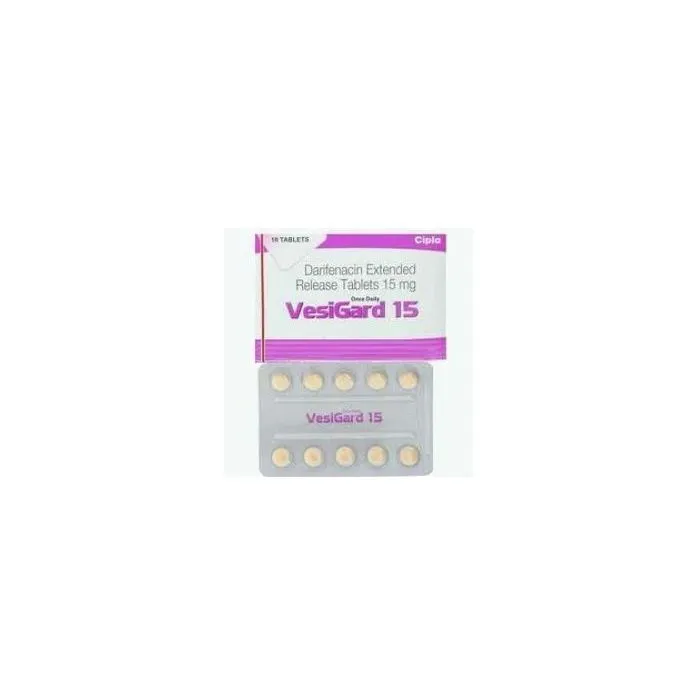
Vesigard 15mg (Darifenacin)
Previous product

Danogen 50mg (Danazol)
A$31.50 A$64.93Price range: A$31.50 through A$64.93
Next product

Prulin 600mg (Prulifloxacin)
A$52.50 A$126.00Price range: A$52.50 through A$126.00
A$56.70 A$136.50Price range: A$56.70 through A$136.50
In Stock
In Stock
Vesigard 15mg (Darifenacin)
| Pack Size | Price | Quantity | Add To Cart | |
|---|---|---|---|---|
| 30 Tablet/s | A$56.70 | |||
| 60 Tablet/s | A$92.75 | |||
| 90 Tablet/s | A$136.50 | |||
| Want to order in bulk / B2B price? Send Inquiry | ||||
×
Sorry!! Out of Stock
Sorry! Vesigard 15mg (Darifenacin) is out of stock
Please click below to view other similar medications.
View All Darifenacin Products


Offer You Can't Resist
Free Shipping
Enjoy Free Shipping on Orders above AUD304 (USD199)
Estimate Shipping :
01 July - 08 July
23
Last Updated on June 27, 2026

Description
Introduction
Vesigard 15mg is a prescription medication containing Darifenacin, a selective muscarinic antagonist, used mostly to treat the symptoms of bladder overactivity (OAB). It is used to treat frequent urination and incontinence due to urge, aiding in improving the health of patients who suffer from issues with bladder control.
Darifenacin is a drug that relaxes the bladder muscles. This results in fewer involuntary contractions and thereby expands the bladder’s capacity. Vesigard is a viable treatment for people suffering from OAB symptoms. It provides relief from urgency in the urinary tract and frequency.
Composition
- Active Ingredient: Darifenacin hydrobromide 15 mg
- Excipients: The right fillers and binders will ensure stable tablets as well as bioavailability.
Mechanism of Action
Darifenacin is an antagonist competitive to muscarinic receptors. It’s specifically targeted for the M3 subtype, which is the main reason for bladder muscle contraction. Through blocking the M3 receptors, Darifenacin blocks involuntary detrusor muscle contractions, which cause signs associated with an overactive bladder, like frequent and intense.
This specific action reduces the amount of unintentional bladder contractions, without significantly impacting the other muscarinic receptors. This reduces adverse effects on other organs.
Indications
Vesigard 15mg is recommended for:
- Treatment for an overactive bladder includes signs of urge urinary incontinence
- Urinary urgency and frequency increase are associated with OAB
- Patients who fail or are not tolerant of other treatments for antimuscarinics
Dosage and Administration
Recommended Dosage:
- The recommended starting dose for Vesigard will be 7.5 mg daily.
- Based on the individual’s response and tolerance, the dosage could be increased according to individual reaction and tolerability. It can be increased up to 15 mg per day within two weeks.
- The recommended dosage is 15 mg per day.
Administration Instructions:
- Vesigard tablets must be consumed by mouth, usually once a day, and with or without food.
- Take the tablet in one swallow with water. Don’t break, chew, or cut the tablet in two pieces.
- Keep hydrated unless it is contraindicated.
- A consistent daily dose every day is recommended for maintaining the blood level in a steady manner.
Contraindications
Vesigard 15mg shouldn’t be used by patients who suffer from:
- Hypersensitivity to Darifenacin and any other excipients that are part of the formulation
- Urinary retention
- Gastric retention
- Uncontrolled narrow-angle glaucoma
- Severe hepatic impairment
Precautions and Warnings
- Urinary Retention: Be cautious when using this medication in those with medical conditions that can lead to urinary retention.
- Glaucoma: Not recommended in patients suffering from small-angle glaucoma. Take care when treating open-angle glaucoma.
- Liver Impairment: The need for dose adjustment isn’t necessary for mild or moderate liver impairment, but it should be avoided in extreme cases.
- Renal Impairment: Beware of patients suffering from severely impaired renal function.
- Elderly Patients: Could be more sensitive to actions of the anticholinergic system; watch for any adverse reactions.
- Cognitive Impairment: The effects of anticholinergic medications can cause confusion and memory issues in people who are elderly.
Side Effects
Common side effects from Vesigard 15mg are usually minimal and short-lived. The most common side effects are:
- Dry mouth (most frequent)
- Constipation
- Blurred vision
- Dizziness
- Headache
- Nasopharyngitis (common cold symptoms)
Less common but serious side effects:
- Urinary retention
- Allergic reactions such as rash, itching, swelling
- Tachycardia (rapid heartbeat)
- Confusion or hallucinations, especially in elderly patients
If you experience severe adverse side effects or allergic reactions develop, take the medication off and get medical help immediately.
Drug Interactions
- CYP3A4 inhibitors: Darifenacin is converted into metabolites through CYP3A4. In conjunction with strong inhibitors such as ketoconazole and erythromycin can cause an increase in blood sugar levels, which requires the adjustment of the dose.
- Other anticholinergics: Use in conjunction with anticholinergic medications can cause more side effects.
- Potassium channel blockers (e.g., quinidine): Use caution due to potential QT prolongation.
- Drugs causing QT prolongation: Take care when interacting with other agents that can prolong QT intervals.
Use in Special Populations
- Pregnancy: There are no safety data available; only use if absolutely needed or if the risks outweigh the benefits.
- Lactation: It is not known if the excretion occurs in human milk. Be cautious.
- Pediatric Use: Insufficient evidence of safety and efficacy among children.
Storage Instructions
- Keep Vesigard tablets at room temperature (15–30°C).
- Be sure to shield yourself from light and moisture.
- Be sure to keep away from children.
- Do not uses after the expiry date.
Patient Counseling Information
Patients should be advised to:
- Use the medicine as directed and consistently every day.
- Inform your doctor about symptoms of urinary retention or severe constipation, or problems with vision, immediately.
- Beware of activities that require mental alertness until people know how this drug impacts them, in the event of blurred vision or dizziness.
- Maintain adequate hydration.
- Tell their physician of all the medications they’re using to prevent any interactions with their medications.
Advantages of Vesigard 15mg
- Antagonism of the M3 receptor selectively decreases symptoms of bladder overactivity.
- Once-daily dosing improves patient compliance.
- It is generally well-tolerated and has an easily manageable profile of side effects.
- Ideal for those who are intolerant of other antimuscarinic medications.
- Enhances the quality of life for patients by reducing urinary urgency as well as incidents of incontinence.
Conclusion
Vesigard 15mg (Darifenacin) is an effective and specific treatment for overactive bladders that targets the primary symptoms, such as frequency, urgency, and urges incontinence. The targeted method of action allows for efficient control of symptoms with lesser overall anticholinergic effects than more selective drugs.
If used in accordance with medical advice, Vesigard can significantly improve bladder control and overall health. Like all medicines, following the doses prescribed and monitoring for adverse reactions is vital to ensure optimal results.
Related products







Reviews
There are no reviews yet.