
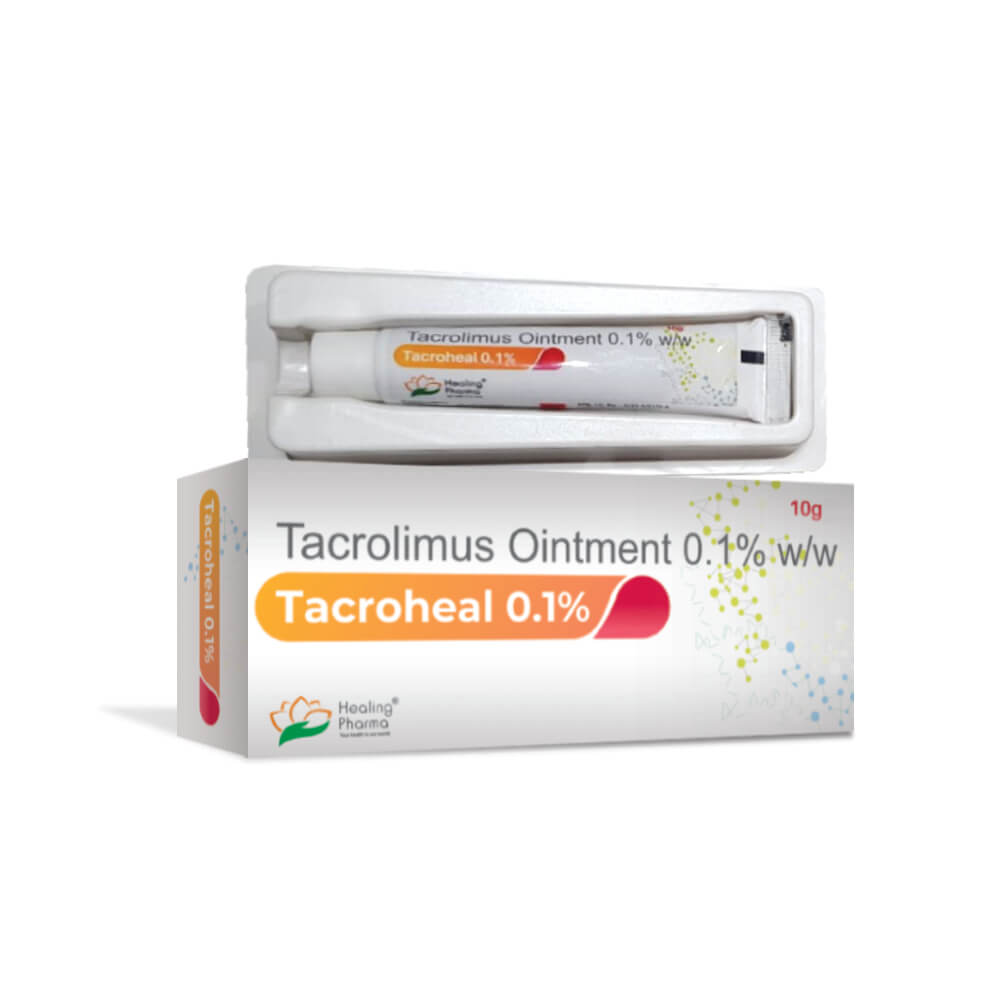
Tacroheal 0.1% Ointment (Tacrolimus)
Previous product
Tacroheal 2mg (Tacrolimus)
$60.00 $150.00Price range: $60.00 through $150.00
Next product
TAD 600mg (Glutathione)
$250.00 $730.00Price range: $250.00 through $730.00
$14.00 $50.00Price range: $14.00 through $50.00
In Stock
In Stock
Tacroheal 0.1% Ointment (Tacrolimus)
| Pack Size | Price | Quantity | Add To Cart | |
|---|---|---|---|---|
| 1 Tube | $14.00 | |||
| 3 Tube/s | $32.00 | |||
| 6 Tube/s | $50.00 | |||
| Want to order in bulk / B2B price? Send Inquiry | ||||
×
Sorry!! Out of Stock
Sorry! Tacroheal 0.1% Ointment (Tacrolimus) is out of stock
Please click below to view other similar medications.
View All Tacrolimus Products
Offer You Can't Resist
Free Shipping
Enjoy Free Shipping on Orders above AUD304 (USD199)
Estimate Shipping :
20 June - 27 June
26
Best quality
Quality medicines at reasonable prices. Delivery was faster than expected, and everything arrived in perfect condition.
 Australia
May 24, 2026
Last Updated on June 11, 2026

Description
Tacroheal 0.1% Ointment is a topical treatment that contains the key component tacrolimus and is an immunosuppressant. It’s primarily used for treating the condition of eczema (also called Atopic Dermatitis) for adults as well as children who aren’t responding effectively to other treatment options, including corticosteroids.
How Tacroheal (Tacrolimus) Works
Tacrolimus is part of a group of medications known as Calcineurin Inhibitors. It acts by blocking the immune system’s cells, particularly T-cells, which contribute to the process of inflammation that can lead to flare-ups of eczema. Inhibiting the immune response within the skin, tacrolimus can reduce redness, inflammation, and itching that are caused by the condition.
In contrast to corticosteroids, which directly reduce the skin’s inflammation, tacrolimus works more selectively on immune cells, which makes it an ideal choice for the long-term treatment of ailments such as eczema, where prolonged steroid treatment may not be the most effective because of the potential for adverse consequences.
Indications for Use
Tacroheal 0.1% ointment is mostly used to:
- Atopic Dermatitis (Eczema):
- Moderate to severe cases: Tacroheal is particularly effective in the treatment of cases of eczema for which corticosteroids applied to the skin aren’t suitable or are not effective.
- The product can also be utilized on areas that are sensitive to the body, like the skin folds and face, when steroid treatment is not recommended because of the possibility of thin skin.
- Steroid-Sensitive Dermatitis:
- When patients are having difficulties applying steroid creams because of negative side effects, such as skin loss or other negative reactions, tacrolimus is a viable alternative.
Dosage and Administration
- Application: Tacroheal 0.1% ointment must be used two times a day on areas that are affected by the sun. The ointment is to be applied in a light layer on the skin areas that are affected.
- Duration: The length of treatment is contingent on the severity of the condition and how it responds to treatment. You must comply with the advice of your physician regarding the duration of applying the treatment.
- Avoid: Tacroheal is not recommended to be applied to skin that is open or infected. The ointment must be sprayed only on regions that suffer from eczema.
How to Apply Tacroheal Ointment
- Wash and Dry: Clean and dry the affected area before applying the ointment.
- Apply Thin Layer: Make a small amount of Tacroheal Ointment, and then apply an even layer of it to the area affected.
- Massage In: The ointment is gently rubbed into the skin until it’s completely absorbed.
- Wash Hands: When you have applied the ointment, cleanse your hands with a thorough wash so that you don’t spread the medicine onto other areas of your body or other people.
Side Effects
Like all medications, Tacroheal can cause side effects. The most frequent negative side effects are generally moderate and may be:
- Burning or Stinging: It is possible to feel discomfort, burning, or an itching feeling upon applying for the first few days after usage. It usually gets better when your skin is accustomed to the drug.
- Skin Irritation: Dryness, redness, or skin irritation can be a result, especially in the first couple of days after usage.
- Increased Risk of Infections: Since tacrolimus blocks a portion of the immune system, it increases the chance of developing skin infections, particularly in the case of broken or damaged skin.
- Headache: Patients may suffer headaches as a result.
- Skin Cancer and Lymphoma Risk: There are concerns based on research in animals in which long-term usage of tacrolimus can raise the likelihood of some types of cancers, including those with lymphoma or skin cancer. But, the risk factors have not been conclusively verified in human studies, and tacrolimus is usually considered to be safe for short- or long-term use with the supervision of a medical professional.
Precautions and Warnings
- Not for Long-Term Use: Tacroheal is usually used to treat the short-term treatment of flare-ups in eczema. The long-term usage, particularly for large parts that cover the entire body, needs to be closely monitored by a medical professional.
- Use on Broken Skin: Tacrolimus shouldn’t be applied to areas of the skin that are damaged, infected, or extremely irritated, as it could increase the chance of absorption into the system and adverse effects.
- Sun Sensitivity: Tacroheal may cause your skin to become more sensitive to sunlight. It is suggested not to expose you to too much sun or to wear sun protection (e.g., sunscreen, sunblock, or protective clothes) during treatment with this medication. It is important not to expose yourself to the sun when you’re taking the treatment.
- Not for Use in Children Under 2: Tacroheal 0.1% ointment recommended for infants under 2 years old. If a child is between 2 and 16 years of age, the product should be administered only with the guidance of a medical doctor.
- Avoid Eye Contact: Tacrolimus is not recommended to be used close to the eyes. Additionally, it is recommended to wash your hands shortly after applying the ointment to prevent accidental contact with your eyes.
Drug Interactions
Tacrolimus is not likely to interfere with the majority of oral medicines because of its local use. If you’re on immune-suppressant medications that are systemic (such as oral tacrolimus and other immune-suppressing medicines), it is important to notify your doctor. The drugs mentioned above could enhance the effects of tacrolimus or trigger additional suppression of your immune system, which could increase the chance of getting a virus.
Alternative Treatments for Eczema
Tacrolimus can be a viable treatment option for those who require non-steroidal treatments for eczema. Other treatment options are:
- Topical Steroids: They’re often the first step to protect against Eczema, but they may cause negative reactions like skin thinning over time if they are used regularly.
- Phototherapy: Ultraviolet (UV) treatments help manage mild to severe eczema. It is particularly helpful when treatments for the skin are not effective.
- Other Topical Immunomodulators: Other medicines that belong to the class of calcineurin inhibitors, including pimecrolimus, can be utilized in the same way to treat eczema as tacrolimus.
- Oral Medications: If the eczema is severe, oral medication such as antihistamines, steroids, and immunosuppressants can be prescribed.
Conclusion
Tacroheal 0.1% ointment is an effective solution for moderate to serious eczema as well as other skin disorders, especially those who are unable to manage or are unable to tolerate the long-term usage of steroids. Because it is a calcium calcineurin inhibitor, it helps in decreasing the immune system’s inflammatory reaction, thereby reducing the signs of eczema, which include itching, redness, and irritability. Although it has a generally excellent safety record, it’s crucial to apply under the guidance of a medical professional, particularly for use over a prolonged period or regularly, because of the potential for risks such as infection or an increased chance of developing skin cancer due to the use for a long period of time.
If you follow the recommended use and in the monitoring of any negative reactions, Tacroheal can provide significant relief to those suffering from eczema. This allows the patients to control the condition better without resorting to steroids.
Additional Information
| Active Ingredient: | Tacrolimus |
|---|---|
| Indication: | Atopic Dermatitis |
| Manufacturer: | Healing Pharma, India |
| Packaging: | 10g in 1 Tube |
| Strength: | 0.1% |
| Delivery Time: | 7 To 15 days |
Related products



Recently Viewed
Reviews
There are no reviews yet.