
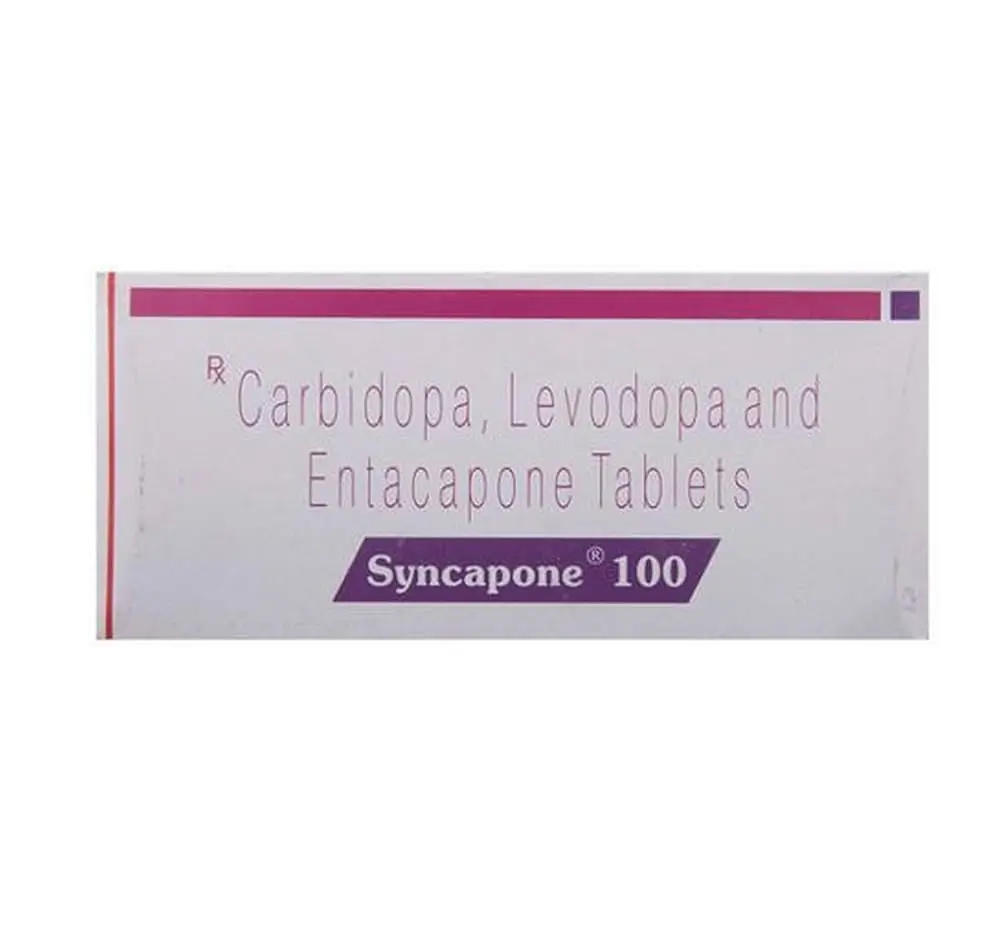
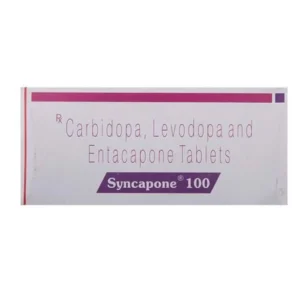
Syncapone 100mg (Levodopa/Carbidopa/Entacapone)
Previous product
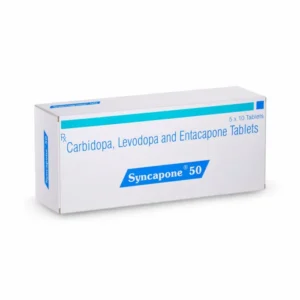
Syncapone 50mg (Levodopa/Carbidopa/Entacapone)
$21.25 $41.25Price range: $21.25 through $41.25
Next product

Suminat 50mg (Sumatriptan)
$43.50 $198.75Price range: $43.50 through $198.75
$22.50 $42.50Price range: $22.50 through $42.50
In Stock
In Stock
Syncapone 100mg (Levodopa/Carbidopa/Entacapone)
| Pack Size | Price | Quantity | Add To Cart | |
|---|---|---|---|---|
| 60 Tablet/s | $22.50 | |||
| 90 Tablet/s | $32.50 | |||
| 120 Tablet/s | $42.50 | |||
| Want to order in bulk / B2B price? Send Inquiry | ||||
×
Sorry!! Out of Stock
Sorry! Syncapone 100mg (Levodopa/Carbidopa/Entacapone) is out of stock
Please click below to view other similar medications.
View All Levodopa/Carbidopa/Entacapone Products
Offer You Can't Resist
Free Shipping
Enjoy Free Shipping on Orders above AUD304 (USD199)
Estimate Delivery :
16 September - 23 September
20
A smooth and reliable
A smooth and reliable experience from order to shipment. Very satisfied with the service
 Australia
August 3, 2026
Last Updated on June 10, 2026

Description
Overview
Syncapone 100mg can be described as a combination medication that is used to control the symptoms of Parkinson’s disease and Parkinsonism. It is particularly helpful when medications like levodopa and carbidopa aren’t enough to treat the signs. The medication is composed of three active components: Levodopa, Carbidopa, and Entacapone, and each contributes to improving motor function through dealing with various aspects of the disease.
- Levodopa: The dopamine precursor that helps to replenish the brain’s dopamine supply, which is a neurotransmitter normally low in patients with Parkinson’s disease.
- Carbidopa: An anti-depressant drug to stop the degrading process of levodopa within the outside (outside the brain) tissues, making sure that higher levels of levodopa reach the brain.
- Entacapone: A catechol-O-methyltransferase (COMT) inhibitor, which further prolongs the effects of levodopa by preventing its breakdown in the body.
Syncapone 100mg can be used to increase the efficacy of levodopa therapy and improve motor symptoms like tremors, stiffness, and bradykinesia (slowness of motion).
Active Ingredients:
- Levodopa: 100mg
- Carbidopa: 25mg
- Entacapone: 200mg
Drug Class:
- Levodopa/Carbidopa: Dopaminergic agent
- Entacapone: COMT inhibitor
Indications:
Syncapone is recommended for the therapy of patients suffering from Parkinson’s disease as well as Parkinsonism for patients who have not been able to respond to carbidopa and levodopa therapy on its own. It is typically indicated to treat:
- Motor symptoms of Parkinson’s Disease: For the Controlling rigidity, tremors, and postural stability.
- End-of-dose Wearing-Off Symptoms: Patients who have a flare-up of symptoms before the scheduled dose of levodopa.
- Levodopa-Induced Motor Fluctuations: Reduces the fluctuations of responses to levodopa therapy.
Mechanism of Action:
- Levodopa:
- Levodopa transforms into dopamine within the brain, refilling the dopamine deficiency in Parkinson’s disease.
- Dopamine aids in controlling movement, and increasing levels within the brain can alleviate symptoms like tremors, stiffness, and slow movement.
- Carbidopa:
- Carbidopa stops levodopa’s conversion into dopamine that is not in the brain (in the peripheral tissues). This means that more levodopa can be delivered to the brain, and also reduces adverse effects such as nausea and vomiting.
- Entacapone:
- Entacapone inhibits catechol-O-methyltransferase (COMT), an enzyme responsible for breaking down levodopa in the peripheral tissues. Through blocking this enzyme, entacapone improves the bioavailability and potency of levodopa by prolonging the duration of its effect and lessening motor fluctuations. This includes the wear-off effect (a condition in which the levodopa effects are fading prior to the time that the next dose can be administered).
All three increase the efficacy and length of the action of levodopa, increasing overall control of symptoms for patients suffering from Parkinson’s disease.
Dosage and Administration:
- Recommended Dosage:
- The standard dose for adult patients who suffer from Parkinson’s disease is 1 tablet (100mg Levodopa/25mg of Carbidopa/200mg Entacapone), taken 3 to 4 times per day in accordance with the degree of the signs.
- The dosage is typically determined based on the individual’s response and tolerance.
- The dosage that is recommended for maximum effectiveness is usually 8 tablets daily (800mg Levodopa / 200mg Carbidopa / 1600mg Entacapone). However, this could vary based on the prescription of your doctor.
- Administration Instructions:
- Use Syncapone tablets orally, whether or not you eat.
- Take the tablet in one swallow. Do not chew or crush it, break it.
- It’s crucial to keep the same schedule for dosing. Inadequate doses can result in fluctuations in symptom control.
- Use the tablet regularly at frequent intervals according to the schedule in order to reduce motor turbulence.
- If you missed a dose, you should take it as quickly as you can remember, unless it’s near time to take the next dose. Don’t double your dose to cover an unintentionally missed dose.
Side Effects:
Common Side Effects:
- Nausea: Certain patients might experience nausea, particularly after starting treatment.
- Dizziness or Lightheadedness: Particularly if standing in a hurry (orthostatic hypotension).
- Diarrhea: Entacapone could cause stomach problems, such as diarrhea, for some patients.
- Involuntary Movements: For example, dyskinesia (abnormal or involuntary movements) because of the increase in dopamine levels.
- Sleep Issues: Insomnia or excessive daytime sleepiness.
- Fatigue: General tiredness or lethargy.
Serious Side Effects:
- Severe Allergic Reactions: Including rash, itching, swelling, and difficulty breathing.
- Mental Status Changes: Confusion, hallucinations, or delusions may occur in some individuals, especially at higher doses.
- Cardiovascular Effects: Abnormal heart rhythms (arrhythmia), chest pain, or shortness of breath.
- Severe Diarrhea: May lead to dehydration or electrolyte imbalances.
- Urinary Retention: Difficulty urinating or increased frequency of urination.
Contraindications:
Syncapone should never be employed in the following situations:
- Hypersensitivity to carbidopa, levodopa, Entacapone, or any other ingredient of the drug.
- Narrow-angle glaucoma.
- Severe liver disease: Entacapone is processed through the liver. Thus, people with liver disease are not advised to take Syncapone.
- History of melanoma or other skin cancers: Levodopa was linked to a higher likelihood of developing a skin lesion.
- Non-selective MAO inhibitors: It includes antidepressants that are specific to certain medications; when combined with levodopa, it can result in dangerous hypertensive crises (severe hypertension).
- History of certain psychiatric disorders: Psychosis is a common occurrence due to the risk of psychological health-related side effects, such as hallucinations.
Drug Interactions:
Syncapone is a drug that can interact with the following medications:
- Non-selective Monoamine Oxidase Inhibitors (MAOIs): Do not take them simultaneously due to the possibility of a hypertensive crisis.
- Antihypertensive Medications: Syncapone is a blood pressure-lowering drug, which means that the effect of blood pressure medicines could be enhanced.
- Anticholinergic Drugs: It is used in the treatment of Parkinson’s disease, which could increase the risk of adverse side effects such as dry mouth, confusion, and other issues.
- Dopamine Antagonists: Such as antipsychotic drugs can reduce the efficacy of Levodopa.
- Iron Supplements: Reduces the absorption of levodopa. Therefore, it should be administered separately from Syncapone.
Be sure to inform your doctor regarding any medication you’re taking in order to avoid dangerous interactions.
Storage:
- Temperature: Keep at at room temperatures and far from moisture, heat and sunlight.
- Be sure to keep out of the child’s reach to prevent accidental ingest.
- Use only beyond that expiration date displayed on the packaging.
FAQs:
How does Syncapone help with Parkinson’s disease?
Syncapone is a combination of Levodopa, carbidopa as well as Entacapone to help improve the motor symptoms associated with Parkinson’s. Levodopa is a dopamine-refilling drug that can be brain, and carbidopa helps prevent premature breakdown and Entacapone extends the effect of levodopa.
Can I take Syncapone with other Parkinson’s medications?
Yes, however, you must notify your doctor when you’re taking any other drugs for Parkinson’s, including dopamine inhibitors as well as MAO-inhibitors since they may affect Syncapone.
How long does it take for Syncapone to start working?
Many patients start to see changes in the first 1 to 2 hours after taking Syncapone and the most significant results typically appearing within one to two weeks when the body is adjusting to the drug.
Can Syncapone be used to treat other conditions?
Syncapone has been specifically formulated specifically for treating Parkinson’s disease and associated motor disorders. It’s not indicated in other disorders.
What should I do if I experience side effects?
If you are experiencing serious side effects like hallucinations, confusion, or excessive dizziness, consult your doctor immediately. If you experience milder side effects such as nausea, your physician could modify the dosage.
Can Syncapone cause sleep problems?
Yes, some people do be afflicted with insomnia or sleep disorders. Like insomnia, or excessive sleepiness during the daytime. If it is a problem you should consult your physician.
Summary:
Syncapone 100mg is a mixture medication used to treat Parkinson’s disease as well as Parkinsonism as well as helping to manage motor signs such as rigidity, tremors as well as bradykinesia.
Related products





Recently Viewed

Reviews
There are no reviews yet.