
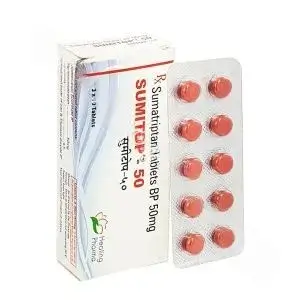
Sumatriptan 50mg (Sumatriptan)
Previous product

Rizatriptan 10mg (Rizatriptan)
$45.00 $103.75Price range: $45.00 through $103.75
Next product

Amantrel 100mg (Amantadine)
$40.50 $87.50Price range: $40.50 through $87.50
$90.00 $193.75Price range: $90.00 through $193.75
In Stock
In Stock
Sumatriptan 50mg (Sumatriptan)
| Pack Size | Price | Quantity | Add To Cart | |
|---|---|---|---|---|
| 100 Tablet/s | $90.00 | |||
| 200 Tablet/s | $137.50 | |||
| 300 Tablet/s | $193.75 | |||
| Want to order in bulk / B2B price? Send Inquiry | ||||
×
Sorry!! Out of Stock
Sorry! Sumatriptan 50mg (Sumatriptan) is out of stock
Please click below to view other similar medications.
View All Sumatriptan Products


Offer You Can't Resist
Free Shipping
Enjoy Free Shipping on Orders above AUD304 (USD199)
Estimate Shipping :
16 June - 23 June
32
Quick shipping
“I’ve ordered multiple times and every experience has been smooth. Genuine products, secure packaging, and quick shipping across Australia.”
 Australia
April 8, 2026
Last Updated on June 10, 2026

Description
Product Overview
Brand Name: Sumatriptan
Generic Name: Sumatriptan
Strength: 50mg
Pharmacological Class: Serotonin receptor agonist (Triptans)
Dosage Form: Oral tablet
Manufacturer: Various (generic and brand formulations)
Sumatriptan 50mg is a drug that is used for urgent treatment of migraines, either without or with aura. Additionally, it can be used for the treatment of migraine clusters. Sumatriptan is part of a group of medications known as triptans that work by triggering serotonin receptors within the brain. This causes the blood vessels that surround the brain to narrow. The result is less inflammation, and it relieves headache pain as well as cluster headaches.
Sumatriptan is most efficient when it is taken within the first indication of migraine. It is not intended to prevent migraines; however, it can be used to relieve intense discomfort.
How Sumatriptan 50mg Works
Sumatriptan is a drug that targets serotonin (5HT1) receptors located in the brain. The action makes blood vessels narrow and decreases the release of inflammation-causing compounds. This can help:
- Help relieve the pain that is caused by migraine attack.
- Eliminate other signs of migraine, such as nausea, vomiting, as well as sensitive to light.
Important to remember that Sumatriptan is only used to treat migraines in the course of an active attack, but does not stop or decrease the likelihood of recurring migraine attacks.
Indications and Uses
Sumatriptan 50mg is a prescription medication in the following circumstances:
- Migraine Attacks:
- The treatment of acute migraines that are accompanied by or without aura (visual problems, etc).
- It is effective for relieving pain and accompanying symptoms such as nausea or sensitivity to sound and light.
- Cluster Headaches:
- The drug is utilized for the treatment of headaches caused by clusters. These are extremely one-sided, severe headaches that manifest with cyclical patterns.
Dosage and Administration
The usual dosage that is used as a starting point to take Sumatriptan 50 mg is:
- Migraine:
- 50mg every time at the beginning of migraine attacks. If the migraine doesn’t alleviate in two hours, an additional dosage of 50mg may be administered. The daily maximum dosage cannot be more than 200 mg (i.e., it could be at least four 50mg tablets during a single day).
- Cluster Headaches:
- 6 mg (injectable) or 50mg taken orally when you first notice an onset of a cluster headache. If the symptoms do not resolve or occur, the dosage can be repeated within one hour and not exceed 200 mg per day.
Administration Instructions:
- Consume Sumatriptan by mouth by drinking a glass of water.
- Tablets can be consumed in conjunction with and without meals. However, starting it earlier in the course of the attack could provide the best advantages.
Don’t exceed the recommended dose.
Side Effects
A variety of severe and frequent adverse reactions can be seen with Sumatriptan. The effects of these side effects may be mild or serious and may include:
Common Side Effects
- Dizziness or lightheadedness
- Fatigue or sleepiness
- Tingling or numbness in the hands or feet
- Dry mouth
- Nausea or upset stomach
- Tightness or pressure in the throat and chest (can be an expected reaction, but it should be closely monitored)
Serious Side Effects
- Chest pain or tightness: Get medical attention immediately if you are experiencing extreme chest pain, palpitations, or an abnormal heartbeat.
- High blood pressure: Sumatriptan may trigger an increased blood pressure that could be harmful for people with pre-existing heart problems.
- Serotonin syndrome: A rare, but dangerous disorder that could develop when taken in conjunction with other serotonergic medicines, which cause anxiety or confusion, a high fever, rapid heartbeat, and muscle stiffness.
- Stroke or heart attack: The extremely rare but serious risk factors can arise, especially for those with a history of heart disease or other risk factors for heart disease.
Allergic Reactions
- Swelling of the lips, face, or throat must be treated as a medical emergency.
Warnings and Precautions
Before you take Sumatriptan, be sure to inform your healthcare doctor if you suffer from one of these conditions:
- Cardiovascular diseases like heart disease, high blood pressure, or a history of stroke.
- Severe liver or kidney disease.
- Risk factors for heart disease, such as smoking, high cholesterol, or diabetes.
- Pregnancy: Sumatriptan should be utilized in pregnancy only when clearly required, since there is little safety information.
- Breastfeeding: Sumatriptan is absorbed into breast milk. Caution should be taken when administering the medication to mothers who are nursing.
- Allergies to sumatriptan and another triptan.
Drug Interactions
Sumatriptan is a drug that interacts with other drugs:
- Other Triptans or ergotamine derivatives: Combining these medications with Sumatriptan may raise the chance of more serious side effects like serotonin-related syndrome or the excessive constriction of blood vessels.
- SSRIs and SNRIs: The medications used to treat depression (such as fluoxetine, sertraline, and venlafaxine) may raise the likelihood of serotonin-related syndrome in combination together with Sumatriptan.
- Monoamine oxidase inhibitors (MAOIs): It is not recommended to use it with Sumatriptan.
- Other medications affecting blood pressure or heart rate: A careful monitoring of the patient is necessary if Sumatriptan is used in conjunction with other medicines that may raise blood pressure or trigger adverse cardiovascular reactions.
Storage
- Temperature: Store at room temperature (between 15°C and 30°C or 59°F to 86°F).
- Be sure to keep the medication out of the sun, heat, or moisture.
- Stay out of the child’s reach.
Frequently Asked Questions (FAQs)
When should I take Sumatriptan?
Sumatriptan is recommended to be used when there is the initial sign of a headache or migraine attack. The most efficacious dosage is at the beginning of an attack. If you do not start treatment until the attack is at its peak, it may not be as effective.
Can I take more than one dose of Sumatriptan in a day?
Yes, however, you should not exceed 200 mg per day. If your symptoms don’t improve within two hours after your first dose, it is possible to have a second dose. Be sure to leave at the very least two hours between doses. Two-hour interval between dosages.
Can Sumatriptan prevent migraines?
No, it’s not. Sumatriptan isn’t intended to be a preventative treatment. It’s intended to alleviate the symptoms and pain associated with chronic migraine attacks. However, it is not able to decrease the severity or frequency of migraine attacks in the future.
Can I take Sumatriptan for a headache that is not a migraine?
Sumatriptan is specifically intended for migraines as well as migraines that cause cluster headaches. The medication should not be taken for headaches that are not regular or tension-type, not for different types of headaches without consulting your doctor.
What should I do if I experience chest pain while taking Sumatriptan?
Pressure or chest pain can be an adverse effect of Sumatriptan. If you notice intense chest tension or tension, you should seek medical assistance, as it may be a sign of a larger heart problem.
Can I take Sumatriptan with other medications for migraines?
You should not take Sumatriptan with other triptans or ergotamine-containing medications. Be sure to inform your doctor of any other medications you take to prevent adverse interactions with other drugs.
Is it safe to use Sumatriptan during pregnancy?
Sumatriptan is only recommended in pregnancy if absolutely required. If you’re currently expecting or plan to get pregnant, speak to your doctor regarding the potential risks and benefits.
Summary
Sumatriptan 50mg is an effective remedy for headaches that are acute headaches as well as Cluster headaches. It is effective in reducing blood vessels within the brain, thereby reducing the symptoms and pain related to these types of headaches. Although it offers quick relief, it’s not intended to be a treatment that is preventive.
Sumatriptan must be used as soon as you feel headaches to get the most effective effects, and the recommended dosage for a day is 200 mg. The risk of side effects is common; however, severe reactions such as serotonin syndrome or chest pain should be treated immediately by a physician.
Related products








Recently Viewed












Reviews
There are no reviews yet.