
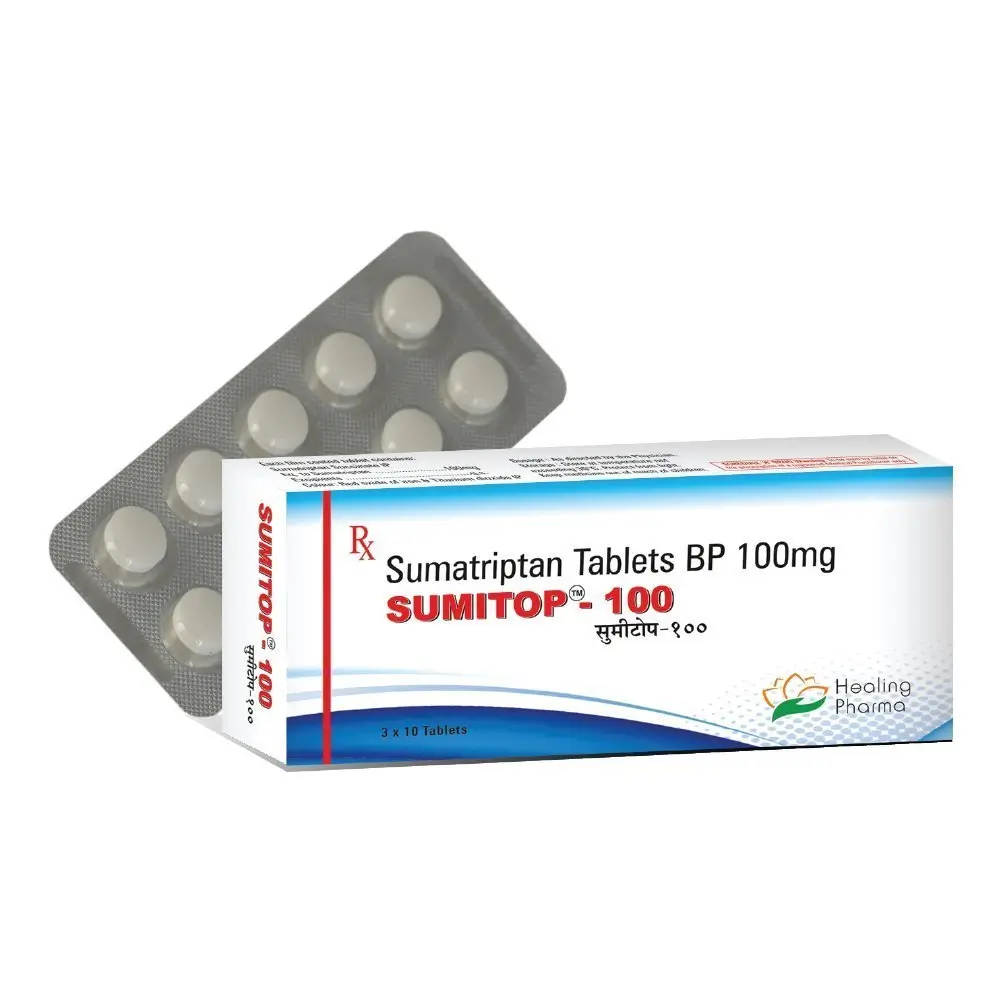
Sumatriptan 100mg (Sumatriptan)
Previous product

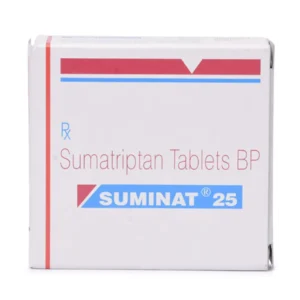
Suminat 100mg (Sumatriptan)
$84.00 $380.00Price range: $84.00 through $380.00
Next product

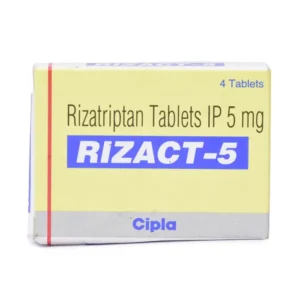
Rizatriptan 10mg (Rizatriptan)
$45.00 $103.75Price range: $45.00 through $103.75
$120.00 $262.50Price range: $120.00 through $262.50
In Stock
In Stock
Sumatriptan 100mg (Sumatriptan)
| Pack Size | Price | Quantity | Add To Cart | |
|---|---|---|---|---|
| 100 Tablet/s | $120.00 | |||
| 200 Tablet/s | $187.50 | |||
| 300 Tablet/s | $262.50 | |||
| Want to order in bulk / B2B price? Send Inquiry | ||||
×
Sorry!! Out of Stock
Sorry! Sumatriptan 100mg (Sumatriptan) is out of stock
Please click below to view other similar medications.
View All Sumatriptan Products

Offer You Can't Resist
Free Shipping
Enjoy Free Shipping on Orders above AUD304 (USD199)
Estimate Shipping :
16 June - 23 June
39
Easy to Use
Easy to order medicines online and customer support was very helpful
 Australia
May 5, 2026
Last Updated on June 10, 2026

Description
Sumatriptan 100mg
Brand Name: Sumatriptan
Generic Name: Sumatriptan
Strength: 100mg
Formulation: Oral Tablet
- Treatment for acute migraines, either without or with aura, for adults.
- Cluster headache (episodic) treatment in adults.
Description
Sumatriptan 100mg is a medicine that is widely employed to treat severe migraines as well as cluster headaches. Sumatriptan is a member of the triptan family of medications that act as specific 5-HT1 receptor antagonists. It acts by binding to serotonin receptors within the brain, which constricts dilated blood vessels while also reducing inflammation. These are believed to play an essential factor in the beginning and recurrence of headaches caused by migraine. The result is the reduction of symptoms associated with migraine, like nausea, pain, and sensitivity to sound and light.
Sumatriptan is generally used in the form of an oral tablet; however, other forms like nasal sprays, injections, and even nasal sprays are also offered. The dose of 100 mg is typically recommended for those who need an increased dose to provide migraine relief, specifically in cases where the 50 mg dose isn’t enough.
Pharmacology
Sumatriptan is able to work through selective stimulation of serotonin 5-HT1B and 5-HT1D receptors. They are found in the brain blood vessels as well as in other places that cause the pain. The receptors play an essential function in the reduction of the pro-inflammatory chemical release within the brain, and in causing vasoconstriction. This helps reduce migraine.
- Onset of Action: Typically, Sumatriptan will begin to relieve pain within 30-minutes to 2 hours after oral administration.
- Half-Life: Sumatriptan has a rather short time-to-live of approximately 2 hours. That means that it’s quickly eliminated in the human body.
Dosage and Administration
Adults:
- Migraine: The minimum recommended dose for patients should be 50mg however, for those who are not responding adequately promptly, it is possible to prescribe a 100mg dosage may be recommended.
- Cluster Headache: The recommended dosage for starting ranges from 100mg. Some patients might need additional doses, as required.
Administration:
- Take orally either with or without food.
- Onset of Action: Patients usually feel relief in thirty minutes to two hours following the use of the tablet.
- Dosage Adjustments: If the first dose did not give enough relief, another dose is able to be taken two hours following the initial; however, not more than two doses must be consumed during a 24-hour time frame.
- Maximum Dose: The recommended dosage is 200 mg daily for migraine attacks.
Missed Dose:
- If you’ve forgotten to take your dosage and you’re getting close to the next dose, you can skip your missed dose. Do not take two doses in order to cover the missed dose.
Contraindications
- Hypersensitivity: Avoid using Sumatriptan when you have an allergy that is known to the medication or one of its components.
- Cardiovascular Disease: It is not recommended for patients who have a history of angina, coronary artery disease, or a heart attack.
- Cerebrovascular Events: Not recommended for patients who’ve suffered a stroke or transient ischemic attacks (TIAs).
- Severe Liver Impairment: Sumatriptan should not be used in patients suffering from severe hepatic impairment.
- Peripheral Vascular Disease: It is not recommended for patients suffering from peripheral vascular disease because of the vasoconstrictive effect.
Warnings and Precautions
- Cardiovascular Risk: Sumatriptan could cause vasoconstriction. It is recommended to be taken with care when patients have high risk factors for developing heart disease (e.g., diabetes, high blood pressure, and smoking cigarettes, diabetes). Patients must be closely watched for signs of angina and other heart-related events while receiving treatment.
- Serotonin Syndrome: Take care when combining Sumatriptan with the SSRIs, SNRIs, and other medicines that alter serotonin levels because this could result in serotonin-related syndrome, which could be a life-threatening illness.
- Neurological Effects: The sudden appearance of severe headaches, visual changes, or other symptoms that suggest a stroke could require immediate removal from the situation and a medical examination.
- Medication Overuse: The use of migraine medication such as Sumatriptan may cause rebound headaches that occur after the drug wears off. It is recommended that patients not use Sumatriptan often.
Side Effects
Common Side Effects:
- Dizziness or lightheadedness
- Drowsiness or fatigue
- Nausea or vomiting
- Dry mouth
- Tingling or warm sensation in the skin
- Muscle weakness or tightness
- Sensitivity to light or sound
Serious Side Effects:
- Chest pain, tightness, or pressure (could indicate a heart problem)
- Shortness of breath or difficulty breathing
- Unexplained visual disturbances
- Symptoms of serotonin syndrome (e.g., agitation, hallucinations, fever, and muscle rigidity)
- Severe allergic reactions (e.g., rash, itching, swelling)
Emergency Warning: If you are experiencing intense chest breathing, pain, or shortness of breath, or signs that could indicate an attack on your heart, get medical attention immediately.
Drug Interactions
- SSRIs/SNRIs: The combination of Sumatriptan with selective serotonin reuptake inhibitors (SSRIs) or serotonin-norepinephrine reuptake inhibitors (SNRIs) can increase the risk of serotonin syndrome, a potentially life-threatening condition.
- MAOIs (Monoamine Oxidase Inhibitors): Use in conjunction with MAOIs (e.g., Phenelzine, Tranylcypromine) is not advised as it may increase the danger of toxicities and serotonin syndrome.
- Ergot Alkaloids: A combination of Sumatriptan together with the Ergotamine derivatives (used to treat migraine) increases the likelihood of vasoconstriction. This can cause grave cardiovascular complications. It is not recommended to take them within 24 hours of one subsequent dose.
- CYP450 Inhibitors: Medicines that hinder CYP450 1A2 (e.g. fluvoxamine, for example) could boost the concentration in plasma of Sumatriptan, which can lead to an increase in the risk of adverse consequences.
Use in Special Populations
Pregnancy:
- Sumatriptan has been classified as category C for pregnancy. This implies that there aren’t sufficient and controlled studies on human beings. The drug should only be utilized in cases where the possible benefit is greater than the risk for the embryo. If you’re expecting or are planning to get pregnant, talk to your physician.
Breastfeeding:
- Sumatriptan can be excreted from the breastmilk in tiny amounts. While it’s generally believed to be acceptable to breastfeed following having taken Sumatriptan, there is a 12-hour interval between doses, and nursing is suggested to reduce the risk for the baby.
Geriatric Use:
- The effectiveness and safety of Sumatriptan for elderly patients (aged 65 or older) have not yet been determined. Because of the higher chance of adverse cardiovascular effects within this age group, Sumatriptan should be used with care.
Renal and Hepatic Impairment:
- Renal Impairment: It is advised to be cautious for patients suffering from kidney impairment. Adjustments to dosages may be necessary.
- Hepatic Impairment: If you have a patient with moderate liver impairment, a lower dosage of Sumatriptan might be suggested.
FAQ
Q1: How long does it take for Sumatriptan to relieve a migraine?
- Sumatriptan usually begins providing relief in 30 mins to 2 hours after the medication is taken. But the duration of complete relief can vary based on the particular person as well as the intensity of migraine.
Q2: Can I take Sumatriptan for a headache that isn’t a migraine?
- Sumatriptan is indicated specifically to treat migraines as well as migraines that cause cluster headaches. It’s not recommended as a treatment for tension headaches and other headaches that are not caused by migraine.
Q3: Can I take Sumatriptan more than once in a day?
- Yes, if the migraine continues, then you can have a second dose within two hours, and only two doses must be consumed during a 24-hour time frame.
Q4: Are there any foods or drinks I should avoid while taking Sumatriptan?
- There is no particular food or beverage that should be avoided while taking Sumatriptan. But too much intake of caffeine or alcohol can cause migraine-related symptoms to worsen, which is why moderation is suggested.
Q5: What should I do if I experience side effects from Sumatriptan?
- If you suffer from extreme side effects, such as chest pain, breathing difficulties, or indications of an allergic reaction, get medical attention right away. For less severe side effects such as nausea or dizziness, speak with your physician about possible changes to your treatment.
Summary
Sumatriptan 100mg is a very beneficial medication for the immediate treatment of migraines as well as migraine clusters. Since it is a selective 5HT1 receptor antagonist, it acts by reducing blood flow to the brain, thereby reducing inflammation. It also helps in reducing the effects of intense headaches. Although it may provide relief after a short time, it should be taken in accordance with the dosage prescribed to avoid leading to recurrent headaches or even dangerous negative side effects.
Related products




Recently Viewed
Reviews
There are no reviews yet.