
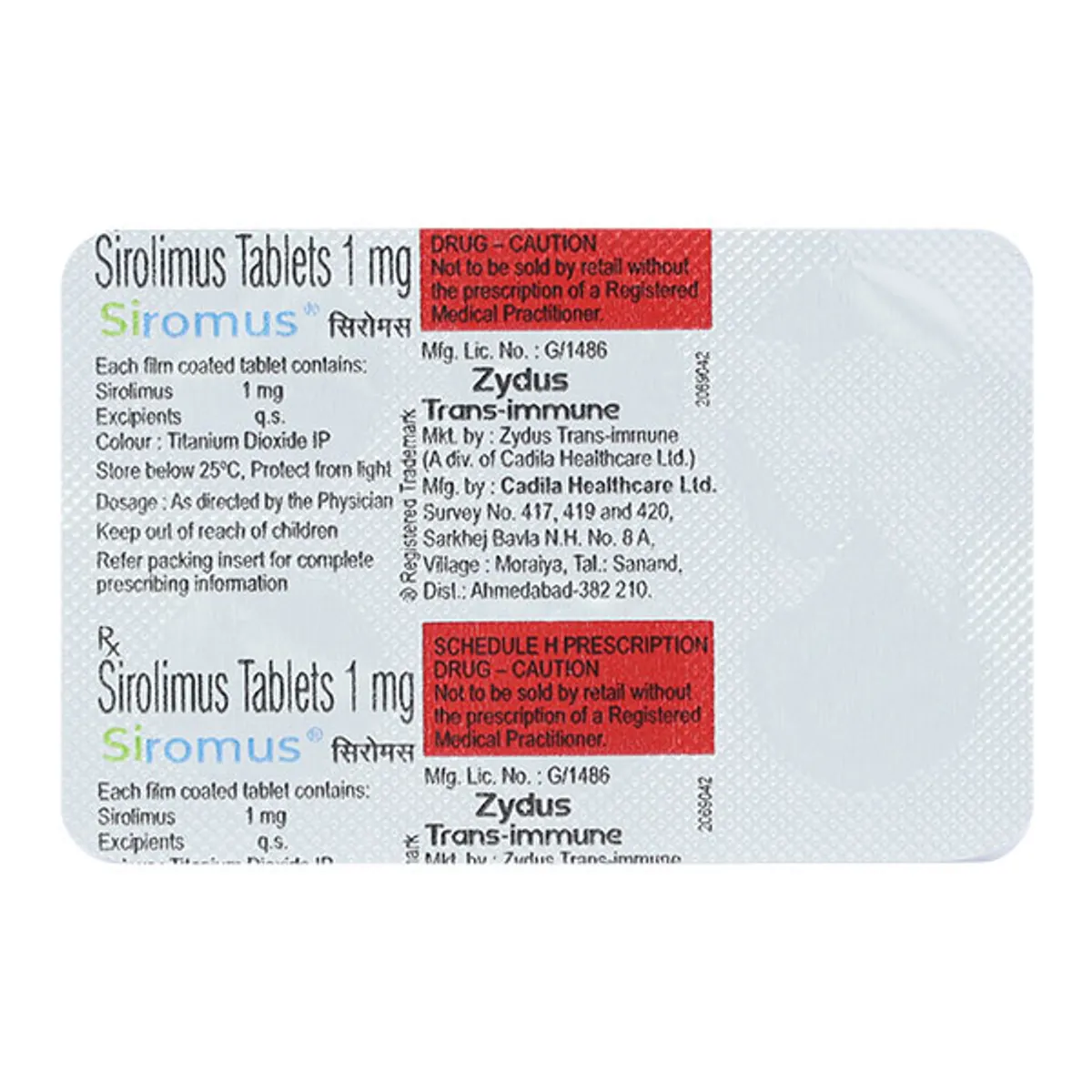
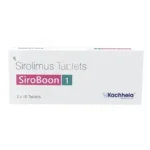
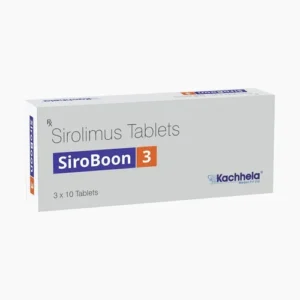
Siromus (Sirolimus)
Previous product
Renodapt S (Mycophenolate Mofetil)
$60.00 $165.00Price range: $60.00 through $165.00
Next product
Tacroz Ointment (Tacrolimus)
$6.00 $30.00Price range: $6.00 through $30.00
$154.00 $424.00Price range: $154.00 through $424.00
In Stock
In Stock
Siromus (Sirolimus)
| Pack Size | Price | Quantity | Add To Cart | |
|---|---|---|---|---|
| 30 Tablet/s | $154.00 | |||
| 60 Tablet/s | $289.00 | |||
| 90 Tablet/s | $424.00 | |||
| Want to order in bulk / B2B price? Send Inquiry | ||||
×
Sorry!! Out of Stock
Sorry! Siromus (Sirolimus) is out of stock
Please click below to view other similar medications.
View All Sirolimus Products
Offer You Can't Resist
Free Shipping
Enjoy Free Shipping on Orders above AUD304 (USD199)
Estimate Shipping :
06 September - 13 September
26
Last Updated on May 28, 2026

Description
Siromus (Sirolimus): Comprehensive Guide to Use and Benefits
Siromus (Sirolimus) is a vital medication that is prescribed to patients who require immune system stimulation, specifically in transplantation. It assists in preventing rejection of organs and ensures long-term success for transplants. This article will cover everything that you need to learn about Siromus, including how it functions and how it is used, the dosage security, and answers to the most frequently asked questions.
What is Siromus (Sirolimus)?
Siromus has its active component, Sirolimus, which is a potent anti-inflammatory drug. It’s used to block the body from rejecting organs that have been transplanted, such as the liver, kidneys, or heart. Sirolimus is a drug that reduces the activities that the immune system performs. This stops it from attacking the newly transplanted organ.
How Does Siromus Work?
The immune system is naturally aware of and targets foreign tissues, which include transplanted organs. Siromus operates by blocking the protein known as the mTOR (mammalian target of Rapamycin). The protein is responsible for the development and expansion of cells that are immune cells, particularly T-cells. By blocking mTOR’s activity, siromus slows down the immune system, thus preventing rejection of organs and allowing for the transplant to function as it should.
Indications and Uses of Siromus
- Organ Transplantation: To prevent rejection after kidney, liver, or heart transplants.
- Certain Cancers: A few times, it is utilized in cancer treatment because it has the ability to slow the growth of cells.
- Other Immune Conditions: It is sometimes prescribed off-label to treat conditions that cause autoimmune disorders under supervision from a specialist.
Dosage and Administration
| Patient Type | Typical Dosage | Administration Guidelines |
| Adult Kidney Transplant | Initial: 6 mg loading dose, then 2 mg daily | Orally once per day, dosage adjusted in line with the blood level |
| Adult Liver or Heart Transplant | Varies per doctor’s prescription | Monitoring of the levels of drugs and kidney function is required |
| Special Populations | Dose adjustments for elderly or liver impairment | Be sure to adhere to specific medical recommendations |
- Always take Siromus regularly every morning.
- It is safe to consume in combination with or without food; however, avoid grapefruit and grapefruit juice.
- The need for blood tests are frequently needed for monitoring drug levels as well as the function of organs.
Benefits of Siromus
| Benefit | Explanation |
| Prevents Organ Rejection | Immune response is suppressed to help protect the transplanted organs |
| Helps Maintain Long-term Graft Function | Reducing the chance of chronic rejection as well as loss of grafts |
| Alternative to Other Immunosuppressants | This is helpful when patients experience adverse reactions or have contraindications to different medications |
| Potential Anti-cancer Effects | It blocks the growth of certain cancer cells in certain circumstances of treatment |
Important Precautions and Side Effects
Precautions
- Tell your doctor about any medication you are taking to prevent harmful interactions.
- Continuously check blood count and liver, kidney, and lipid levels.
- Avoid live vaccines during treatment.
- Keep your hygiene in check to minimize the chances of contracting an infection.
Common Side Effects
- Risk of infection increases
- High blood cholesterol and triglycerides
- Mouth ulcers or sores
- Diarrhea or nausea
- Rash or acne
Serious Side Effects (Seek Immediate Help)
- Severe infections or fever
- Difficulty breathing or swelling
- Unusual bruising or bleeding
- Signs of organ rejection (pain, swelling, or decreased function)
How Siromus Compares to Other Immunosuppressants
| Feature | Siromus (Sirolimus) | Calcineurin Inhibitors (e.g., Tacrolimus, Cyclosporine) |
| Mechanism of Action | mTOR inhibitor | Blocks T-cell activation through calcineurin pathway |
| Side Effect Profile | More effects on lipids, delayed wound healing | More nephrotoxic, risk of high blood pressure |
| Use in Transplants | Often combined with other immunosuppressants | Common first-line immunosuppressants |
| Monitoring Requirements | Frequent blood level and lipid monitoring | Blood level and kidney function monitoring |
Frequently Asked Questions About Siromus (Sirolimus)
What is Siromus used for?
Siromus is used primarily to stop rejection of organs in transplant patients through suppressing the immune system.
How is Siromus taken?
Orally, every day, whether or not food is consumed, as per your doctor’s dose instructions.
Can I stop taking Siromus suddenly?
No. A sudden stop can lead to a higher risk of rejection. Always speak with your doctor before making any changes to your treatment.
Are there dietary restrictions?
Beware of grapefruit juice and grapefruit since they may affect siromus metabolism.
What side effects should I watch for?
Inspect for bleeding disorders, infection or swelling, as well as breathing issues immediately.
How often will I need blood tests?
It is essential to monitor blood levels regularly particularly during the first month of treatment.
Can Siromus be used with other transplant drugs?
Yes, In fact, it’s often used in conjunction with other immunosuppressants to achieve best results.
Is Siromus safe during pregnancy?
This is not generally recommended to discuss this with your physician in case you’re pregnant or are planning to have a pregnancy.
How long does Siromus treatment last?
The transplant usually lasts for life, according to your doctor’s plans.
What should I do if I miss a dose?
Use it as soon as you can remember it, unless it’s close to the next dose. Do not take two doses.
Why Siromus Matters for Australian Patients
There is a growing number of organ transplants being performed each year in Australia an effective immune system is essential for the success of patients. Siromus provides a cutting-edge and reliable solution to transplant patients to decrease the risks of rejection while maintaining good organ function. In conjunction with close supervision by a medical professional as well as lifestyle support, Siromus supports longer, healthier lives for transplant recipients throughout Australia.
Final Thoughts
Siromus (Sirolimus) is a vital medication in the area of organ transplantation as well as the modulation of immune function. Knowing how it functions by following your prescription, being aware of adverse effects, will ensure the most effective results. Be in regular contact with your medical team, and regularly check in for your health monitoring.
Additional Information
| Manufacturer | Zydus Pharma |
|---|---|
| Pharmaceutical | Tablet/s |
| Strength | 1 mg |
| Pack Size | 30 Tablet/s, 60 Tablet/s, 90 Tablet/s |
Related products



Reviews
There are no reviews yet.