
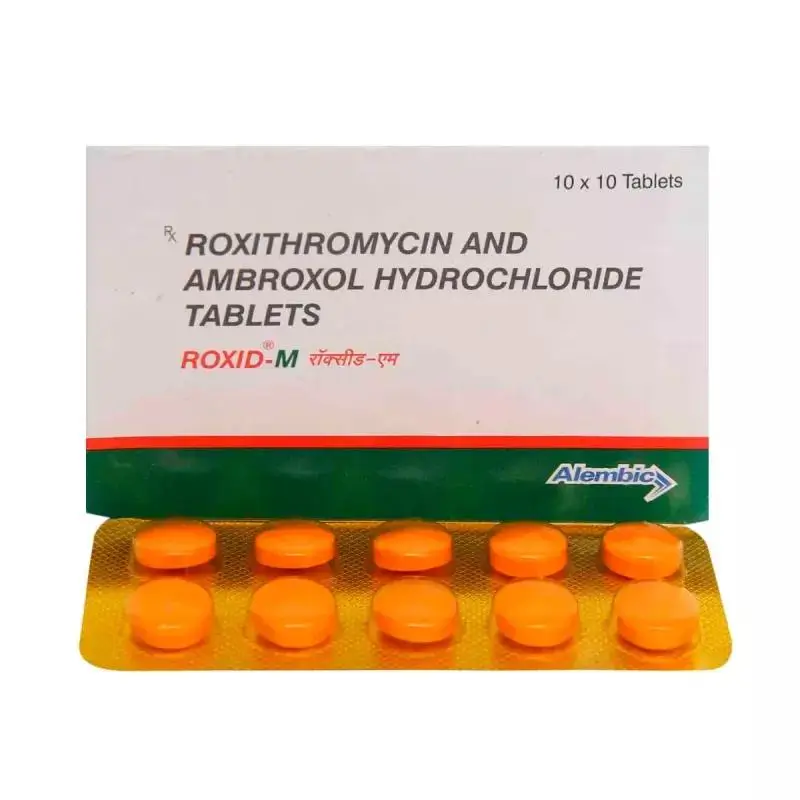
Roxid M (Roxithromycin/Ambroxol)
Previous product
Roxid 50mg (Roxithromycin)
$17.00 $50.00Price range: $17.00 through $50.00
Next product
Roxychem 150mg (Roxithromycin)
$21.00 $47.50Price range: $21.00 through $47.50
$40.00 $125.00Price range: $40.00 through $125.00
In Stock
In Stock
Roxid M (Roxithromycin/Ambroxol)
| Pack Size | Price | Quantity | Add To Cart | |
|---|---|---|---|---|
| 50 Tablet/s | $40.00 | |||
| 100 Tablet/s | $70.00 | |||
| 200 Tablet/s | $125.00 | |||
| Want to order in bulk / B2B price? Send Inquiry | ||||
×
Sorry!! Out of Stock
Sorry! Roxid M (Roxithromycin/Ambroxol) is out of stock
Please click below to view other similar medications.
View All Roxithromycin/Ambroxol Products
Offer You Can't Resist
Free Shipping
Enjoy Free Shipping on Orders above AUD304 (USD199)
Estimate Delivery :
13 September - 20 September
29
Fast Support
Customer support was excellent. My questions were answered promptly and the team was very helpful throughout the process. The order was handled efficiently and professionally
 Australia
August 15, 2026
Last Updated on May 18, 2026

Description
When it comes to respiratory tract infection, the use of antimicrobials and mucolytic agents is an effective method of combating symptoms while focusing on the root of the illness. Roxid M is a commonly prescribed medicine that combines roxithromycin and ambroxol, an agent for mucolysis. The combination is not just used to fight bacterial infections, but also eases congestion of the mucus, which makes it an all-encompassing treatment option to treat respiratory ailments.
In this comprehensive guide, we’ll explore the elements in Roxid M, as well as its mechanisms of action, its clinical usage, dosage, reactions, warnings, and other important information. If you’re a patient who is prescribed Roxid M or a caregiver or healthcare specialist, this article will attempt to provide you with everything you require to learn about this crucial medicine.
What is Roxid M?
Roxid M is a drug mixture that contains two active components:
- Roxithromycin: The macrolide antibiotic blocks the synthesis of protein by bacteria effective in tackling vulnerable bacteria.
- Ambroxol: A mucolytic agent that thins and loosens mucus from the airways, facilitating its elimination.
These ingredients together combine to make Roxid M a powerful medication for the treatment of respiratory tract infections caused by excessive mucus production.
Components and Their Roles
Roxithromycin
Roxithromycin is part of the macrolide category of antibiotics. It functions by binding the 50S ribosomal subunit in bacteria and inhibiting the synthesis of protein by bacteria. This is an antibacterial, which means it blocks the growth of bacteria, allowing the immune system to combat the disease.
Roxithromycin has been proven to be efficient against various Gram-positive bacteria and some Gram-negative ones, which include:
- Streptococcus pneumoniae
- Haemophilus influenzae
- Moraxella catarrhalis
- Mycoplasma pneumoniae
Its effectiveness for treating respiratory diseases such as sinusitis, bronchitis, and pneumonia has been documented.
Ambroxol
Ambroxol is a mucolytic as well as a secretolytic substance. It boosts the production of surfactant pneumocytes of type II in the lungs. This reduces the viscosity and stickiness of mucus. In turn, it assists in removing mucus from the respiratory tract, increasing the effectiveness of coughs and easing breathing.
Furthermore, ambroxol is a natural antioxidant. Antioxidant as well as anti-inflammatory properties that aid in the healing process of ailment-prone airways.
How Does Roxid M Work?
Roxid M is a combination of the antibacterial benefits of roxithromycin and the ability to thin mucus with ambroxol, which creates a synergistic effect that targets both infections and mucus congestion.
- Roxithromycin stops the development of a bacterium and helps control the condition that triggers inflammation and an increase in mucus release.
- Ambroxol improves the clearance of mucus, decreasing obstruction of the airways and improving the exchange of oxygen.
Together, they can reduce the frequency of coughing and its severity while also helping to improve breathing and help speed up recovery from respiratory ailments.
Clinical Uses of Roxid M
Roxid M is typically prescribed to treat respiratory tract infections when both mucus and bacterial production are present. This includes:
Acute and Chronic Bronchitis
It is a common condition that causes inflammation of the bronchial tube with the production of mucus. Roxid M aids in the elimination of bacteria and reduces mucus accumulation to ease coughs and increase the flow of air.
Pneumonia
When you suffer from bacterial pneumonia, cleaning mucus and treating the infection are crucial. Roxithromycin is a powerful antibiotic that targets the most common pathogens of bacterial infection, and ambroxol aids in lung clearing.
Sinusitis
Sinus infections can be caused by the colonization of bacteria and the retention of mucus. This combination helps in clearing the sinuses as well as resolving infections.
Pharyngitis and Tonsillitis
While these diseases mostly cause throat irritation, the presence of mucus and bacterial presence makes Roxid M a beneficial treatment choice.
Chronic Obstructive Pulmonary Disease (COPD) Exacerbations
When there is a flare-up of COPD inflammation, mucus and infection accumulation can worsen symptoms. Roxid M is a part of the strategy for managing COPD in order to lower the amount of bacteria and open airways.
Dosage and Administration
The dose of Roxid M will depend upon the severity of infection, the patient’s health, age, kidney and liver functioning, as well as other variables. Always adhere to the physician’s prescriptions.
Typical Dosage for Adults
- Roxithromycin: Usually 150 mg twice daily.
- Ambroxol: Usually 30 mg twice daily.
This is the equivalent of taking one Roxid Tablet (containing doses of both) every day, two times after meals.
Duration
The treatment duration typically ranges between 5 and 10 days dependent on the extent of the infection. It is essential to finish your entire course of treatment even if the symptoms get better in order to avoid resistance.
Pediatric Use
The dosage for children is smaller and is best determined by a physician. Ambroxol and roxithromycin can be employed in infants, but they require careful dosage control.
Side Effects of Roxid M
Just like any other medication, Roxid M may cause negative side effects. However, every person experiences them.
Common Side Effects
- Gastrointestinal upset such as nausea, vomiting, diarrhea, or abdominal pain.
- Headache or dizziness.
- Mild skin rash or itching.
- Dry mouth or altered taste.
Serious Side Effects (Rare)
- Allergic reactions such as swelling, rash, itching, or difficulty breathing.
- Liver enzyme abnormalities and jaundice.
- Severe skin reactions (Stevens-Johnson syndrome).
- Clostridium difficile-associated diarrhea is caused by an imbalance in intestinal bacteria.
If you notice signs such as breathing difficulties and swelling, extreme itching, or persistent diarrhea, you should seek medical assistance immediately.
Precautions and Warnings
Allergies
Tell your doctor whether you have an allergy to roxithromycin or ambroxol, other macrolide antibiotics, or any of the components in Roxid M.
Liver or Kidney Disease
Patients suffering from kidney or liver impairment must make use of Roxid M in moderation; dosage changes may be needed.
Pregnancy and Breastfeeding
The evidence is not extensive regarding the efficacy of roxithromycin as well as ambroxol in lactation and during pregnancy. Make sure that the benefits exceed the risks and are under supervision from a medical professional.
Drug Interactions
Roxithromycin can interact with:
- Theophylline: Increased theophylline levels, risk of toxicity.
- Warfarin: The effect of anticoagulants is increased, resulting in a higher risk of bleeding.
- Statins: The risk of muscle injury.
- Other QT-prolonging drugs: May increase heart rhythm disturbances.
Be sure to inform your physician of any supplements, medications, or herbal supplements you use.
What to Do If You Miss a Dose
You should take the dose missed immediately after you recall. If you’re nearing the time to take the next dose, avoid the dose you missed and proceed following your regular schedule. Make sure you don’t take twice the dosage to make up for lost time.
Storage
Store Roxid Tablets at room temperature, far from heat and moisture, in a well-sealed container. Make sure that the tablet is out of reach for youngsters.
Frequently Asked Questions (FAQs)
Q: Can Roxid M be taken on an empty stomach?
A: It is generally recommended to consume Roxid M before meals in order to lessen discomfort caused by gastrointestinal issues.
Q: How soon will I feel better after starting Roxid M?
A: The symptoms usually improve after several days. However, take the entire course of treatment as advised to ensure the infection is completely taken care of.
Q: Is it safe to drive while taking Roxid M?
A: Roxid M is not known to result in drowsiness. However, it can cause dizziness. Do not drive if you feel faint or sick.
Q: Can I drink alcohol while taking Roxid M?
A: Avoid drinking drinks that contain alcohol because it could cause the effects of alcohol and slow recuperation.
Conclusion
Roxid M, which is a combination of ambroxol with roxithromycin, is a potent medication created to fight respiratory tract infections and ease congestion of the mucus. The dual action makes it useful in situations where infections and mucus accumulation coexist, like bronchitis, sinusitis, and pneumonia.
The proper use of Roxid M is dependent on adhering to the prescribed doses, being aware of potential side effects, as well as communication with health professionals regarding any issues or medicines that are taken. When they do this, you can reap the advantages of this combination treatment, decrease symptoms efficiently, and aid the recovery of respiratory illnesses.
If you or your loved one has been prescribed Roxid M, knowing how it functions and what you can expect will assist you in using the medication safely and effectively. Consult your physician to get personalized recommendations and inform them of any abnormal symptoms immediately.
Additional Information
| Pack Size | 50 Tablet/s, 100 Tablet/s, 200 Tablet/s, 300 Tablet/s |
|---|
Related products



Recently Viewed

Reviews
There are no reviews yet.