
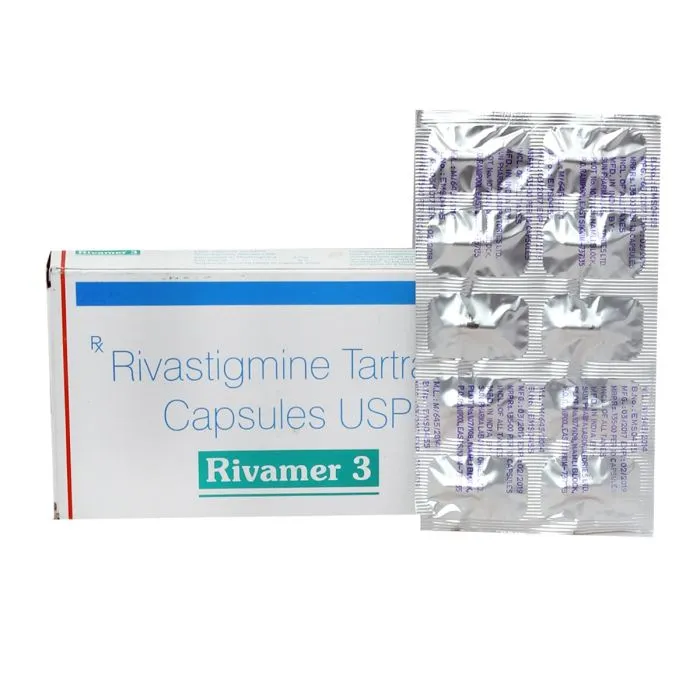
Rivamer 3mg (Rivastigmine)
Previous product
Sildenafil Oral Film 100mg (Sildenafil Citrate)
$14.00 $60.00Price range: $14.00 through $60.00
Next product
R-Cinex 300/450mg (Isoniazid/Rifampicin)
$30.00 $67.50Price range: $30.00 through $67.50
$22.50 $52.50Price range: $22.50 through $52.50
In Stock
In Stock
Rivamer 3mg (Rivastigmine)
| Pack Size | Price | Quantity | Add To Cart | |
|---|---|---|---|---|
| 30 Tablet/s | $22.50 | |||
| 60 Tablet/s | $35.00 | |||
| 90 Tablet/s | $52.50 | |||
| Want to order in bulk / B2B price? Send Inquiry | ||||
×
Sorry!! Out of Stock
Sorry! Rivamer 3mg (Rivastigmine) is out of stock
Please click below to view other similar medications.
View All Rivastigmine Products
Offer You Can't Resist
Free Shipping
Enjoy Free Shipping on Orders above AUD304 (USD199)
Estimate Shipping :
08 June - 15 June
40
Customer service
Customer service was responsive and medicines arrived in perfect condition
 Australia
May 19, 2026
Last Updated on May 18, 2026

Description
What is Rivamer 3mg?
Rivamer is a drug that contains Rivastigmine, a medication that is mainly used to treat the decline in cognitive function that can be caused by Alzheimer’s disease as well as Parkinson’s disease. It is part of a group of medicines known as Cholinesterase inhibitors and works by increasing the amount of acetylcholine, which is a neurotransmitter responsible for cognitive and memory functions in the brain.
Mechanism of Action
Rivastigmine works by reversibly inhibiting acetylcholinesterase and butyrylcholinesterase enzymes. They normally break down the synaptic cleft into acetylcholine. Through blocking these enzymes, rivastigmine improves the availability of acetylcholine at synapses between neurons, helping to increase the neuronal ability to communicate and memory, as well as attention and other cognitive impairments during dementia.
Indications and Uses
Rivamer 3 mg is typically used to treat:
- Mild to moderate Alzheimer’s disease: Enhance cognitive function and slow down the progression of the symptoms.
- Parkinson’s disease dementia: To manage the decline in cognitive function and to improve cognitive functioning.
- It is sometimes used in conjunction with other forms of dementia where cholinergic impairment is obvious.
Dosage and Administration
- Starting Dose: In general, treatment begins at 1.5 mg once a day (3 mg daily total dosage).
- Maintenance Dose: Gradually increasing every two weeks to 1.5 mg once daily, in a comfortable amount.
- Usual effective dose: Between 3 mg and 6 mg once a day (6-12 mg per day).
- Maximum Dose: Six mg or more every day.
- Tablets are best swallowed along with a glass of water. Typically, tablets are taken during meals in order to avoid the effects of gastrointestinal issues.
- A consistent timing for doses aids in maintaining steady drug levels.
Forms Available
Rivastigmine can be purchased as:
- Oral capsules/tablets (like Rivamer 3 mg)
- Oral solution
- Transdermal patches (providing continuous delivery and fewer GI side effects)
Benefits of Rivamer (Rivastigmine)
- Increases cognitive function, memory, and attention in the early stages of mild forms of dementia.
- Can help treat neuropsychiatric issues, including anxiety and apathy.
- Facilitates daily living activities and the quality of life for those who care for them and patients.
- The transdermal patch improves patient compliance and also reduces stomach discomfort.
Common Side Effects
They are usually mild to moderate and generally improve after continued therapy or a dose adjustment.
Serious Side Effects (Rare)
- Bradycardia (slow heart rate)
- Syncope (fainting)
- Gastrointestinal bleeding
- Seizures (rare)
- Severe allergic reactions
Precautions and Contraindications
- Cardiac issues: Take care when administering this medicine to patients who have disorders of conduction or a history of syncope.
- Asthma or COPD: May worsen bronchoconstriction.
- Gastrointestinal conditions: Beware of patients who have active bleeding or ulcers.
- Severe hepatic or renal impairment: Adjustments to dosages may be needed.
- Pregnancy and breastfeeding: Do not recommend unless the benefits outweigh risk.
- Allergy: Beware if you are allergic to rivastigmine or any other inhibitors of cholinesterase.
Drug Interactions
- Other cholinergic or anticholinergic drugs: Could have opposing or additive results.
- Beta-blockers and calcium channel blockers: Increases the risk of having bradycardia.
- Cholinesterase inhibitors: Avoid concurrent use.
- Antipsychotics or anticonvulsants: Could alter the effectiveness or worsen negative side effects.
Monitoring and Follow-up
- Check the cognitive function frequently to determine if it is functioning effectively.
- Be aware of any side effects be aware of any side effects, particularly GI symptoms as well as cardiac indications.
- Weight checks are regularly performed to identify a loss of weight.
- Inform the doctor of any severe dizziness, fainting, or unusual heart rhythms as soon as you notice them.
Tips for Patients and Caregivers
- Follow the prescribed dosage exactly. Don’t stop abruptly.
- Let your healthcare professional know about any other medications.
- Small, frequent meals may aid in reducing symptoms of nausea.
- Take care when standing rapidly to avoid the risk of dizziness.
- The need for regular follow-ups is for monitoring the progress.
Conclusion
Rivamer 3 mg (Rivastigmine) is an essential treatment for mild to moderate degenerative diseases in Parkinson’s disease and Alzheimer’s dementia. Enhancing the function of cholinergic neurons within the brain area, it assists in improving the quality of life and cognition and significantly improves the patient’s well-being. Although side effects can be common, they can be controlled by ensuring the proper dosage and monitoring.
Related products

Recently Viewed

Reviews
There are no reviews yet.