
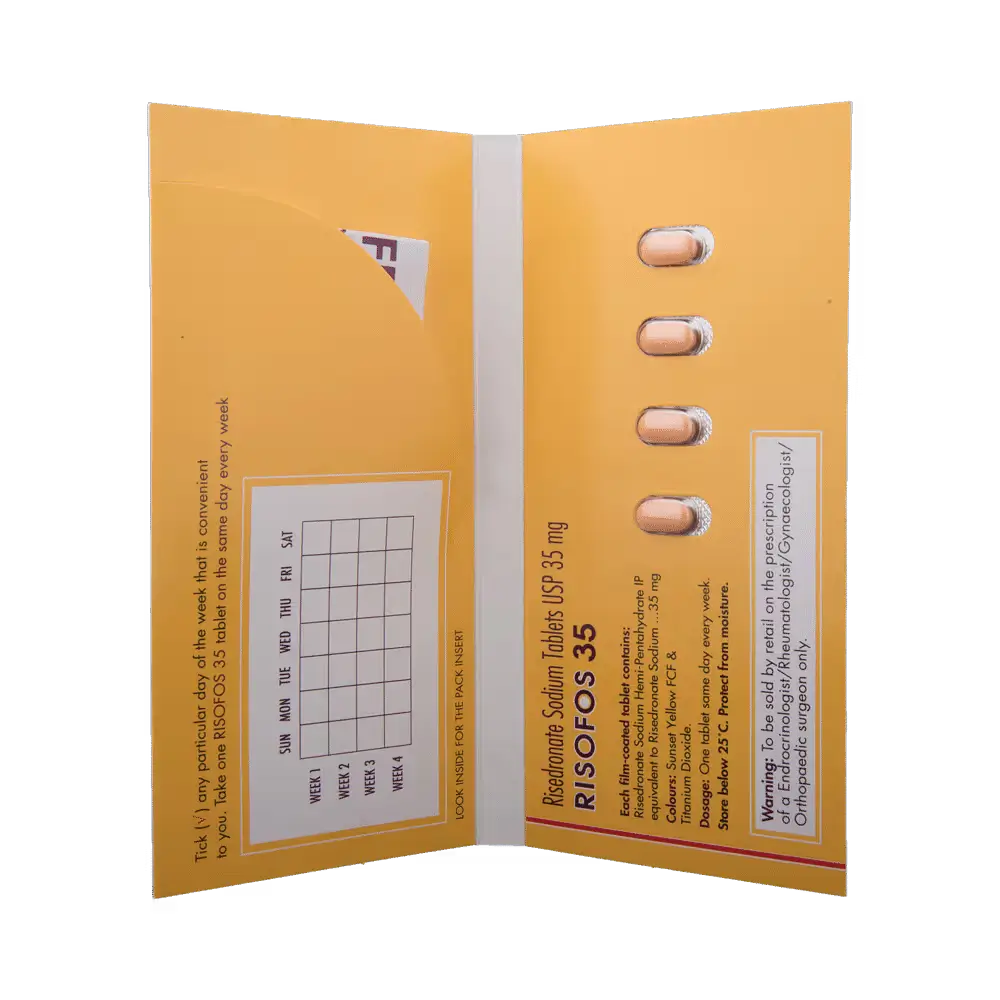
Risofos 35mg (Risedronate)
Previous product
Idrofos 3mg Injection (Ibandronic Acid)
A$47.65 A$274.36Price range: A$47.65 through A$274.36
Next product
Eprisan 50mg (Eperisone)
A$32.49 A$61.37Price range: A$32.49 through A$61.37
A$58.01 A$249.45Price range: A$58.01 through A$249.45
In Stock
In Stock
Risofos 35mg (Risedronate)
| Pack Size | Price | Quantity | Add To Cart | |
|---|---|---|---|---|
| 12 Tablet/s | A$58.01 | |||
| 32 Tablet/s | A$127.14 | |||
| 64 Tablet/s | A$249.45 | |||
| Want to order in bulk / B2B price? Send Inquiry | ||||
×
Sorry!! Out of Stock
Sorry! Risofos 35mg (Risedronate) is out of stock
Please click below to view other similar medications.
View All Risedronate Products
Offer You Can't Resist
Free Shipping
Enjoy Free Shipping on Orders above AUD304 (USD199)
Estimate Shipping :
04 September - 11 September
46
Trusted Service
Good experience overall. The team was responsive, the ordering process was simple, and I received clear information about my shipment. Professional service and good customer support.
 Australia
August 16, 2026
Last Updated on May 18, 2026

Description
Risofos 35mg (Risedronate): Uses, Benefits, and Precautions
Osteoporosis is an extremely common bone condition that affects millions across the globe, resulting in fragile bones as well as an increased chance of breaking. A highly efficient treatment option for osteoporosis management can be found in Risedronate that is available under various brand names, such as Risofos 35mg. It is a member of the class known as bisphosphonates and is commonly recommended to aid in strengthening bones and avoiding fractures.
In this blog, that is comprehensive, we’ll explore the details of Risofos 35mg dosage and how it functions, as well as when and how you can take it, the potential adverse effects, and the important aspects to take into consideration.
What is Risofos 35mg (Risedronate)?
Risofos 35mg is a prescription medicine that contains an active substance, Risedronate sodium, which is a bisphosphonate that is used mostly to treat and prevent osteoporosis among postmenopausal women as well as people at risk for fractures of the bone. Additionally, it can be used for other bone disorders that are characterized by the loss of bone, for instance, Paget’s disease, which is a bone disorder.
Risedronate slows down the process of reducing bone, which allows your body to create more robust bone tissue over time. It also reduces the likelihood of breaking bones, particularly on the hips, back, wrists, and ankles, which are the most frequent sites for osteoporosis-related fractures.
Understanding Osteoporosis and Why Treatment Matters
Osteoporosis manifests itself in reduced bone density, as well as the degradation of the bone’s microarchitecture. It results in weak bones, which are prone to fractures even in the case of minor injury or fall. It is commonly referred to as “the silent thief” because it is not symptomatic until fractures occur.
Some risk factors for osteoporosis include:
- Aging
- Postmenopausal status (due to decreased estrogen)
- Family history
- Low body weight
- Sedentary lifestyle
- Smoking and excessive alcohol consumption
- Certain medications (like corticosteroids)
- Certain medical conditions can affect the absorption of calcium or the metabolism of bone
Osteoporosis-related fractures can cause serious problems like chronic pain, diminished independence, and a greater risk of mortality. So, an effective treatment method such as Risofos is vital to ensuring good bone health and quality.
How Does Risofos 35mg Work?
Risedronate is part of the bisphosphonate category, which works by slowing osteoclast-mediated bone resorption. Osteoclasts, a type of cell that is specialized, are responsible for breaking down bone tissue. This is an integral element of bone remodeling. But in the case of osteoporosis growth of osteoclasts outpaces that of bone and results in net bone loss.
In binding with hydroxyapatite bones, risedronate can be selectively consumed at the sites that are active in bone remodelling. When osteoclasts are trying to break down bone that contains risedronate, their performance is compromised, which leads to a decrease in bone regeneration. The balance shifts towards the formation of bone, which results in an increase in bone mineralization as time passes.
The end result is better bones as well as a decrease in the chance of breaking.
Indications for Risofos 35mg
Risofos 35mg has been prescribed to treat:
- Postmenopausal osteoporosis: Prevent and treat osteoporosis among postmenopausal women.
- Osteoporosis in men: To treat osteoporosis and decrease the risk of fracture.
- Glucocorticoid-induced osteoporosis: For preventing bone loss when patients are receiving corticosteroids over a long period of time.
- Paget’s disease of bone: Regulate bone remodelling with this type of condition, which is characterised by abnormal bone development.
Dosage and Administration
The most commonly recommended dosage of Risofos 35mg is:
- 35 mg tablet once weekly.
How to Take Risofos Correctly
It is essential to take Risofos correctly is crucial for the best results and also reduces the risk of side effects, particularly those that affect the digestive tract.
- The tablet should be taken at the beginning of your day, on an empty stomach, at least 30 minutes before your first drink, food, or any other medication.
- Drink the tablet completely by drinking a glass (6-8 eight-ounce) of pure water. Do not drink mineral water or any other drinks.
- Don’t lie on your back and eat or drink any other beverage for a minimum of 30 minutes following the tablet.
- Don’t lie down for 30 minutes to avoid irritation of the esophagus.
- Always follow your physician’s directions and make sure you don’t miss any dosages.
Benefits of Risofos 35mg
- Increases bone mineral density: Studies have shown significant improvements in bone density within the hip and spine.
- Reduces fracture risk: It is effective in reducing the risk of hip, vertebral, and non-vertebral fractures.
- Convenient dosing: A weekly dose increases compliance when compared with daily regimens.
- Well-studied: Proven track record of effectiveness and safety.
Side Effects of Risofos 35mg
Although Risofos is usually well-tolerated, there are some who may have side effects. These include:
Common Side Effects
- Gastrointestinal discomfort (e.g., abdominal pain, nausea, indigestion)
- Acid reflux or heartburn
- Diarrhea or constipation
- Headache
- Muscle or joint pain
Less Common or Serious Side Effects
- Esophageal irritation or ulceration: It can cause discomfort, trouble swallowing, or even heartburn.
- Osteonecrosis of the jaw: Rare but severe problem affecting jawbones, most often in patients with cancer receiving the highest dose of bisphosphonates.
- Atypical femoral fractures: Rarely, injuries to the bone of the thigh have been reported after long-term usage.
- Hypocalcemia: Insufficient calcium levels, particularly for patients suffering from Vitamin D deficiency.
If you are experiencing chest pains, intense heartburn, trouble swallowing, or jaw pain, consult your doctor immediately.
Precautions and Contraindications
Who Should Avoid Risofos?
- Individuals who suffer from abnormal esophageal organs that are abnormal, like strictures or the condition known as achalasia.
- Patients who cannot stand up or sit for more than 30 minutes.
- People suffering from Hypocalcemia until they are corrected.
- Hypersensitivity is known to occur with risedronate and other bisphosphonates.
Important Precautions
- Be sure to get adequate vitamin D and calcium intake for the health of your bones.
- Tell your physician about any past kidney issues.
- If you are pregnant or nursing, you should consult your doctor, as there is no guarantee of safety.
- Use caution with children and teenagers unless it is prescribed by a medical professional.
- Let your healthcare provider know about any medicines you are taking to prevent interactions.
Lifestyle Tips to Support Bone Health While on Risofos
- Keep a balanced diet that is rich in calcium (dairy products, leafy vegetables) as well as vitamin D (fatty seafood, fortified food items, and exposure to sunlight).
- Participate in weight-bearing routines and exercise to strengthen your muscles.
- Beware of smoking cigarettes and reduce alcohol consumption.
- Avoid falls by creating safe surroundings at home and correcting your vision.
Monitoring and Follow-Up
In the course of treatment using Risofos, your doctor could:
- Regularly check the density of bone by DEXA scans.
- Check the function of your kidneys and check calcium levels.
- Examine adherence, and take care of adverse negative effects.
- Assess the necessity of continuing or changing the therapy.
Frequently Asked Questions (FAQs)
Q: How long does it take for Risofos to work?
A: The improvement in bone density can be observed within 6 to 12 months. However, fracture risk decreases require longer-term care, generally over several years.
Q: Can I take calcium or multivitamins with Risofos?
A: Minerals like calcium and others could interfere with absorption; therefore, it is recommended to take them no less than 30 mins after Risofos.
Q: What if I miss a dose?
A: Then take it as soon as you remember. Don’t double-dose on the same day.
Q: Can Risofos cause weight gain?
A: Weight gain isn’t the most common result of the disease.
Q: Can I stop taking Risofos once my bone density improves?
A: Talk to your physician, and the duration of treatment varies depending on the risk variables.
Conclusion
Risofos 35mg (Risedronate) is an essential component in treating osteoporosis. It is an established method for increasing the strength of bones and decrease risks of breaking. When you understand how to take the correct dosage, note adverse effects in the early stages, and pursue the right lifestyle, people will significantly enhance their bone health and overall quality of living.
If you are suffering from osteoporosis or you are in danger, seek out your doctor to determine if Risofos 35mg is the right choice for you. When properly managed, more robust bones as well as a healthier lifestyle are within your reach.
Related products




Recently Viewed


Reviews
There are no reviews yet.