
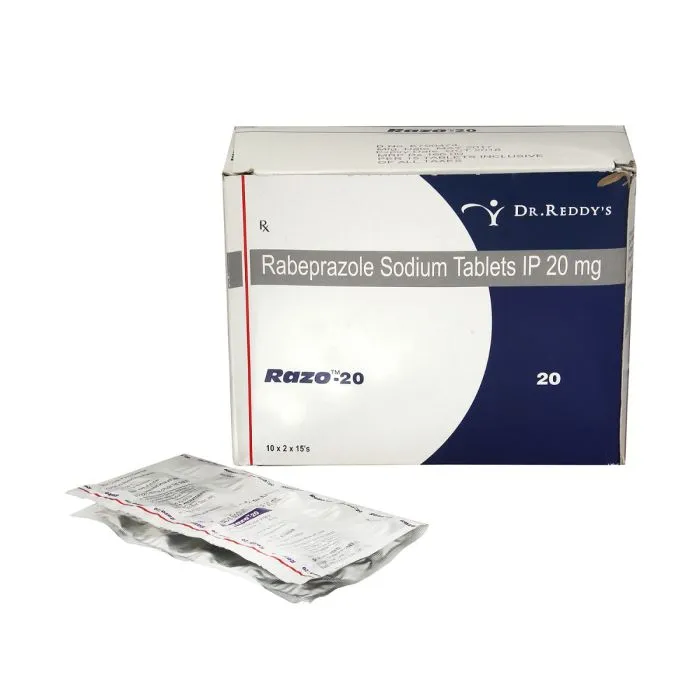
Razo 20mg (Rabeprazole)
Previous product
Rabicip 20mg (Rabeprazole)
A$31.50 A$52.50Price range: A$31.50 through A$52.50
Next product
Razo 10mg (Rabeprazole)
A$8.88 A$21.55Price range: A$8.88 through A$21.55
A$11.69 A$29.93Price range: A$11.69 through A$29.93
In Stock
In Stock
Razo 20mg (Rabeprazole)
| Pack Size | Price | Quantity | Add To Cart | |
|---|---|---|---|---|
| 30 Tablet/s | A$11.69 | |||
| 60 Tablet/s | A$21.18 | |||
| 90 Tablet/s | A$29.93 | |||
| Want to order in bulk / B2B price? Send Inquiry | ||||
×
Sorry!! Out of Stock
Sorry! Razo 20mg (Rabeprazole) is out of stock
Please click below to view other similar medications.
View All Rabeprazole Products
Offer You Can't Resist
Free Shipping
Enjoy Free Shipping on Orders above AUD304 (USD199)
Estimate Shipping :
17 June - 24 June
40
Professional service
Professional service from start to finish. Secure packaging, authentic products, and excellent customer care.
 Australia
May 28, 2026
Last Updated on May 16, 2026

Description
Introduction
Razo 20mg is a prescription medicine that contains the active ingredient Rabeprazole, a proton pump inhibitor (PPI) used to reduce excess stomach acid production. It is commonly prescribed for conditions such as acid reflux, gastroesophageal reflux disease (GERD), stomach ulcers, and other digestive disorders caused by excess acid.
By decreasing acid production in the stomach, Razo 20mg helps relieve symptoms such as heartburn, acidity, chest discomfort, stomach pain, and irritation in the digestive tract. It also supports healing of ulcers and inflammation in the stomach and esophagus.
What is Razo 20mg?
Razo 20mg contains Rabeprazole Sodium, a medicine that belongs to the proton pump inhibitor (PPI) class. It works by blocking the acid-producing pumps in the stomach lining, thereby reducing acid secretion.
Excess stomach acid can damage the lining of the stomach and esophagus, causing irritation, ulcers, and severe discomfort. Razo 20mg helps control these symptoms and promotes healing.
It is often prescribed for both short-term and long-term management of acid-related stomach conditions.
Composition of Razo 20mg
Each tablet of Razo 20mg contains:
- Rabeprazole Sodium 20mg
Rabeprazole works effectively to control stomach acid and reduce symptoms linked to digestive disorders.
How Does Razo 20mg Work?
Razo 20mg works by blocking the H+/K+ ATPase enzyme system, also called the proton pump, located in the stomach lining.
Normally, these proton pumps release stomach acid required for digestion. However, excessive acid production can lead to acid reflux, ulcers, and inflammation.
Rabeprazole suppresses acid production by:
- Blocking acid secretion in the stomach
- Reducing irritation in the digestive tract
- Helping heal ulcers and inflamed tissues
- Preventing acid from flowing back into the esophagus
Its action begins within a few hours after taking the medicine, but maximum acid suppression generally occurs after continuous use for 2–3 days.
Medical Uses of Razo 20mg
Razo 20mg is prescribed for several acid-related digestive conditions.
1. Gastroesophageal Reflux Disease (GERD)
GERD occurs when stomach acid repeatedly moves into the esophagus, causing:
- Heartburn
- Chest discomfort
- Sour taste in the mouth
- Difficulty swallowing
Razo 20mg reduces acid reflux and promotes healing of the esophageal lining.
2. Acid Reflux and Heartburn
People experiencing frequent acidity and burning sensation in the chest may benefit from Razo 20mg, as it helps reduce acid formation.
3. Peptic Ulcers
Stomach ulcers and duodenal ulcers may develop because of:
- Excess acid production
- Helicobacter pylori infection
- Long-term painkiller use
Razo helps ulcers heal by reducing acid irritation.
4. Erosive Esophagitis
Severe acid reflux may damage the esophagus and lead to inflammation or erosions. Razo 20mg supports tissue healing.
5. Zollinger-Ellison Syndrome
This rare condition causes excessive stomach acid production due to tumors called gastrinomas. Higher doses of Rabeprazole may be prescribed to control acid levels.
6. H. pylori Infection Treatment
Razo 20mg is often combined with antibiotics to eradicate Helicobacter pylori, a bacteria linked to ulcers and gastritis.
Dosage and Administration
The dosage of Razo 20mg depends on the medical condition and doctor’s recommendation.
Usual Dose
- GERD/Acid reflux: 20mg once daily
- Peptic ulcer: 20mg daily for 4–8 weeks
- H. pylori treatment: Used with antibiotics
- Zollinger-Ellison syndrome: Higher doses may be required
How to Take Razo 20mg
- Take the tablet 30–60 minutes before meals, preferably before breakfast.
- Swallow the tablet whole with water.
- Do not crush, chew, or break the tablet.
- Take it at the same time daily for better effectiveness.
Benefits of Razo 20mg
Razo 20mg offers several important benefits:
- Provides relief from acidity and heartburn
- Reduces stomach acid production effectively
- Helps heal ulcers faster
- Improves symptoms of GERD
- Protects the stomach and esophagus from acid damage
- Long-lasting acid suppression for up to 24 hours
- Well tolerated in most patients
Side Effects of Razo 20mg
Like any medicine, Razo 20mg may cause side effects in some people.
Common Side Effects
- Headache
- Nausea
- Vomiting
- Diarrhea
- Constipation
- Abdominal pain
- Gas or bloating
- Dizziness
These side effects are generally mild and temporary.
Serious Side Effects
Seek medical attention if you experience:
- Severe allergic reactions
- Persistent diarrhea
- Severe stomach pain
- Muscle cramps or weakness
- Low magnesium levels
- Signs of vitamin B12 deficiency
- Bone weakness or fractures after long-term use
Long-Term Use Risks
Long-term use of proton pump inhibitors like Rabeprazole may increase the risk of:
- Vitamin B12 deficiency
- Magnesium deficiency
- Bone fractures
- Gut infections
- Kidney problems (rare)
Doctors generally recommend using the lowest effective dose for the shortest duration needed.
Precautions and Warnings
Before taking Razo 20mg, inform your doctor if you have:
- Liver disease
- Kidney problems
- History of allergies to proton pump inhibitors
- Osteoporosis
- Vitamin deficiencies
Pregnancy and Breastfeeding
Pregnant or breastfeeding women should use Razo 20mg only under medical supervision.
Alcohol Consumption
Avoid alcohol as it can worsen acid reflux and stomach irritation.
Drug Interactions
Razo 20mg may interact with certain medicines, including:
- Warfarin
- Methotrexate
- Ketoconazole
- Iron supplements
- Clopidogrel
- Certain HIV medicines
Tell your doctor about all medicines, vitamins, and herbal supplements you take.
Lifestyle Tips While Taking Razo 20mg
To improve treatment results:
- Avoid spicy and oily foods
- Reduce caffeine intake
- Stop smoking
- Avoid alcohol
- Eat smaller meals
- Do not lie down immediately after eating
- Maintain a healthy body weight
These lifestyle habits can significantly reduce acidity symptoms.
Related products





Recently Viewed

Reviews
There are no reviews yet.