

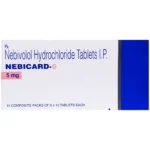
Nebicard 10mg (Nebivolol)
Previous product

Nebicard 5mg (Nebivolol)
$30.00 $75.00Price range: $30.00 through $75.00
Next product

Telma 80mg (Telmisartan)
$21.00 $47.00Price range: $21.00 through $47.00
$38.00 $94.00Price range: $38.00 through $94.00
In Stock
In Stock
Nebicard 10mg (Nebivolol)
| Pack Size | Price | Quantity | Add To Cart | |
|---|---|---|---|---|
| 30 Tablet/s | $38.00 | |||
| 60 Tablet/s | $63.00 | |||
| 90 Tablet/s | $94.00 | |||
| Want to order in bulk / B2B price? Send Inquiry | ||||
×
Sorry!! Out of Stock
Sorry! Nebicard 10mg (Nebivolol) is out of stock
Please click below to view other similar medications.
View All Nebivolol Products
Offer You Can't Resist
Free Shipping
Enjoy Free Shipping on Orders above AUD304 (USD199)
Estimate Delivery :
21 September - 28 September
45
Very easy to order
I have been struggling with staying focused and maintaining productivity for years, particularly during long workdays. After researching various options, I decided to give Modalert 100 MG a try, and I can confidently say it has been a game-changer for me.
 Australia
February 11, 2025
Response from Modalertaustralia
Thank you for sharing your experience! We’re glad to hear Modalert 100 MG has helped support your focus and productivity during long days. Feedback like this means a lot to us and to others considering their options. Please continue to use the medication as directed, and feel free to reach out if you ever need assistance.
Last Updated on April 30, 2026

Description
Introduction
Nebicard 10mg, which has its active ingredient Nebivolol, is a drug frequently prescribed for treating hypertension (high blood pressure) as well as heart-related ailments like heart failure. It’s part of a class of medicines that are known as beta-blockers that are utilized to treat cardiovascular diseases by affecting the ability of the heart to react to specific events. Nebivolol is a specific beta-1 adrenergic receptor antagonist, which makes it extremely specific for targeting the heart and providing a favorable treatment for those suffering from specific heart diseases.
Mechanism of Action
Nebivolol is a drug that blocks beta-1 adrenergic receptors within the heart. These receptors are normally activated by the hormone adrenaline. If these receptors are activated, they can increase the heart rate as well as the force of contraction. Through blocking these receptors, Nebivolol can slow the rate of heartbeat and lessen the burden on the heart. This helps reduce blood pressure and may alleviate symptoms for patients suffering from heart failure.
In addition, Nebivolol has a unique vasodilatory action, which is not found in beta-blockers. It is because of its capacity to boost the production of nitric oxide (NO) which is a chemical that aids in dilation of blood vessels. This leads to lower blood pressure and offers additional benefits by reducing stress on the heart.
Pharmacokinetics
Nebivolol is well-absorbed by mouth, and plasma levels typically reach within 2 to 4 hours. Its half-life span is about 10 to 12 hours. This is in line with its daily dosing schedule. It is processed in the liver mainly via the Cytochrome P450 system. It is then eliminated mainly through urine.
The effects that the drug has are generally lasting, due to the beta-1 receptor’s highly selective blocking ability, Nebivolol typically produces less side effects when in comparison to other non-selective beta blockers. The effects it has on the heart rate and blood pressure are slow, with the majority of patients noticing an improvement in a couple of days of beginning treatment.
Indications
Nebivolol is most often prescribed to treat:
- Hypertension (High Blood Pressure): It aids in lowering blood pressure through reducing the heart’s workload as well as increasing blood vessel relaxation. Achieving effective blood pressure control is essential to avoid issues like kidney attacks and heart disease.
- Heart Failure: For patients suffering from chronic heart failure, Nebivolol has proven beneficial in ameliorating symptoms and improving outcomes. It is able to improve the tolerance to exercise, decrease hospitalizations, and improve the overall level of living.
In some instances, Nebivolol can also be prescribed off-label to treat disorders like arrhythmias, headaches, or other anxiety-related heart problems, even though the use of these drugs is not generally suggested or accepted.
Dosage and Administration
The most common dose for Nebicard (Nebivolol) will be 5 mg once a day. If needed, the dosage could be increased to 10 mg once a day, following a time between 1 and 2 weeks, to test the tolerance. If a patient has heart disease or impaired liver or renal function, it is possible that the dosage needs to be altered.
The tablet is best taken in a pill form, whether or not with food. It is recommended that patients consume the medication every day to ensure they retain the dose. It is crucial not to abruptly stop Nebivolol treatment without consulting your physician, in case abrupt withdrawal could cause a rebound that causes heart rate to increase, and blood pressure to increase dramatically.
Contraindications and Precautions
Nebivolol is not recommended for those with:
- Severe bradycardia (slow heart rate)
- Severe hypotension (low blood pressure)
- Heart block greater than first degree
- Cardiogenic shock
- Severe liver impairment
- Hypersensitivity to Nebivolol or any of the other ingredients
Patients who have a history of asthma or chronic obstructive lung disease (COPD) are advised to exercise cautiously when taking Nebivolol due to the possibility of bronchospasm. However, Nebivolol is typically thought to be more secure in the event of developing these conditions compared to non-selective beta-blockers. It is recommended to exercise caution in patients suffering from diabetes since beta-blockers could mask the signs that are caused by the condition known as hypoglycemia (low levels of blood sugar).
Patients with a previous history of peripheral blood vessel diseases and Raynaud’s syndrome could also have to be watched closely since beta-blockers may aggravate the conditions.
Side Effects
Just like any other medication, Nebivolol can cause side effects, but not everyone is likely to experience them. Some of the most frequent side effects include:
- Fatigue
- Headache
- Dizziness
- Bradycardia (slow heart rate)
- Diarrhea
- Nausea
A few more severe, yet not as common, side effects could be:
- Severe hypotension (low blood pressure)
- Heart block or arrhythmias
- Respiratory difficulties
- Swelling of the extremities
- Depression or mood changes
Rarely, patients might experience the reaction of an allergy to Nebivolol, which manifests in signs like itching, rashes, swelling, or trouble breathing. Medical attention should be sought immediately when any of these symptoms are observed.
Interactions
Nebivolol is a drug that interacts with various medications. The most important interactions are:
- Calcium channel blockers (such as verapamil or diltiazem): These medications can increase the lower heart rate effects of Nebivolol, which increases the chance of developing heart block, bradycardia, or even a heart attack.
- Other antihypertensives: In combination with other medicines that lower blood pressure, like ACE inhibitors or diuretics, can create an additive effect which increases the risk of developing hypotension.
- Digoxin: It is used to treat arrhythmias and heart problems. Digoxin is also able to slow the rate at which your heart beats, which, when in combination with Nebivolol, could result in excess bradycardia.
- Nonsteroidal anti-inflammatory drugs (NSAIDs): Regular usage of NSAIDs could reduce the efficacy of blood pressure-lowering medication such as Nebivolol.
Patients are advised to notify their medical professionals of every medication they’re currently taking, which includes over-the-counter medications and supplements, in order to prevent harmful interactions.
Benefits of Nebivolol
The main benefit of Nebivolol is its capability to efficiently control hypertension as well as heart failure, as well as providing a better adverse effects profile than other beta-blockers. The drug’s cardioselectivity lets it focus on the beta-1 receptors of the heart, which reduces the possibility of unintentional adverse effects such as bronchospasm.
Furthermore, the drug’s vasodilatory effects Due to the release of nitric oxide reduce blood pressure and also increase the health of the vascular system. This double action can make Nebivolol a very effective drug for those who require both blood pressure control as well as heart protection, in particular the setting of chronic heart insufficiency.
Conclusion
Nebicard 10mg (Nebivolol) is a highly effective and well-tolerated medicine for treating high blood pressure and a failing heart. Its specific action on beta-1 adrenergic receptors, with its capability to trigger vasodilation, makes it a viable treatment option for those suffering from cardiovascular issues. Like all medications, it is essential to adhere to your physician’s directions, be on the lookout for the potential for adverse reactions, and keep track of any other medications they might be taking in order to prevent dangerous interactions with other drugs.
Related products


Recently Viewed
Reviews
There are no reviews yet.