
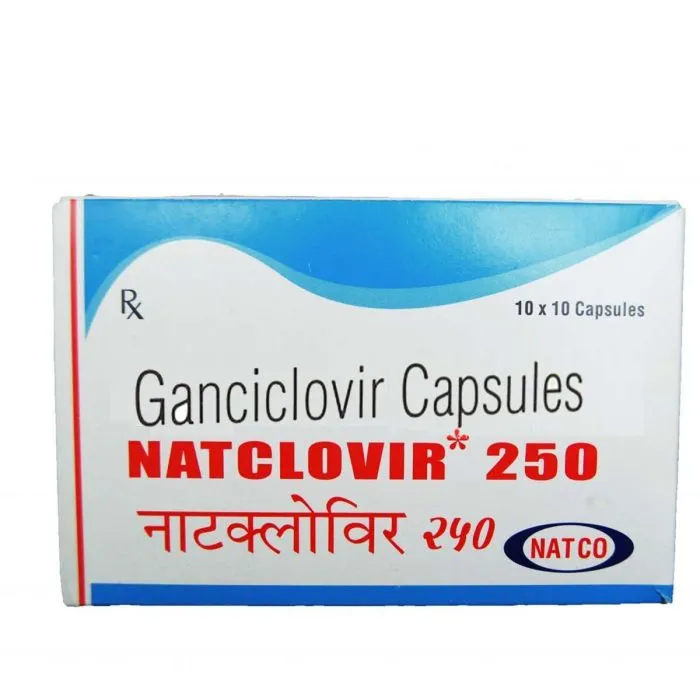
Natclovir 250mg Injection (Ganciclovir)
Previous product

Natclovir 500mg Injection (Ganciclovir)
$325.30 $946.70Price range: $325.30 through $946.70
Next product

Vomistop 10mg (Domperidone)
$4.56 $11.34Price range: $4.56 through $11.34
$325.30 $946.70Price range: $325.30 through $946.70
In Stock
In Stock
Natclovir 250mg Injection (Ganciclovir)
| Pack Size | Price | Quantity | Add To Cart | |
|---|---|---|---|---|
| 3 Injection/s | $325.30 | |||
| 6 Injection/s | $637.60 | |||
| 9 Injection/s | $946.70 | |||
| Want to order in bulk / B2B price? Send Inquiry | ||||
×
Sorry!! Out of Stock
Sorry! Natclovir 250mg Injection (Ganciclovir) is out of stock
Please click below to view other similar medications.
View All Ganciclovir Products


Offer You Can't Resist
Free Shipping
Enjoy Free Shipping on Orders above AUD304 (USD199)
Estimate Delivery :
02 October - 09 October
24
Clear and straightforward to order
Fast, inexpensive and great products.
 Australia
February 19, 2025
Response from Modalertaustralia
Thank you for your great feedback! We’re happy to hear you’re satisfied with our pricing, fast service, and product quality. Providing value and reliability is always our goal. We truly appreciate your support!
Last Updated on April 30, 2026

Description
Introduction
Natclovir 250mg Injection is a formulation for pharmaceuticals that contains Ganciclovir, which is an antiviral drug that is used principally to treat CMV (CMV) infections. CMV is a part of the herpesvirus family. It could cause severe infections and complications, especially for those with weak immune systems, for example, those who undergo organ transplants, or those suffering from HIV/AIDS. Ganciclovir is the active ingredient of Natclovir, a powerful drug in curing CMV-related infections by stopping the replication of the virus.
Ganciclovir is a drug that targets the viral DNA and prevents the virus from growing and spreading throughout the body. It is commonly employed in hospitals under the guidance of health experts due to its effectiveness and the possibility of adverse negative side adverse effects.
In this document, we will discuss what we can do to make it easier for you. Natclovir 250mg Injection How it works, what uses it for, dose, adverse consequences, safety precautions, as well as other important information to ensure the safe and efficient administration of it.
What is Natclovir 250mg Injection?
Natclovir 250mg Injection is an injection-only, sterile form of Ganciclovir that is utilized to treat a variety of viral illnesses; especially ones resulted from cytomegalovirus (CMV). CMV infection can lead to serious issues for people with immunocompromised bodies, including those who suffer from HIV or cancer, as well as after organ transplantation.
A 250mg dose is normally taken in a vein (IV) in an institution such as a hospital or a clinic. Ganciclovir is an effective drug. Nucleoside analog. It works by disrupting the synthesis of DNA in viruses, which makes it highly effective against all kinds of herpesviruses. CMV is one.
How Does Natclovir 250mg Injection (Ganciclovir) Work?
Ganciclovir, which is the active ingredient of Natclovir, acts by imitating an organic substance (deoxyguanosine) inside the human body. This is a brief explanation of the mechanism it uses:
- Viral DNA Inhibition: Ganciclovir transforms into its active version, Ganciclovir triphosphate, inside infected cells. When activated, Ganciclovir triphosphate fights the nucleotides in nature that are required by the virus to duplicate its DNA.
- Interference with Viral Replication: Incorporating in the DNA chain of viral replication, Ganciclovir triphosphate stops further lengthening of DNA, thereby stopping the virus’s capacity to reproduce. It also limits the ability of the virus to spread and causes affected cells to cease producing the virus’s new particles.
- Selective Activity: Ganciclovir is a specific drug against the virus, meaning that it primarily affects the infected cells and has less effect on healthy, normal cells. It can, however, create toxicity in certain instances and, in particular, those suffering from impaired kidney or bone marrow function.
Uses of Natclovir 250mg Injection
Natclovir (Ganciclovir) can be employed for the prevention and treatment of CMV-related infections. These can be particularly harmful in those with a compromised immune system. Its main uses include:
Cytomegalovirus (CMV) Retinitis
CMV retinitis can be a severe eye disease that can be found among people suffering from weak immune systems, specifically people with HIV/AIDS. If not treated, CMV retinitis can lead to blindness. Ganciclovir is frequently utilized to treat CMV retinitis and to prevent further damage to the retina.
CMV Prophylaxis in Organ Transplant Recipients
Patients who have organ transplants (such as liver, kidney, and heart transplants) are more at risk of CMV infection because of the administration of immunosuppressive medication. Ganciclovir helps to reduce the risk of CMV infections among these patients in the immunosuppression period.
Prevention and Treatment of CMV in HIV/AIDS Patients
For HIV-positive patients who have low CD4 number, CMV infections can cause grave complications such as digestive issues, retinitis, and pneumonia. Ganciclovir can be used for treatment as well as a prevention measure to decrease the possibility of CMV-related complications in patients with these conditions.
- CMV Pneumonitis
CMV may also affect the lungs and cause pneumonitis (inflammation of lung tissues). It is a severe condition that needs immediate treatment, typically by using Ganciclovir.
- Other Herpesvirus Infections (Off-label use)
Though it’s mostly used to treat CMV infection, Ganciclovir could occasionally be prescribed off-label to treat different herpesvirus-related infections intolerant to the standard antiviral treatment. It is the case for infections caused by herpes simplex virus (HSV) as well as varicella-zostervirus (VZV).
Dosage and Administration of Natclovir 250mg Injection
The dose of Natclovir (Ganciclovir) is figured out according to the individual’s health and the kidney’s function, age, as well as the patient’s response to treatment. The drug is given intravenously (IV), typically in healthcare settings.
Common Dosage for CMV Retinitis:
- Initial Treatment: A typical dose for starting dose is five mg per kilogram of body weight every 12 hours. This is given as an intravenous infusion.
- Maintenance Dose: Following the initial phase of treatment, it is possible to decrease the dose by 5 mg/kg twice an each day to ensure continued maintenance.
For CMV Prophylaxis in Organ Transplantation:
- The dose for prophylactic purposes is generally 5 mg/kg twice daily from 14 to 30 days after transplantation, based on the severity of the disease as well as the immunosuppressive treatment.
For CMV Pneumonitis in HIV/AIDS Patients:
- Similar dosage protocols to those used for CMV Retinitis are used, which include 5 mg/kg once every 12 hours beginning, and then an ongoing regimen.
Side Effects of Natclovir 250mg Injection
While Ganciclovir can be extremely effective for treating CMV infections, it could result in some unwanted side effects, particularly when taken for extended durations or in large dosages. The most common side effects are:
- Bone Marrow Suppression: The most frequently reported adverse side effects of Ganciclovir can be bone Marrow Suppression and could cause lower white blood cell count (neutropenia), decreased platelet count (thrombocytopenia), and anemia. The conditions may increase the likelihood of getting bleeding, infections, and fatigue.
- Renal Toxicity: Ganciclovir could alter kidney function, especially for patients who have pre-existing kidney problems or who are taking large doses. Kidney function must be checked frequently throughout treatment.
- Gastrointestinal Issues: Patients may feel nausea and vomiting. They may also experience diarrhea or abdominal pain.
- Fever and Chills: Chills and fever are typical adverse reactions that are common, particularly in the beginning period of treatment.
- Headache and Fatigue: Certain individuals might be afflicted with headaches, dizziness, or fatigue after taking Ganciclovir.
- Rash and Skin Reactions: Reactions to skin, like itching or rashes, may happen, but they are usually not serious.
- Liver Toxicity: In rare instances, Ganciclovir could cause liver damage, which can manifest as elevated levels of liver enzymes and jaundice (yellowing of the eyes and skin).
- Neurological Effects: Sometimes, Ganciclovir could trigger seizures or cause other symptoms of neurological origin, specifically in patients suffering from already-existing neurological disorders.
Precautions and Warnings
- Renal Function: Ganciclovir is eliminated primarily by the kidneys. As such, those with impaired renal function must be monitored closely, and dosages could have to be adjusted according to kidney function.
- Pregnancy and Breastfeeding: Ganciclovir is classed as a Class C medication during pregnancy. That means its safety in pregnancy is not well confirmed. The drug should be used only in cases where the potential benefits exceed the potential risks. The drug is also excreted into breastmilk. Therefore, breastfeeding during Ganciclovir treatment is not advised.
- Bone Marrow Suppression: Monitoring blood count closely is vital when you are taking Natclovir, particularly when it is a long-term regimen. The thrombocytopenia and neutropenia may make it more likely for infections as well as bleeding.
- Drug Interactions: Ganciclovir may interact with other drugs that can affect kidney function, like cyclosporine or aminoglycosides. This combination should be utilized with care, and renal function needs to be monitored closely.
- Hematologic Monitoring: Regular blood tests must be performed to look the presence of the bone marrow being depleted (low levels of blood cells).
- Patient Monitoring: Given the possibility of severe side effects, those taking Ganciclovir must be monitored closely within a medical setting, particularly in the initial couple of days after starting therapy.
Conclusion
Natclovir 250mg Injection, which contains Ganciclovir it, is a very efficient treatment for cytomegalovirus (CMV) infections, particularly for immunocompromised patients including transplant recipients, HIV patients and people suffering from cancer. Ganciclovir acts by preventing the replication of DNA in viral cells that prevents the growth of CMV within the body.
Although Natclovir has many benefits, it is also associated with the risk of serious adverse reactions, in particular regarding the suppression of bone marrow and the kidneys are a target for toxicity. In the end it is imperative to monitor the dosage and make adjustments are essential all through the process of treatment.
Related products



Recently Viewed
Reviews
There are no reviews yet.