
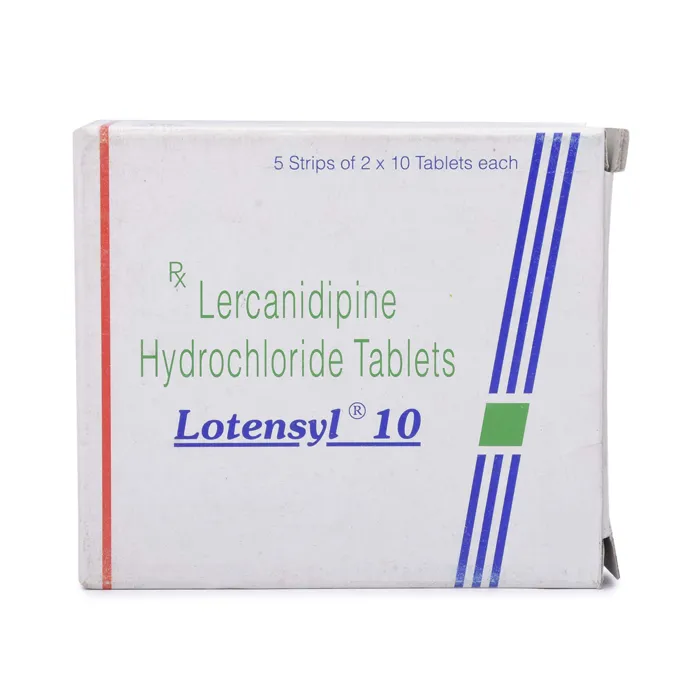
Lotensyl 10mg (Lercanidipine)
Previous product

Listril 10mg (Lisinopril)
$31.00 $63.00Price range: $31.00 through $63.00
Next product
Aldactone 25mg (Spironolactone)
$20.00 $55.00Price range: $20.00 through $55.00
$17.00 $27.00Price range: $17.00 through $27.00
In Stock
In Stock
Lotensyl 10mg (Lercanidipine)
| Pack Size | Price | Quantity | Add To Cart | |
|---|---|---|---|---|
| 60 Tablet/s | $17.00 | |||
| 90 Tablet/s | $22.00 | |||
| 120 Tablet/s | $27.00 | |||
| Want to order in bulk / B2B price? Send Inquiry | ||||
×
Sorry!! Out of Stock
Sorry! Lotensyl 10mg (Lercanidipine) is out of stock
Please click below to view other similar medications.
View All Lercanidipine Products
Offer You Can't Resist
Free Shipping
Enjoy Free Shipping on Orders above AUD304 (USD199)
Estimate Shipping :
07 June - 14 June
42
Last Updated on April 19, 2026

Description
Introduction
Lotensyl 10mg is the brand designation of Lercanidipine, which is a drug that is primarily utilized for treating hypertension (high blood pressure). It’s part of the class of medications that are known as calcium channel blockers. The medication can relax and enlarge blood vessels. This makes it more efficient for the heart muscle to circulate blood that in turn reduces blood pressure.
The maintenance of a healthy blood pressure is crucial to prevent grave cardiovascular issues like heart attack, stroke, and kidney damage. Lotensyl is commonly recommended to lower blood pressure as well as enhance overall cardiovascular health.
Chemical Nature and Mechanism of Action
Lercanidipine is a dihydropyridine calcium channel blocker. It selectively controls the movement of calcium ions through the L-type calcium channels that are found in the cells of smooth muscles that line the blood vessels.
- Calcium Channels: The channels permit calcium ions into cells, which triggers muscles contraction.
- Action: By blocking these channels, Lercanidipine stops calcium from reaching the muscle cells and causing relaxation of the smooth muscle in the vascular system.
- Result: The relaxation causes vasodilation (widening of blood vessels) and reduces peripheral vascular resistance, consequently decreasing blood pressure.
Contrary to many calcium channel blockers, Lercanidipine features an onset that is gradual and a long duration of effect, allowing continuous blood pressure control.
Indications
Lotensyl 10mg is used to treat:
- Essential Hypertension: It’s used by adults to manage hypertension when lifestyle changes are not sufficient.
- Sometimes, off-label use is used in conjunction with therapy for various cardiovascular diseases when blood pressure management is vital.
The effective management of blood pressure lowers the chance of developing complications, such as:
- Stroke
- Myocardial infarction (heart attack)
- Heart failure
- Kidney disease related to hypertension
Dosage and Administration
- Standard Dose: The recommended starting dose for Lotensyl (Lercanidipine) will be 10mg every day.
- Administration: The medicine is consumed orally, usually before meals, and by drinking the addition of water.
- Dose Adjustment: In the event of a patient’s reaction to treatment, dosages can be increased up to 20mg daily.
- Monitoring: The blood pressure must be checked frequently to evaluate the efficacy and alter the dose accordingly.
- People with liver impairment, or patients with a chronic illness, may need fewer doses or a more careful adjustment.
Pharmacokinetics
- Absorption: Lercanidipine is easily absorbed by mouth. However, its bioavailability is approximately 10% due to the high first-pass metabolism occurring in the liver.
- Peak Concentration: The effect is seen within 1-3 hours of consumption.
- Half-Life: About 8-10 hours. Allow one dose per day.
- Metabolism: Primarily metabolized by liver enzyme CYP3A4.
- Excretion: The majority of the waste is processed through the feces. Just a tiny amount gets eliminated unchanged from the urine.
Side Effects
Even though Lotensyl is usually well-tolerated, some adverse reactions may happen:
Common Side Effects
- Headache
- Dizziness or lightheadedness (especially on standing up quickly)
- Flushing or warmth of the skin
- Palpitations or rapid heartbeat
- Edema (swelling), particularly in the ankles and feet
Less Common but Serious Side Effects
- Hypotension (excessively low blood pressure)
- Severe allergic reactions such as rash, itching, or swelling
- Liver function abnormalities (rare)
- Increased heart rate (reflex tachycardia)
If severe adverse reactions or adverse side effects develop, patients must be treated by a physician immediately.
Precautions and Contraindications
Precautions
- Pregnancy and Breastfeeding: Pregnancy safety is not yet established. Use only when necessary and under medical supervision.
- Liver impairment: A dose adjustment is possible. Patients with liver diseases should stay away from this drug.
- Elderly patients: Could be more sensitive to blood pressure-lowering effects.
- Concomitant use with CYP3A4 inhibitors: The use of ketoconazole and erythromycin could increase the levels of Lercanidipine, which increases the likelihood of adverse reactions.
Contraindications
- There is an established hypersensitivity reaction to Lercanidipine or dihydropyridines
- Severe hypotension (low blood pressure)
- Cardiogenic shock or unstable angina
- Severe aortic stenosis (a condition where the aortic valve is narrowed)
Drug Interactions
Lercanidipine is processed by CYP3A4. Therefore, use alongside other drugs that hinder or stimulate this enzyme may alter its levels in plasma.
- Inhibitors (increase Lercanidipine levels):
- Ketoconazole
- Itraconazole
- Erythromycin
- Ritonavir
- Inducers (decrease Lercanidipine levels):
- Rifampicin
- Carbamazepine
- Phenytoin
Also, be cautious in conjunction with any other drugs or antihypertensives that alter heart rate and rhythm.
Patient Counseling and Lifestyle Advice
- Regularly take Lotensyl, and take one each all day.
- Beware of sudden movements in your posture in order to avoid dizziness.
- Don’t stop taking the medication without contacting your physician, even if it seems like you’re doing well.
- Eat a nutritious diet, work out regularly, and stay clear of excess salt consumption to aid in blood pressure management.
- Do not drink too much since it may cause a rise in blood pressure.
- Tell your doctor about the medications and supplements that you’re taking.
Summary
Lotensyl 10mg (Lercanidipine) is an efficient calcium channel blocker that is used to control high blood pressure that is high. Relaxing blood vessels lowers the risk of cardiovascular disease and assists in maintaining normal blood pressure levels. Monitoring regularly, being aware of potential side effects, and adhering to doses prescribed by the doctor are essential for maximizing advantages and decreasing the risk.
Related products


Reviews
There are no reviews yet.