
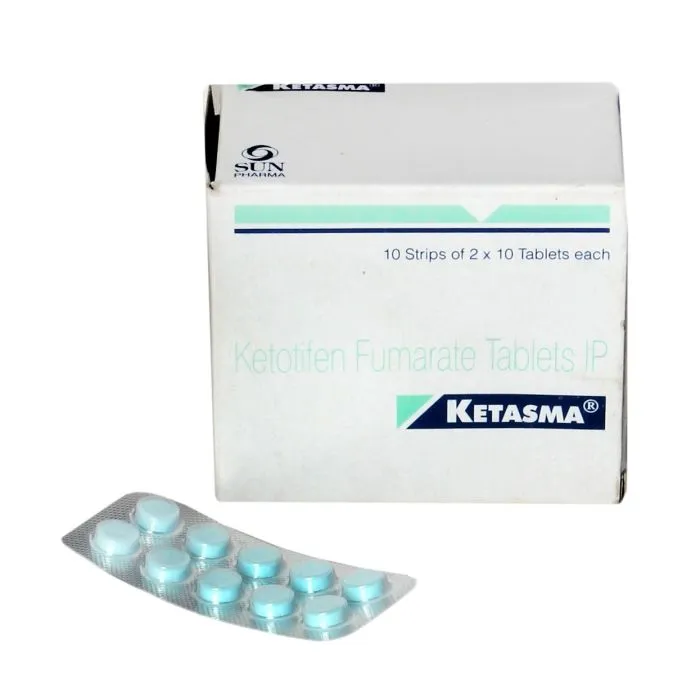
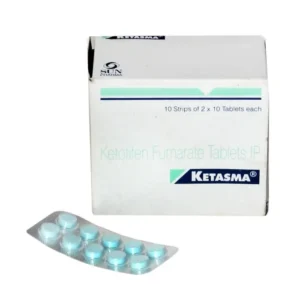
Ketasma (Ketotifen)
Previous product

Ipravent Rotacaps (Ipratropium Bromide)
$5.00 $14.00Price range: $5.00 through $14.00
Next product

Montair Plus (Montelukast/Bambuterol)
$42.00 $80.00Price range: $42.00 through $80.00
$7.00 $17.00Price range: $7.00 through $17.00
In Stock
In Stock
Ketasma (Ketotifen)
| Pack Size | Price | Quantity | Add To Cart | |
|---|---|---|---|---|
| 30 Tablet/s | $7.00 | |||
| 60 Tablet/s | $12.00 | |||
| 90 Tablet/s | $17.00 | |||
| Want to order in bulk / B2B price? Send Inquiry | ||||
×
Sorry!! Out of Stock
Sorry! Ketasma (Ketotifen) is out of stock
Please click below to view other similar medications.
View All Ketotifen Products


Offer You Can't Resist
Free Shipping
Enjoy Free Shipping on Orders above AUD304 (USD199)
Estimate Shipping :
09 June - 16 June
30
Last Updated on April 18, 2026

Description
Ketasma (Ketotifen): A Complete Guide to This Antiallergic Medication
Ketasma is a trademark name used for the medicine Ketotifen, which is part of the antihistamine class of medicines. It’s used primarily for treating and preventing allergies, including asthma, hay fever, as well as chronic Urticaria (hives). Ketotifen is not just an antihistamine, but it also contains stabilizing effects on mast cells, which makes it effective in the treatment of long-term allergic disorders.
In this post on the blog this blog post, we’ll provide a thorough review of Ketasma (Ketotifen)–how it functions how it works, the conditions it treats, the benefits of taking it, negative effects, and the most important things to be aware of.
What is Ketasma (Ketotifen)?
Ketasma is a source of an active component called Ketotifen fumarate, which is an antihistamine that also has anti-allergic and mast cell stabilizing qualities. It’s commonly used for:
- Bronchial asthma (as a preventive, not for acute attacks)
- Allergic rhinitis (hay fever)
- Chronic urticaria (hives)
- Atopic dermatitis
- Other allergic conditions involving mast cell activation
Important Note: Ketasma is not the type of asthma bronchodilator which as it is not suitable to treat severe asthma attacks. It can decrease the severity and frequency of allergic reactions by taking it frequently throughout.
How Does Ketasma Work?
Ketotifen is a result of double mechanisms:
- Antihistamine Action
Ketotifen can be described as a H1 receptor antagonist, which means it inhibits histamine, a chemical that causes allergies, such as itching, a runny nose, and hives.
- Mast Cell Stabilization
Ketotifen helps to stabilize mast cells, as immune cells that release histamine as well as various other chemical compounds during allergic reactions. Preventing the degranulation of mast cells reduces the production of allergens.
The dual effect ensures that Ketotifen is highly effective at stopping allergic manifestations, specifically for chronic diseases such as asthma and eczema.
Indications: What is Ketasma Used For?
Ketasma (Ketotifen) is typically prescribed for: typically used for:
- Allergic asthma (for long-term prevention, not immediate relief)
- Allergic rhinitis (sneezing, nasal congestion, itchy nose)
- Chronic urticaria (long-term hives)
- Atopic dermatitis (eczema)
- Allergic conjunctivitis
- Food allergies (as part of a preventive treatment plan)
Dosage and Administration
The dosage is dependent on your weight, age, and the disease that is being diagnosed. Here are some general guidelines; however, always follow the doctor’s prescriptions.
For Adults and Children Over 3 Years:
- 1 mg twice daily (morning and evening)
- In certain instances, it is possible to have the dosage raised to 2 mg daily.
For Children (6 months to 3 years):
- 0.05 mg/kg twice daily
General Guidelines:
- Drink it before or following meals to help reduce stomach upset
- In the case of asthma, continual usage is required for about 4-6 weeks to experience the full benefits
- Avoid using it to treat acute asthma attacks
Available Forms
Ketasma is available in many types:
- Tablets (1 mg)
- Syrup (1 mg/5 ml) – for children
- Eye drops (Ketotifen fumarate ophthalmic solution) – for allergic conjunctivitis
Benefits of Ketasma (Ketotifen)
✅ Long-Term Asthma Control
Aids in reducing the intensity and frequency, and severity, particularly in those with asthma who are allergic to children.
✅ Effective in Chronic Allergies
It is ideally suitable for chronic allergic rhinitis as well as eczema and itching that doesn’t respond to the short-term use of antihistamines.
✅ Prevents Histamine Release
Contrary to most antihistamines, which only inhibit histamine receptors, Ketotifen blocks the release of histamine and is therefore more effective for prevention.
✅ Suitable for Children
Ketotifen is frequently employed in pediatric health because of its safety profile as well as its effectiveness in reducing allergies.
Side Effects of Ketasma
Ketasma is typically well-tolerated, but as with all medicines, it can trigger negative side effects. The majority of these are mild and get better with time.
Common Side Effects:
- Drowsiness or sedation
- Dry mouth
- Dizziness
- Increased appetite or weight gain
- Irritability in children
Rare Side Effects:
- Nervousness
- Nausea or stomach upset
- Headache
- Skin rash
- Insomnia (rare, especially at higher doses)
Note: Drowsiness is common in the initial few days, but typically, it decreases over time.
Precautions and Warnings
Before you begin Ketasma, be sure to let your doctor be aware of the following:
- Do you suffer from epilepsy or a previous history of seizures (Ketotifen could reduce the threshold for seizures)
- Are pregnant or breastfeeding (use only if clearly needed)
- Have liver disease
- Are taking CNS depressants (e.g., sleeping pills, alcohol, sedatives)
Important:
- Don’t discontinue taking your medication abruptly in particularly if it is used over a long period to treat asthma.
- Do not drive or operate machines that are heavy machines until you are aware of the effects it has on your health (due to the possibility of sleepiness).
Drug Interactions
Ketotifen could interact with:
- Alcohol – increases sedative effect
- Other antihistamines or sedatives – may cause excessive drowsiness
- Oral antidiabetic medications – rare interactions; monitor blood sugar closely
- Theophylline – could increase its impact when you suffer from asthma
Be sure to inform your physician of any medications you take to ensure that there are no interactions.
Ketasma vs Other Antihistamines
| Feature | Ketasma (Ketotifen) | Cetirizine | Loratadine | Diphenhydramine |
| Sedation | Moderate | Low | Low | High |
| Duration | Long-term control | Short-term relief | Short-term relief | Short-term relief |
| Mast cell stabilization | ✅ Yes | ❌ No | ❌ No | ❌ No |
| Asthma prevention | ✅ Yes | ❌ No | ❌ No | ❌ No |
Ketotifen is more proactive in its nature, and it works for a long time. Others, such as cetirizine and loratadine, can be employed for rapid relief.
Storage Instructions
- Keep the product at room temperature (below 25°C)
- Beware of the sun, humidity, as well as heat
- Make sure that the items are out of children’s reach.
Frequently Asked Questions (FAQs)
How long does it take for Ketasma to work?
It can take up to six weeks for continuous usage to realize its full potential, specifically to prevent asthma.
Can Ketasma be used during an asthma attack?
No. This isn’t the type of bronchodilator that is ever prescribed for sudden asthma attacks. Utilize an emergency inhaler (like salbutamol) to get quick relief.
Is Ketotifen a steroid?
No, there is no need to worry; Ketotifen is an antihistamine but not a steroid.
Can Ketasma be used in children?
Yes, but under the supervision of a doctor. The syrup type is usually used with small children.
Final Thoughts
Ketasma (Ketotifen) is an effective, dual-action antiallergic drug that not only inhibits histamine release but also blocks its release by stabilizing mast cells. It is extremely effective in the long-term control of allergies, asthma, eczema, and urticaria, particularly in children.
While it’s not guaranteed to give instant relief, it’s a great prevention option for those suffering from chronic or persistent allergic issues. Similar to any other medication, take it under the supervision of a physician and remain mindful that the advantages get better with usage as time passes.
Additional Information
| Manufacturer | Sun Pharmaceutical Industries Ltd |
|---|---|
| Pharmaceutical | Tablet/s |
| Strength | 1 mg |
| Pack Size | 30 Tablet/s, 60 Tablet/s, 90 Tablet/s |
Related products






Recently Viewed



Reviews
There are no reviews yet.