
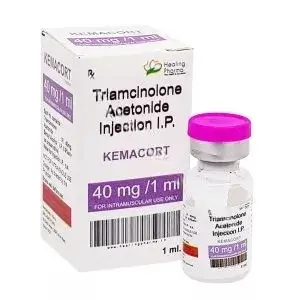
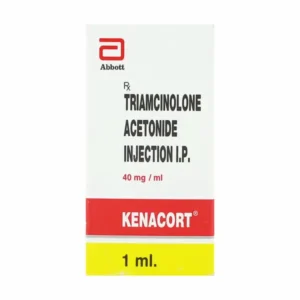
Kemacort Injection (Triamcinolone)
Previous product

Oxuba (Oxaceprol)
$20.00 $53.00Price range: $20.00 through $53.00
Next product
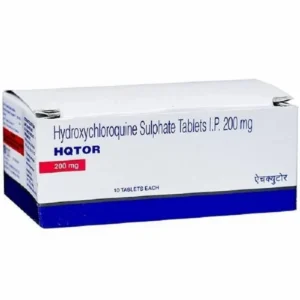
HQTOR (Hydroxychloroquine Sulfate)
$60.00 $162.00Price range: $60.00 through $162.00
$20.00 $49.00Price range: $20.00 through $49.00
In Stock
In Stock
Kemacort Injection (Triamcinolone)
| Pack Size | Price | Quantity | Add To Cart | |
|---|---|---|---|---|
| 10 Injection/s | $20.00 | |||
| 20 Injection/s | $35.00 | |||
| 30 Injection/s | $49.00 | |||
| Want to order in bulk / B2B price? Send Inquiry | ||||
×
Sorry!! Out of Stock
Sorry! Kemacort Injection (Triamcinolone) is out of stock
Please click below to view other similar medications.
View All Triamcinolone Products
Offer You Can't Resist
Free Shipping
Enjoy Free Shipping on Orders above AUD304 (USD199)
Estimate Shipping :
12 July - 19 July
25
Last Updated on April 18, 2026

Description
Introduction
Kemacort Injection is a source of Triamcinolone, an artificial corticosteroid with powerful anti-inflammatory and immunosuppressive capabilities. It is frequently employed in the clinical setting for treating a variety of allergies, inflammation, as well as autoimmune disorders. Triamcinolone is administered through various routes, such as intramuscular injections, intra-articular injections, epidural, and intralesional injections.
Pharmacology
- Class: Corticosteroid (Glucocorticoid).
- Mechanism of Action: Triamcinolone is akin to endogenous cortisol, delivering powerful anti-inflammatory as well as suppressive effects through:
- By blocking the infiltration of leukocytes within the area of inflammation.
- Inhibiting the production of inflammation mediators such as prostaglandins and leukotrienes.
- Inducing capillary permeability and less edema.
- Reducing immune response through the suppression of the activity of lymphocytes.
This results in a decrease in inflammation, decreased immune activation, as well as relief from symptoms such as pain and swelling.
Indications
Kemacort Injection is used for:
- Inflammatory conditions: Rheumatoid arthritis, osteoarthritis, bursitis, tendonitis.
- Allergic reactions: Severe allergic dermatitis, asthma exacerbations.
- Autoimmune diseases: Lupus, multiple sclerosis exacerbations.
- Dermatologic conditions: Psoriasis, keloids, lichen planus.
- Respiratory conditions: Severe asthma, COPD exacerbations.
- Neurological conditions: Epidural steroid injections for radiculopathy, nerve inflammation.
- Other uses: Certain eye inflammation diseases require adjuvant chemotherapy for cancer.
Dosage and Administration
- Formulation: Usually, it’s available as triamcinolone acetonide suspension to inject.
- Route: Intramuscular (IM), intra-articular (into joints), intralesional (into skin lesions), or epidural.
- Dosage: Variable based on intensity, indication, as well as the factors that affect the patient.
- Injectable doses for joints can range from 10 mg to 40 mg for each joint.
- IM dosages to achieve systemic effects vary from 20 mg to 80 mg. Repeated at intervals of a few weeks if needed.
- It is recommended to be handled by certified health experts.
- An aseptic and clean technique must be used to avoid the spread of infections.
Pharmacokinetics
- In the event of an intramuscular injection, the triamcinolone drug is slowly absorbed, and it can last longer in action (up to a few weeks).
- In the liver, it is metabolically active.
- Excreted via urine.
- The depot formulation allows long-term release.
Contraindications
- Systemic fungal infections.
- Hypersensitivity to triamcinolone or other corticosteroids.
- Live vaccines are administered during the treatment with corticosteroids.
- Systemic infections that are not treated.
Side Effects
Common Side Effects:
- The swelling and pain are at the site of injection.
- Atrophic, mildly localized skin lesions or hypopigmentation following intralesional injections.
- Increased blood sugar levels (hyperglycemia).
- Insomnia, mood changes.
Serious Side Effects (especially with prolonged or high-dose use):
- Suppression of hypothalamic-pituitary-adrenal (HPA) axis.
- Infections that are suppressed can increase the chance.
- Osteoporosis.
- Cataracts or glaucoma (with repeated or ocular use).
- Cushingoid features (weight gain, moon face).
- Muscle weakness.
- Peptic ulcers.
Precautions
- Utilize the lowest dose effective, which is the shortest amount of time, in order to limit the effects on your system.
- Monitor blood glucose in diabetic patients.
- Beware of abrupt withdrawal following prolonged therapy. Reduce the dose gradually.
- Take care when treating patients with osteoporosis, diabetes, hypertension, or infections.
- Do not inject into sites with infections.
- Follow up regularly for the long-term use to evaluate adverse effects.
Drug Interactions
- Could reduce the effectiveness of vaccinations.
- It is possible to interact with medications that affect CYP3A4 (an enzyme that is responsible for metabolism).
- The use of NSAIDs in conjunction with each other increases the risk of stomach ulcers.
- It can enhance the effects of anticoagulants. It is important to monitor their effects.
Use in Special Populations
- Pregnancy: Only use if the benefits are greater than the risk; corticosteroids cross the placenta.
- Lactation: A small amount of excreted from breast milk. Take care to avoid it.
- Pediatrics: Growth suppression possible; use minimal effective dose.
- Elderly: Greater susceptibility to side effects.
Patient Counseling
- Inform patients of possible adverse effects and the need to follow up.
- Be sure to notify your physician of any indications of illness or other unusual signs.
- It is important not to abruptly stop using it when you have been using it for a long time.
- Apply sunscreen and take precautions to prevent skin injury on injection sites.
- Be aware of any changes in your mood or sleeping patterns.
Storage
- Keep the temperature of your room at a controlled level (20-25°C).
- Guard yourself from the sun’s rays.
- Be sure to keep away from youngsters.
Summary
Kemacort Injection (Triamcinolone) can be described as a multifaceted corticosteroid product widely used due to its powerful anti-inflammatory and immunosuppressive properties. It’s efficient in managing many inflammatory allergies, allergic, and other immune-mediated diseases. A proper administration, dosage, and monitoring are vital in order to maximize the benefits and reduce the risk.
Additional Information
| Manufacturer | Healing Pharma, India |
|---|---|
| Pharmaceutical | Injection |
| Strength | 40 mg |
| Pack Size | 10 Injection/s, 20 Injection/s, 30 Injection/s |
Related products



Reviews
There are no reviews yet.