
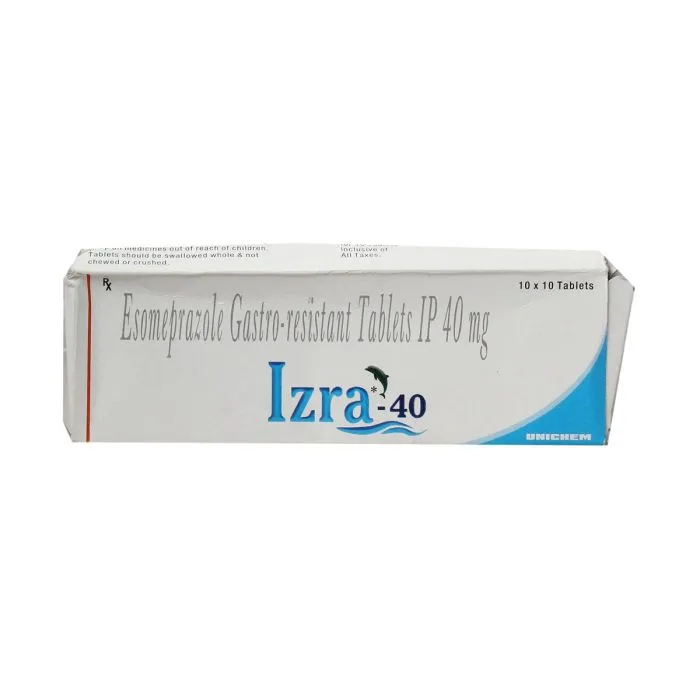
Izra 40 mg (Esomeprazole)
Previous product

Glycolate 2mg (Glycopyrrolate)
A$44.10 A$126.00Price range: A$44.10 through A$126.00
Next product

Aciloc 25mg Injection 30ml (Ranitidine)
A$214.20 A$623.14Price range: A$214.20 through A$623.14
A$11.69 A$29.93Price range: A$11.69 through A$29.93
In Stock
In Stock
Izra 40 mg (Esomeprazole)
| Pack Size | Price | Quantity | Add To Cart | |
|---|---|---|---|---|
| 30 Tablet/s | A$11.69 | |||
| 60 Tablet/s | A$21.99 | |||
| 90 Tablet/s | A$29.93 | |||
| Want to order in bulk / B2B price? Send Inquiry | ||||
×
Sorry!! Out of Stock
Sorry! Izra 40 mg (Esomeprazole) is out of stock
Please click below to view other similar medications.
View All Esomeprazole Products

Offer You Can't Resist
Free Shipping
Enjoy Free Shipping on Orders above AUD304 (USD199)
Estimate Shipping :
19 June - 26 June
44
Best quality
Quality medicines at reasonable prices. Delivery was faster than expected, and everything arrived in perfect condition.
 Australia
May 24, 2026
Last Updated on April 13, 2026

Description
Izra 40 mg (Esomeprazole): Comprehensive Overview
Generic Name: Esomeprazole Magnesium
Brand Name: Izra
Drug Class: Proton Pump Inhibitor (PPI)
What is Esomeprazole?
Esomeprazole is an inhibitor of the proton pump that decreases stomach acid. It is extensively employed to treat acid-related digestive ailments by blocking the last process of producing acid in the stomach lining.
Mechanism of Action
The drug works by inhibiting the H+/K+ATPase enzyme (proton pump) that is located in stomach parietal cells. The enzyme is responsible for releasing hydrochloric acid in the stomach. Inhibiting this enzyme, esomeprazole reduces the amount of gastric acid produced and causes a rise in stomach pH as well as relief from symptoms associated with acid.
Indications
Izra 40 mg (Esomeprazole) is prescribed to treat:
- Gastroesophageal reflux disease (GERD)
- Erosive esophagitis
- Peptic ulcer disease
- Zollinger-Ellison syndrome
- Treatment and prevention of gastric ulcers that are caused by NSAIDs
- Helicobacter pylori eradication (as part of combination therapy)
- Pathological hypersecretory conditions
Dosage and Administration
- The recommended dosage can be 40 mg once a day and is usually consumed before meals.
- The duration of treatment varies based on the condition being addressed and can range between 4-8 weeks.
- To maintain the therapy, lower dosages (e.g., 20 mg per day) can be prescribed.
- Tablets are best taken as a whole, with water. Tablets shouldn’t be crushed or chewed.
- A consistent timing (before meals) can improve the efficacy of your diet.
Pharmacokinetics
- Absorption: It is well absorbed by mouth; however, bioavailability can be lowered by foods.
- Peak plasma concentration: Between 1 and 2 hours after the dose.
- Half-life: Around 1 to 1.5 hours.
- Metabolism: Primarily in the liver by CYP2C19 and CYP3A4 enzymes.
- Excretion: Most often, fecal and renal.
Side Effects
Common side effects:
- Headache
- Diarrhea or constipation
- Nausea and abdominal pain
- Flatulence
Serious but rare side effects:
- Vitamin B12 deficiency (with long-term use)
- Hypomagnesemia (low magnesium levels)
- Higher risk of bone fractures during prolonged usage
- Clostridium difficile-associated diarrhea
- Allergic reactions (rash, itching, swelling)
Contraindications
- Hypersensitivity to esomeprazole as well as other PPIs
- Use in conjunction with other drugs such as Rilpivirine (HIV medicine)
Drug Interactions
- Reduces absorption for drugs that require an acidic atmosphere (e.g., ketoconazole, atazanavir).
- Interactions can interact with Clopidogrel and reduce its effectiveness.
- Metabolized by CYP enzymes; therefore, interactions with inducers and inhibition of CYP2C19 and CYP3A4 could affect esomeprazole concentrations.
Precautions
- Take care when using this method for patients suffering from serious liver disease.
- In the long run, it is important to monitor any potential bone problems or deficiencies.
- It is not recommended to have a baby except when absolutely needed.
- Be sure to inform your physician to avoid interactions.
Patient Counseling
- Consume Izra 40 mg according to the dosage prescribed. Izra 40 mg, best taken before breakfast.
- Be careful not to stop therapy abruptly without consulting a medical professional.
- Contact your physician if you notice persistent constipation or signs of the presence of magnesium deficiency.
- Make sure to keep track of your appointments and monitor the progress.
Related products



Reviews
There are no reviews yet.