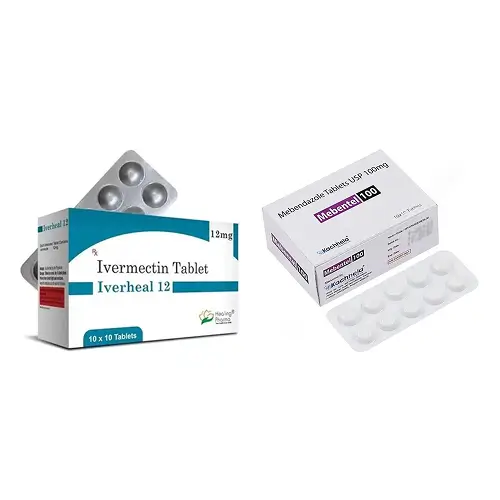
Ivermectin+Mebendazole
Previous product
Ivermectin+Fenbendazole+Mebendazole
$154.36 $436.58Price range: $154.36 through $436.58
Next product
Ivermectin+Fenbendazole
$121.62 $343.03Price range: $121.62 through $343.03
$118.50 $328.99Price range: $118.50 through $328.99
In Stock
In Stock
Ivermectin+Mebendazole
| Pack Size | Price | Quantity | Add To Cart | |
|---|---|---|---|---|
| 1 Pack | $118.50 | |||
| 2 Pack/s | $227.64 | |||
| 3 Pack/s | $328.99 | |||
| Want to order in bulk / B2B price? Send Inquiry | ||||
×
Sorry!! Out of Stock
Sorry! Ivermectin+Mebendazole is out of stock
Please click below to view other similar medications.
View All Ivermectin Products

Offer You Can't Resist
Free Shipping
Enjoy Free Shipping on Orders above AUD304 (USD199)
Estimate Shipping :
16 June - 23 June
49
Good Packagingg
Professional packaging and timely delivery. Highly recommend this medicines website
 Australia
May 20, 2026
Last Updated on April 13, 2026

Description
Introduction
Infections caused by parasites affect millions of people around the world, especially in subtropical and tropical regions. In order to combat these diseases successfully, combination treatments may be used, which utilise the synergistic mechanisms of various antiparasitic medications.
The Ivermectin + Mebendazole combination is an example of a method of treatment that is used to expand protection against parasites. The combination can target a broad range of intestinal and tissue parasites and offers greater efficiency in the treatment of co-infections as well as massive parasite burdens.
Individual Drug Profiles
Ivermectin
- Class: Antiparasitic (macrocyclic lactone)
- Mechanism: Binds to specific glutamate-gated chloride channels within invertebrate nerves and muscle cells, thereby increasing the permeability of chloride ions, which causes hyperpolarization, paralysis, and the death of parasites.
- Spectrum: It is effective in fighting the nematodes (roundworms) as well as Ectoparasites (lice and Scabies mites), as well as a few tissue parasites.
- Common Uses: Onchocerciasis, strongyloidiasis, scabies, lice infestations, filariasis.
Mebendazole
- Class: Benzimidazole antiparasitic
- Mechanism: The drug blocks tubulin polymerization by parasites, causing disruption to microtubule formation crucial for glucose absorption and resulting in energy depletion and the death of parasites.
- Spectrum: Most effective in tackling intestinal nematodes, such as Ascaris Lumbricoides (roundworm), Trichuris trichiura (whipworm), as well as hookworms (Ancylostoma duodenale and Necator americanus), along with certain cestodes.
- Common Uses: Intestinal helminthiasis that includes ascariasis, Trichuriasis, hookworm, and pinworm.
Rationale for Combination
Ivermectin and mebendazole with a broad-spectrum antiparasitic action that covers the entire spectrum of intestinal and tissue parasites:
- Ivermectin is a parasite killer that targets the bloodstream or tissues (e.g., microfilariae) and a few intestinal nematodes.
- Mebendazole can be extremely beneficial against intestinal helminths that consume glucose to stay alive.
The combination could be beneficial for areas with multiple parasitic diseases or for large-scale medication administration (MDA) initiatives aimed at lowering the burden of parasites within communities.
Indications
The combination of ivermectin + mebendazole is typically used to treat:
- Mixed intestinal helminth infections: The co-infection is caused by whipworms, roundworms, and hookworms.
- Strongyloidiasis and various other infections caused by nematodes, where there is an intestinal helminthiasis that is concurrently present.
- Mass deworming programmes in areas of endemicity in order to lessen the burden of parasitic diseases.
- Investigational or off-label use for certain filarial diseases or ectoparasitic infections that are accompanied by intestinal worms.
Pharmacodynamics and Mechanism of Action
Ivermectin:
- Channels that is glutamate-gated in the muscle and nerve cells of parasites.
- Induces death and paralysis of parasites through disruptions to the transmission of neural signals.
- Acute toxicity due to the lack of channels like these in mammals.
Mebendazole:
- Binds to β-tubulin within parasites and inhibits the microtubule’s assembly.
- Stops the glucose absorption, which leads to depletion of energy and even death.
- Primarily affects the intestinal cells of parasites, hindering their growth and survival.
Together, they attack diverse biological pathways, thus reducing the risk of developing resistance and increasing the effectiveness.
Dosage and Administration
Dosage schedules may differ based on the severity, type, and nature of the infection, the weight of patients, and clinical guidelines. Always follow the advice of a physician’s specific directions.
Typical Adult Dosing:
- Ivermectin:
150 to 200 mcg/kg in a single oral dose. Usually, it is repeated every 1-2 weeks based on the level of infection. - Mebendazole:
100 mg once daily for three days or an individual dose of 500 mg according to the level of severity.
Pediatric Dosing:
- Ivermectin doses based on weight (150-200 mcg/kg).
- Mebendazole 100 mg, twice a day for three days, or 500 mg at once with respect on age and the severity of infection.
Administration Tips:
- Ivermectin is best taken on an empty stomach, accompanied by water to aid in absorption.
- Mebendazole is a drug that can be consumed either with or without food. However, fatty meals can increase the absorption.
- Two drugs can be administered concurrently or sequentially according to the clinical setting.
Pharmacokinetics
Ivermectin:
- Absorption in the oral cavity is fast and rapid. Peak plasma levels after 4 hours.
- Metabolized through CYP3A4 enzymes that are found in the liver.
- The excretion is mostly in the Feces.
Mebendazole:
- Insufficiently absorbed orally (<10 %). It is absorbed locally by the intestines.
- Metabolized in the liver. Metabolites released in bile and urine.
- The lower exposure to the system reduces the toxic risks.
Side Effects
Common Side Effects (both drugs combined):
- Gastrointestinal: Nausea, vomiting, abdominal pain, diarrhea.
- Neurological: Dizziness, headache (more common with ivermectin).
- Skin: Rash, itching.
- Fatigue, malaise.
Less Common/Serious Side Effects:
- Allergic reactions (rare but may include anaphylaxis).
- Hepatotoxicity (rare).
- A variety of neurological symptoms, including seizures, confusion (rare in the presence of ivermectin).
- A reaction resembling Mazzotti in severe filarial infection (fever, rash, Joint pain).
Contraindications
- Hypersensitivity to either Ivermectin or mebendazole.
- Severe liver impairment.
- Be cautious when using during pregnancy; the advantages must be greater than the risks.
- Children with weight restrictions that are not as high (typically <15 kg for ivermectin) need special attention.
- The patients with neurological issues must be closely monitored.
Precautions
- Conduct appropriate diagnostic tests to determine the parasite’s species.
- Check liver function when the treatment lasts for a long time, or when the patients suffer from liver disease.
- Be aware of drug interactions, particularly with those that are metabolized by CYP3A4.
- Averting patients suffering from immunocompromised diseases.
- Beware of alcohol consumption during treatment to ease stress on your liver.
Drug Interactions
- Ivermectin: Metabolized through CYP3A4. The levels of CYP3A4 are influenced by inhibitors (ketoconazole and erythromycin) as well as inducers (rifampin and carbamazepine).
- Mebendazole: Absorption of minimal systemic doses, fewer interactions, but be cautious with medications that affect liver metabolism.
- Combining use doesn’t significantly increase the risks of interactions; however, it is important to check with your healthcare professional.
Use in Pregnancy and Lactation
- Both are classified as Category C to treat pregnancy. They should be used only in cases where the benefits could outweigh the risk.
- Insufficient information on the safety of nursing mothers; seek advice from a healthcare professional.
- When it comes to mass deworming, there are many benefits that outweigh the dangers due to health effects.
Clinical Considerations
- This combination can be particularly beneficial when dealing with polyparasitic illnesses prevalent in tropical regions.
- A large-scale drug distribution combination has helped reduce the burden of helminths that are transmitted by soil, as well as filarial infections.
- The development of resistance is a major concern, as is combination therapy. Combination therapy reduces the chance of developing resistance.
- The education of the patient on sanitation and hygiene is essential in order to avoid reinfection.
Storage
- Keep both medicines at ambient temperatures (15-30°C).
- Guard against moisture and direct sunlight.
- Make sure that the area is safe for youngsters.
Summary
The Ivermectin + Mebendazole combination provides a powerful and broad-spectrum treatment for an array of parasites in the intestinal and tissues. The unique effect of Ivermectin in the parasite’s nerve channels, with mebendazole’s ability to inhibit energy metabolism in the parasite, creates a synergistic effect.
This is especially beneficial for endemic zones in which mixed infections are common, as well as in large-scale treatments aimed at parasite disease management. Although it is effective, it is important to be cautious about the dosage, contraindications, as well as surveillance for adverse effects.
Additional Information
| Manufacturer | Healing Pharma, India, Kachhela Medex Pvt.Ltd |
|---|---|
| Pharmaceutical | Tablet/s |
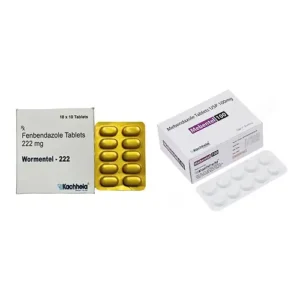
| Tablet/s | Iverheal 12mg (ivermectin) = 60 Pills, , Mebentel 100mg (Mebendazole) = 60 Pills |
Related products

Recently Viewed