
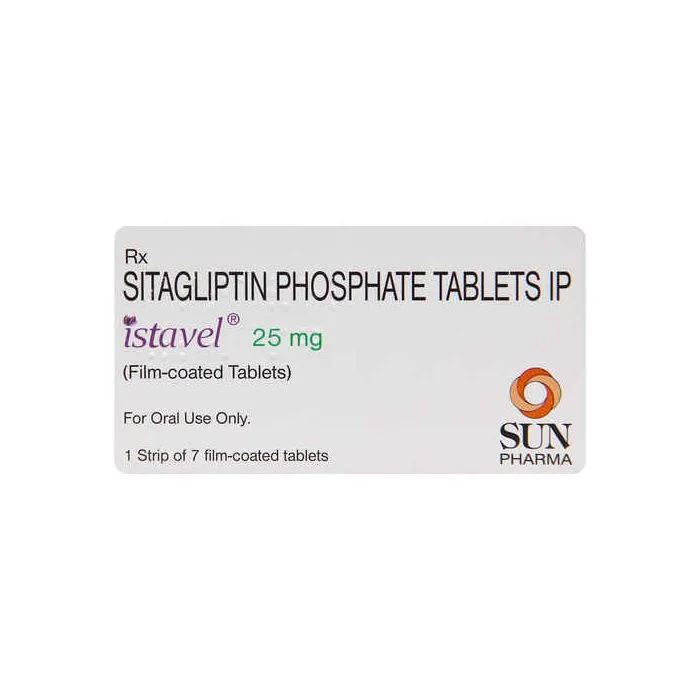
Istavel 25mg (Sitagliptin)
Previous product
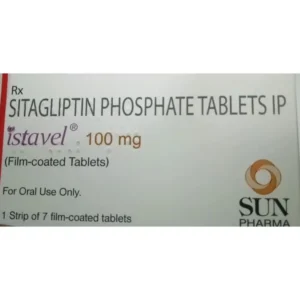
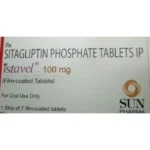
Istavel 100Mg (Sitagliptin)
A$149.80 A$380.80Price range: A$149.80 through A$380.80
Next product
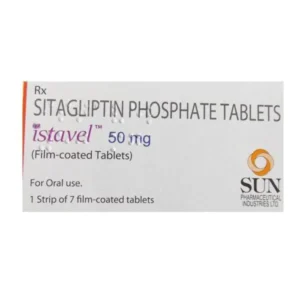
Istavel 50mg (Sitagliptin)
A$98.00 A$231.00Price range: A$98.00 through A$231.00
A$70.00 A$168.00Price range: A$70.00 through A$168.00
In Stock
In Stock
Istavel 25mg (Sitagliptin)
| Pack Size | Price | Quantity | Add To Cart | |
|---|---|---|---|---|
| 100 Tablet/s | A$70.00 | |||
| 200 Tablet/s | A$126.00 | |||
| 300 Tablet/s | A$168.00 | |||
| Want to order in bulk / B2B price? Send Inquiry | ||||
×
Sorry!! Out of Stock
Sorry! Istavel 25mg (Sitagliptin) is out of stock
Please click below to view other similar medications.
View All Sitagliptin Products
Offer You Can't Resist
Free Shipping
Enjoy Free Shipping on Orders above AUD304 (USD199)
Estimate Shipping :
07 June - 14 June
42
Excellent service
Excellent service! My order was processed quickly and delivered on time. The medicines were well-packaged and exactly as described. Highly recommended.
 Australia
May 26, 2026
Last Updated on April 13, 2026

Description
Overview
Istavel 25mg is a generic version of Sitagliptin, which is an agent used to maintain blood sugar levels in individuals suffering from type 2 diabetes mellitus (T2DM). Sitagliptin belongs to a category of medications known as DPP-4 inhibitors (dipeptidyl peptidase-4 inhibitors).
It’s usually used together with other medications for diabetes that include metformin, sulfonylureas as well as insulin when the other medications are not sufficient for blood sugar management. Sitagliptin is not a cause of weight increase and comes with an extremely low risk of developing low blood sugar (low glucose levels) even when taken on its own.
Composition
- Active Ingredient: Sitagliptin monohydrate phosphate equivalent to 25 mg of base Sitagliptin
- Brand Name: Istavel
- Manufacturer: Most commonly, they are produced by Sun Pharma and other pharmaceutical corporations in various nations
Mechanism of Action
Sitagliptin functions in the same way by blocking the enzyme DPP-4 that breaks down the hormone incretin (like GLP-1, and GIP) within the body. Incretins are helpful in:
- Increase insulin production through the pancreas’s reaction to food
- Suppresses the release of glucagon and lowers glucose production in the liver
In addition, by enhancing the effects of incretin, Sitagliptin can help decrease postprandial as well as fasting blood sugar levels.
Indications and Uses
Istavel 25mg is used to treat:
- Type 2 diabetes mellitus (T2DM) in adults:
- For monotherapy for those times when exercise and diet are not sufficient for Glycemic control, metformin isn’t appropriate
- As add-on therapy to:
- Metformin
- Sulfonylureas (like glimepiride)
- Thiazolidinediones
- Insulin (with or without metformin)
Sitagliptin is not recommended for patients with Type 1 Diabetes or diabetic ketoacidosis.
Dosage and Administration
Standard Dosage:
- The typical dosage for Sitagliptin will be 100 mg per day
- Istavel 25mg is normally prescribed for those suffering from moderate or extreme renal impairment
Renal Impairment Dosage Adjustments:
| Renal Function (eGFR) | Sitagliptin Dose |
| Normal (eGFR ≥ 90 mL/min/1.73m²) | 100 mg once daily |
| Mild impairment (eGFR ≥ 60 to < 90) | 100 mg once daily |
| Moderate impairment (eGFR ≥ 30 to < 60) | 50 mg once daily |
| Severe impairment (eGFR < 30) or ESRD on dialysis | 25 mg once daily (Istavel 25) |
Doses are to be taken at least once a day, either with or without food.
Benefits of Sitagliptin (Istavel)
- Enhances the HbA1c (average blood sugar) by ~0.6-0.8%
- Hypoglycemia is not a risk, particularly when using insulin or Sulfonylureas
- Weight-neutral is not a cause of the growth of weight
- Simple oral dosing once a day
- It is well-tolerated by the majority of patients
Side Effects
Common Side Effects:
- Nasopharyngitis (sore throat, runny nose)
- Headache
- Upper respiratory tract infections
- Stomach discomfort or gas
Less Common but Serious Side Effects:
- Pancreatitis (uncommon, but very serious acute pancreas inflammation)
- Symptoms: severe abdominal pain, nausea, vomiting
- Hypoglycemia (particularly when it is particularly when)
- Allergic reactions (rash, swelling, breathing difficulty)
- Joint pain (can be severe in rare cases)
- Kidney function changes (rare)
If serious adverse side effects develop, the medication must be stopped immediately, and medical attention is required.
Contraindications
Don’t take Istavel 25mg for patients who suffer from:
- Type 1 diabetes mellitus
- Diabetic ketoacidosis
- Hypersensitivity is known to Sitagliptin, or any of its components
- A history of severe allergic reaction in response to DPP-4 inhibitors
Precautions and Warnings
Use with Caution in:
- Retinal impairment – Adjust doses in accordance with the kidney’s function
- History of pancreatitis
- In the same session, insulin or monitor for the presence of hypoglycemia
- Patients with a long-term illness are monitored for the kidney’s function frequently
Monitoring:
- HbA1c every 3 to 6 months to determine the control of blood sugar
- Renal function (eGFR) in the initial phase, as well as periodically
- The signs of pancreatitis and allergic reactions, or joint discomfort
Drug Interactions
Sitagliptin generally has a very low chance of drug-drug interactions. However:
Potential Interactions:
- Digoxin – Sitagliptin can elevate blood levels. Be sure to watch for any digoxin-related toxicity
- Sulfonylureas or insulin – A higher risk of developing hypoglycemia when combined
There are no major interactions with metformin and statins, ACE inhibitors, or any of the popular medicines.
Use in Pregnancy and Lactation
- Pregnancy: Sitagliptin has been classified Pregnancy category B (animal research shows that there is no harm; however, human studies have not been conducted). Utilize only when necessary.
- Lactation: It’s unknown how Sitagliptin is absorbed into the breast milk. Use only when breastfeeding, unless a doctor has advised.
Use in Older Adults
Sitagliptin is extremely well-liked by older patients. However:
- It is important to monitor the function of your kidneys frequently, since kidney function diminishes with time.
- Dosage adjustments may be required in accordance with an eGFR.
Comparison with Other Antidiabetic Drugs
| Feature | Sitagliptin (Istavel) | Sulfonylureas | Metformin | SGLT2 Inhibitors |
| Hypoglycemia risk | Low | Moderate-High | Low | Low |
| Weight impact | Neutral | Gain | Neutral or Loss | Loss |
| Dosing | Once daily | Once/twice daily | Twice daily | Once daily |
| Renal adjustment | Yes | Yes | Yes | Yes |
| GI side effects | Rare | Rare | Common | Moderate |
Sitagliptin is typically used when patients aren’t able to tolerate metformin or require an additional drug that has minimal adverse consequences.
Storage and Handling
- Store at room temperature (15°C to 30°C / 59°F to 86°F)
- Guard against the sun and water
- Be sure to keep it out of the Children’s reach
Summary
Istavel 25mg (Sitagliptin) is a DPP-4 inhibitor that is used for the treatment of type 2 diabetes, specifically in patients who suffer from kidney problems needing a smaller dosage. It does this by stimulating incretin hormones and the release of insulin, while cutting down on the production of liver glucose. It’s easily tolerated, it offers a lower risk of hypoglycemia as well as being weight-neutral.
Key Takeaways:
- It is used to treat the treatment of type 2 diabetes, usually in combination treatments
- Dose adjustments based on the kidney’s function
- Risk of side effects is low, but be sure to look out for pancreatitis as well as hypoglycemia when using insulin
- Taken either with or without food
- Convenient once-daily dosing
Additional Information
| Pack Size | 100 Tablet/s, 200 Tablet/s, 300 Tablet/s |
|---|
Related products





Recently Viewed



Reviews
There are no reviews yet.