
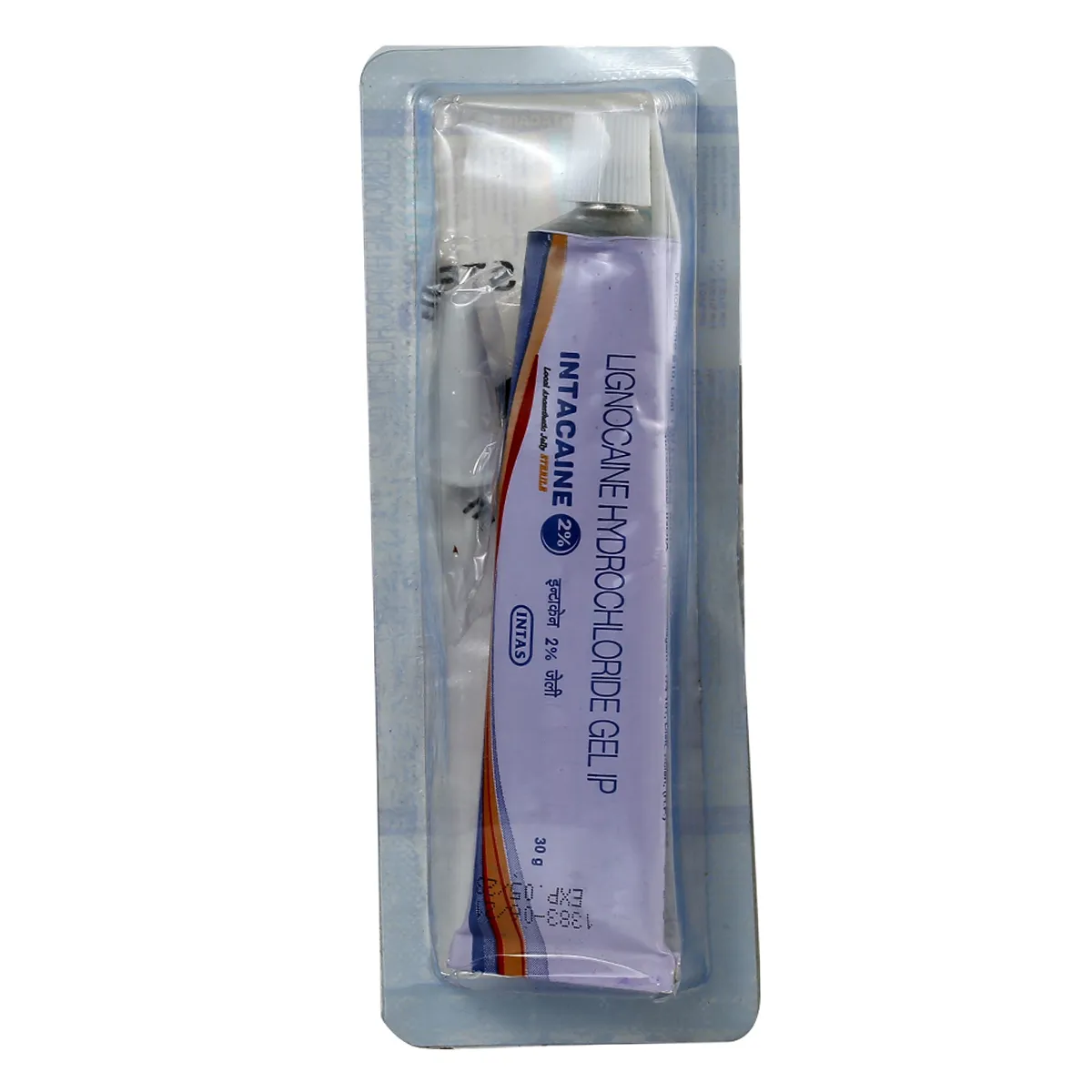
Intacaine Jelly (Lidocaine)
Previous product
Bambudil (Bambuterol)
A$28.00 A$50.40Price range: A$28.00 through A$50.40
Next product
Beclate Inhaler (Beclometasone)
A$46.19 A$109.97Price range: A$46.19 through A$109.97
A$25.20 A$82.60Price range: A$25.20 through A$82.60
In Stock
In Stock
Intacaine Jelly (Lidocaine)
| Pack Size | Price | Quantity | Add To Cart | |
|---|---|---|---|---|
| 3 Tube/s | A$25.20 | |||
| 6 Tube/s | A$43.40 | |||
| 12 Tube/s | A$82.60 | |||
| Want to order in bulk / B2B price? Send Inquiry | ||||
×
Sorry!! Out of Stock
Sorry! Intacaine Jelly (Lidocaine) is out of stock
Please click below to view other similar medications.
View All Lidocaine Products


Offer You Can't Resist
Free Shipping
Enjoy Free Shipping on Orders above AUD304 (USD199)
Estimate Shipping :
06 June - 13 June
35
Last Updated on April 13, 2026

Description
What is Intacaine Jelly?
Intacaine Jelly is a topical preparation of an anesthetic that contains Lidocaine, which is a local anesthetic that is used to reduce pain in specific regions in the body, easing the discomfort and pain caused by the course of medical treatments.
Lidocaine jelly can be employed to offer local anesthesia for mucous membranes, like the urethra, the throat, or the rectum.
Mechanism of Action
Lidocaine is a drug that works by blocking sodium channels inside nerve cells, which prevents the induction and transmission of nerve impulses. The inhibition blocks pain signals from contacting the brain and causes an immediate numbing effect.
Indications
- For local anesthesia to be administered during the urological procedure, like catheterization, cystoscopy.
- To numb the mucous membranes of the surgical procedures (e.g., for sigmoidoscopy and colonoscopy, etc.).
- For relieving pain and discomfort, to ease discomfort and pain from minor injuries, burns, as well as the skin’s irritations (less often seen with jelly forms).
- Sometimes, it is used to treat the throat to lessen the gag reflex before intubation or an examination.
Dosage and Administration
- The jelly is directly applied to the mucous membrane and requires anesthesia.
- The quantity used is based on the process and the area.
- Most often, it is a thin layer, or a specified amount (e.g, 10-20 mL to treat urethral issues) is placed.
- Anesthesia starts in a matter of minutes and can last from 10 – 30 minutes.
- It is important to be careful not to go over recommended doses to reduce the risk of systemic toxicity.
Side Effects
Common Side Effects:
- The application site may experience temporary burning or stinging.
- Mild redness or irritation.
Serious Side Effects (Rare):
- Allergic reactions (rash, itching, swelling)
- In the case of systemic toxicity, if taken in large quantities and cause symptoms such as:
- Dizziness
- Confusion
- Seizures
- Cardiovascular effects (arrhythmias, hypotension)
Precautions and Contraindications
- Be cautious with patients suffering from high-risk hypersensitivity to lidocaine and any other local anesthetics of the amide type.
- Be cautious when using this medication in patients suffering from serious liver diseases or cardiac health conditions.
- Beware of excessive use or application in large areas to minimize the chance of absorption into the system.
- It is not recommended to use it in youngsters under the age of a certain age without medical supervision.
- Be aware of indications of toxicity, in particular when you are dealing with massive doses or absorption of mucous membranes.
Drug Interactions
- The use of any other local or regional anesthetics, as well as antiarrhythmic medications, can increase the risks of toxicity.
- Averting the patient if they are taking drugs that alter the enzymes in the liver that process lidocaine.
Storage
- Place in a cool, dry place free of moisture and heat.
- Close the tube whenever not in use.
Summary
Intacaine Jelly (Lidocaine) is a topically applied gel that is used to reduce the sensitivity of mucous membranes in many medical procedures, specifically during endoscopy and urology. It offers quick, targeted pain relief and has minimal effect on the entire body when utilized properly. Monitoring and careful dosage are crucial to prevent rare but severe toxicities.
Additional Information
| Manufacturer | Intas Pharmaceuticals Ltd |
|---|---|
| Pharmaceutical | Jelly |
| Strength | 2% |
| Pack Size | 3 Tube/s, 6 Tube/s, 12 Tube/s |
Related products





Recently Viewed
Reviews
There are no reviews yet.