
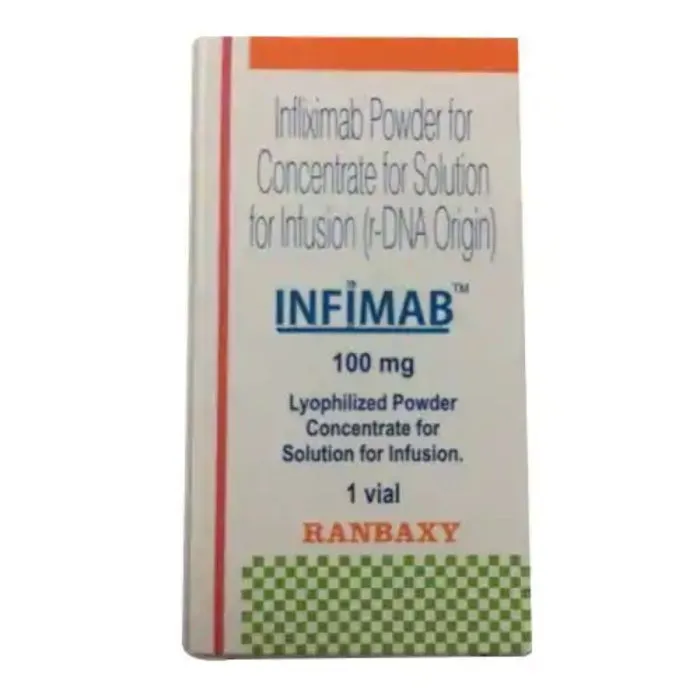
Infimab 100mg Injection (Infliximab)
Previous product

Febuat 40mg (Febuxostat)
$16.20 $31.50Price range: $16.20 through $31.50
Next product

J Flex 100mg (Celecoxib)
$24.38 $37.50Price range: $24.38 through $37.50
$1,800.00 $5,158.83Price range: $1,800.00 through $5,158.83
In Stock
In Stock
Infimab 100mg Injection (Infliximab)
| Pack Size | Price | Quantity | Add To Cart | |
|---|---|---|---|---|
| 3 Injection/s | $1,800.00 | |||
| 6 Injection/s | $3,534.47 | |||
| 9 Injection/s | $5,158.83 | |||
| Want to order in bulk / B2B price? Send Inquiry | ||||
×
Sorry!! Out of Stock
Sorry! Infimab 100mg Injection (Infliximab) is out of stock
Please click below to view other similar medications.
View All Infliximab Products
Offer You Can't Resist
Free Shipping
Enjoy Free Shipping on Orders above AUD304 (USD199)
Estimate Shipping :
07 June - 14 June
46
Excellent service
Excellent service! My order was processed quickly and delivered on time. The medicines were well-packaged and exactly as described. Highly recommended.
 Australia
May 26, 2026
Last Updated on April 13, 2026

Description
Infimab 100mg Injection (Infliximab): A Comprehensive Guide
Chronic inflammatory ailments can seriously impact living quality. Therapies specifically targeting the inflammation processes that cause them have transformed the treatment of patients. One such treatment includes Infimab 100mg injection, whose main substance is Infliximab. It’s a biological treatment that is widely utilized to control a range of autoimmune diseases successfully.
In this post this blog post, we’ll go over everything about Infimab 100mg injection (Infliximab) — its benefits and how it functions, the benefits, negative effects, warnings, and guidelines for administration.
What is Infimab 100mg Injection (Infliximab)?
Infimab includes Infliximab, which is a monoclonal antibody with a chimeric structure that is targeted at Tumor Necrosis factor-alpha (TNF-α), an important pro-inflammatory cytokine that is involved in a variety of autoimmune disorders. Infliximab neutralizes TNF-α and helps reduce inflammation, tissue damage, as well as disease progression.
It is administered via an intravenous infusion, and it is classed as a biologic antirheumatic medication that modifies the disease (bDMARD).
How Does Infimab Work?
Infliximab can bind both insoluble and membrane-bound versions of TNF-α and blocks its interactions in the presence of TNF receptors. TNF-α is the main driver of inflammation in conditions such as Crohn’s disease, rheumatoid arthritis, and psoriasis.
Infliximab inhibits TNF-α and can be used to treat:
- It reduces inflammation.
- It reduces swelling, pain, and damage to tissues.
- Modulates immune system overactivity.
Indications and Uses
Infimab 100mg is a prescription to treat:
- Rheumatoid Arthritis (RA)
- Sometimes, it is combined with methotrexate to help reduce joint pain and injury.
- Crohn’s Disease
- For moderate to severe active disease.
- Ulcerative Colitis
- When the patient is not responsive to conventional treatments.
- Ankylosing Spondylitis
- To reduce the severity of spinal pain and increase mobility.
- Psoriatic Arthritis
- It helps to reduce joint discomfort and the appearance of skin lesions.
- Plaque Psoriasis
- For severe skin involvement.
Dosage and Administration
- Dosage: The most common induction schedule is 5 mg/kg body mass during weeks 0, 2, and 6, then maintenance infusions every eight weeks.
- Administration: As an intravenous infusion lasting 2 hours in the clinical environment.
- Monitoring: Patients are monitored during as well as after the infusion to check for negative reactions.
- Dose adjustments: It could be required depending on the response and tolerance.
Benefits of Infimab 100mg Injection
- It provides significant relief from symptoms as well as an improved quality of living.
- Reducing joint inflammation and the progression of autoimmune disorders.
- Remission can be maintained and induced for inflammatory bowel disorders.
- It is effective in managing joints and skin symptoms of Psoriatic arthritis.
- A well-established safety and effectiveness profile.
Possible Side Effects
The most common side effects are:
- Infusion reactions (fever, chills, rash)
- Upper respiratory infections
- Headache
- Abdominal pain
- Nausea
The more serious, yet less frequent, negative side effects:
- Serious infections (e.g., tuberculosis, fungal infections)
- Reactivation of latent tuberculosis
- Allergic reactions
- Hepatitis B reactivation
- Heart failure exacerbation
- Blood disorders (low blood counts)
Precautions and Contraindications
- A screening test for tuberculosis or Hepatitis B, before beginning therapy, is required.
- Avoid live vaccines during treatment.
- Take care when treating patients with a history of chronic problems with the heart.
- Tell your physician in the event that you suffer from chronic infection.
- Do not recommend during pregnancy unless the benefits outweigh the risks.
- Regular monitoring of blood count and liver function is recommended.
Drug Interactions
- The use of other immunosuppressants, biologics, or any other drugs can increase the risk of infection.
- It is possible that live vaccines can interact.
- Be sure to disclose any medications or supplements to your doctor.
Who Should Avoid Infimab?
- Patients who have an active infection.
- People who are allergic to infliximab and other components in the formula.
- Patients suffering from moderate to severe heart failure ranging from moderate to severe (NYHA IV class).
Managing Infusion Reactions
Infusion reactions can happen in the course of or following the administration. The symptoms include:
- Fever
- Chills
- Rash
- Itching
- Shortness of breath
The treatment includes slowing down or stopping infusions, applying corticosteroids or antihistamines, or antipyretics if needed.
Frequently Asked Questions (FAQs)
Q: How soon does Infimab start working?
The patient may notice improvement in their symptoms in a matter of weeks; however, full-on benefits usually require many months.
Q: Can Infimab cure autoimmune diseases?
It can help control signs and symptoms; however, it isn’t an effective treatment.
Q: Is Infimab safe long-term?
Through regular surveillance, a lot of sufferers can tolerate the treatment for a long time; however, infection risks remain.
Q: Can I get vaccinated while on Infimab?
Live vaccines are not recommended. Talk about vaccinations with your physician.
Conclusion
Infimab 100mg Injection (Infliximab) is a very effective biologic therapy that is used for treating autoimmune as well as inflammatory illnesses. It targets TNF-α and can provide patients with relief from the symptoms and increased control over their disease.
But, because of the risk factors like infection and reaction to infusions, the treatment needs strict monitoring by medical experts. If you’ve been prescribed Infimab, ensure that you are in constant contact with your healthcare team in order to maximise benefits and reduce dangers.
Related products

Recently Viewed
Reviews
There are no reviews yet.