
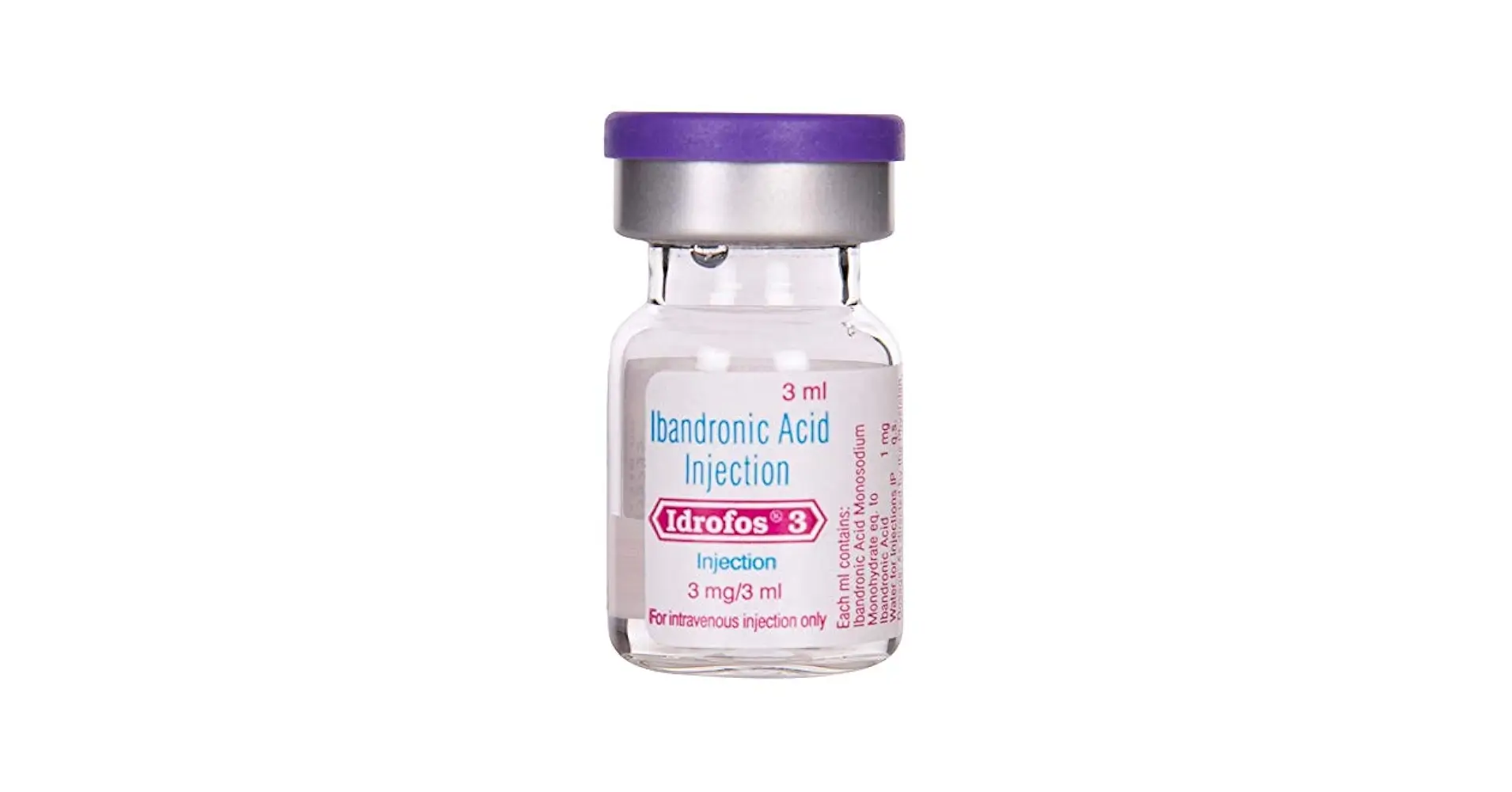
Idrofos 3mg Injection (Ibandronic Acid)
Previous product

Orcerin 50mg (Diacerein)
A$30.32 A$64.98Price range: A$30.32 through A$64.98
Next product

Risofos 35mg (Risedronate)
A$58.01 A$249.45Price range: A$58.01 through A$249.45
A$47.65 A$274.36Price range: A$47.65 through A$274.36
Out of Stock
Out of Stock
Idrofos 3mg Injection (Ibandronic Acid)
| Pack Size | Price | Quantity | Add To Cart | |
|---|---|---|---|---|
| 1 Injection/s | A$47.65 | |||
| 3 Injection/s | A$140.07 | |||
| 6 Injection/s | A$274.36 | |||
| Want to order in bulk / B2B price? Send Inquiry | ||||
×
Sorry!! Out of Stock
Sorry! Idrofos 3mg Injection (Ibandronic Acid) is out of stock
Please click below to view other similar medications.
View All Ibandronic Acid Products
Offer You Can't Resist
Free Shipping
Enjoy Free Shipping on Orders above AUD304 (USD199)
26
Excellent service
Excellent service and very professional communication. The entire process was smooth and straightforward
 Australia
August 5, 2026
Last Updated on April 13, 2026

Description
What is Ibandronic Acid?
Ibandronic acid (also called ibandronate) is a drug that belongs to the class of bisphosphonates. It’s used mainly for its ability to stop and combat osteoporosis and bone disorders through slowing the loss of bone and strengthening bone.
Idrofos 3 mg Injection is Ibandronic, an injectable acid that is typically injected intravenously.
Mechanism of Action
Ibandronic acid inhibits the activities in osteoclasts, which are the cells that are responsible for the resorption of bone (breakdown). Inhibiting osteoclast-mediated bone resorption helps:
- Reduce bone loss
- Increase or maintain the density of bones
- Lower the risk of fractures, especially within the hip joint and in the spine.
Indications
- Osteoporosis in postmenopausal women
To reduce the chance of non-vertebral or vertebral bone fractures. - Osteoporosis in men
When bone loss is proven. - Prevention and treatment of corticosteroid-induced osteoporosis
Patients who have been on long-term steroid treatment. - Treatment of metastatic bone disease and multiple myeloma
Reduce the risk of skeletal-related injuries, including bone injuries and fractures, and discomfort. - Paget’s disease of bone
In certain cases.
Dosage and Administration
- Dosage for osteoporosis (IV injection):
The usual dose is 3 mg of the drug is administered in an intravenous injection at least once every three months. - The injections are usually given slowly, usually over 15 to 30 minutes.
- A proper hydration regimen prior to and following the administration of medication is suggested to minimize the risk of kidney-related adverse effects.
- Bisphosphonates for oral administration are a viable option for those who cannot tolerate oral treatment.
Pharmacokinetics
- Following the administration of IV Ibandronic acid binds rapidly to the bone tissue.
- It’s a longer time-to-live in bones, which contributes to a long-lasting effect.
- The primary source of excretion is the kidney, and therefore, dose modifications may be required for kidney impairment.
Side Effects
Common Side Effects:
- The flu-like symptoms (fever and chills, as well as muscle discomfort) are especially common following the initial injection
- Nausea
- Headache
- Joint or bone pain
- Fatigue
Serious Side Effects:
- Osteonecrosis of the jaw (ONJ)
A rare but severe condition that causes fractures to the jawbone, particularly when cancer patients are taking large doses of. - Atypical femoral fractures
Long-term usage. - Renal toxicity
Increases the risk of infection with a fast infusion or a pre-existing kidney condition. - Hypocalcemia
particularly if vitamin D levels are low.
Precautions and Contraindications
- It is not recommended for patients with hypocalcemia. The levels of calcium must be regulated before the treatment.
- Do not recommend it in cases of the case of severe renal impairment (creatinine clearance <30 mL/min).
- Take care when using this product in patients who have a history of oral problems or other invasive procedures.
- A dental exam is recommended before any treatment. Good oral hygiene is crucial.
- Women who are pregnant or nursing should avoid it if the benefits outweigh the risks.
- The patients should take calcium supplements as well as vitamin D in accordance with the advice of a doctor.
Drug Interactions
- Other medications may interact that affect kidney function.
- Be cautious when using the use of nephrotoxic medications.
- The use of calcium supplements or other antacids needs to be avoided in order not to interfere with absorption (oral forms).
Storage and Handling
- Maintain a controlled temperature in the room. Be sure to keep it away from sunlight.
- Utilize aseptic methods in preparation and administration.
- Recycle any solution that is not used after opening.
Summary
Idrofos 3 mg Injection (Ibandronic Acid) is an effective bisphosphonate to stop and treat osteoporosis, as well as bone-related disorders by preventing the resorption of bone. When administered intravenously, every three months, it increases bone mass and decreases the risk of fracture. Though generally considered secure, monitoring for adverse consequences such as hypocalcemia and kidney function, and jaw health is essential for minimizing risks.
Related products
Recently Viewed

Reviews
There are no reviews yet.