
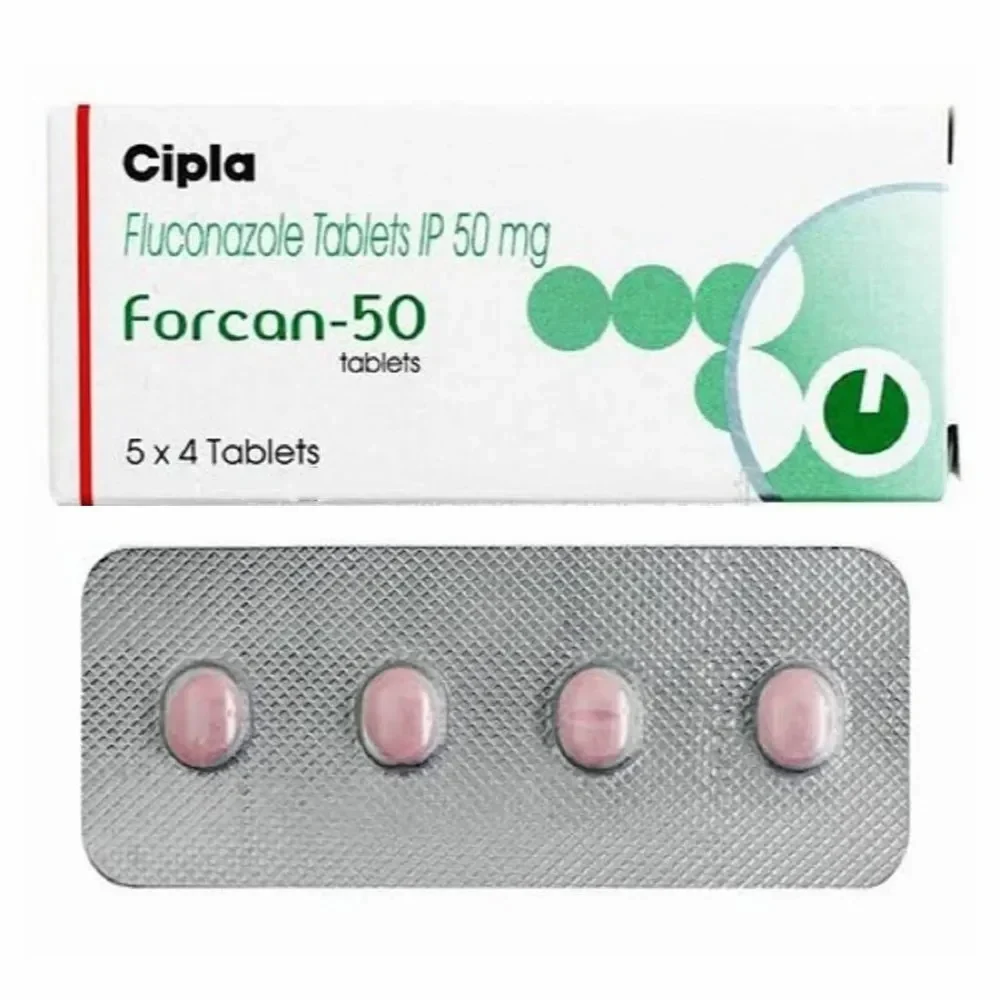
Forcan 50mg (Fluconazole)
Previous product
Winolap Eye Drop (Olopatadine)
$18.75 $71.25Price range: $18.75 through $71.25
Next product
Forcan 150mg (Fluconazole)
$21.00 $79.00Price range: $21.00 through $79.00
$10.00 $33.00Price range: $10.00 through $33.00
In Stock
In Stock
Forcan 50mg (Fluconazole)
| Pack Size | Price | Quantity | Add To Cart | |
|---|---|---|---|---|
| 16 Tablet/s | $10.00 | |||
| 32 Tablet/s | $18.00 | |||
| 64 Tablet/s | $33.00 | |||
| Want to order in bulk / B2B price? Send Inquiry | ||||
×
Sorry!! Out of Stock
Sorry! Forcan 50mg (Fluconazole) is out of stock
Please click below to view other similar medications.
View All Fluconazole Products
Offer You Can't Resist
Free Shipping
Enjoy Free Shipping on Orders above AUD304 (USD199)
Estimate Shipping :
05 September - 12 September
48
Last Updated on March 24, 2026

Description
Introduction
Forcan 50mg is a trademark designation that refers to Fluconazole, which is an antifungal drug extensively employed to treat and stop fungal infection. Fluconazole is part of the category of medicines called triazole antifungals. It’s efficient against an array of fungal pathogens. These include Candida species as well as Cryptococcus.
Fluconazole is a drug that inhibits fungal cell membrane production and causes death of the fungal cells. The drug is typically prescribed to treat the treatment of systemic and mucosal fungal infections and is preferred because of its high bioavailability in the mouth, its penetration of tissues, and minimal side effects.
Composition
- Active ingredient: Fluconazole
- Strength: 50 mg per tablet or capsule (Forcan 50mg)
- Form: Oral tablets or capsules. Available as an intravenous suspension or oral formulation (not for sale under the Forcan brand)
Mechanism of Action
Fluconazole is a drug that blocks this enzyme lanosterol 14-α demethylase, which is a cytochrome P450-dependent enzyme that converts lanosterol the ergosterol, a vital element of the fungal cell membrane.
If ergosterol is not present in the cell membrane of fungal cells, it gets damaged, leading to the cell’s permeability to increase and loss. This is what results in Fluconazole being anti-fungal against the majority of Candida kinds, but also fungicidal for Cryptococcus Neoformans.
Indications (Uses)
Forcan 50mg can be prescribed for combating various fungal illnesses, such as:
- Oropharyngeal and esophageal candidiasis (thrush)
- Vaginal candidiasis (yeast infections)
- Systemic candidiasis infections
- Cryptococcal meningitis (as maintenance therapy)
- Dermatophytosis (skin fungal infections)
- Prophylaxis of fungal infections among immunocompromised patients, like patients undergoing chemotherapy or transplants
Dosage and Administration
The dose of Forcan 50mg is determined by the nature and severity of the disease and other conditions, like kidney function.
Typical Dosages:
- Oropharyngeal candidiasis: 50 mg a day for 7-14 days
- Vaginal candidiasis: A single dosage with 150 mg (usually one tablet with 150 mg tablets of 50 mg may be mixed as required)
- Esophageal candidiasis: 100-200 mg once a day for 14 to 21 days
- Systemic candidiasis: 400 mg dose of loading and then 200-400 mg per day
- Cryptococcal meningitis: 400 mg per day (maintenance therapy following the initial dose of amphotericin B)
- Prophylaxis: It varies based on the risk as well as the clinical protocols
Patients are advised to take Forcan whether or not food is eaten and preferably in the same order each day, to keep their blood sugar levels.
Pharmacokinetics
- Absorption: High oral bioavailability (~90%)
- Distribution: It is found in a variety of body fluids, like cerebrospinal fluid, saliva, sputum, and vaginal secretions.
- Metabolism: Minimal hepatic metabolism
- Elimination: Mostly excreted unaltered through the kidneys
- Half-life: About 30 hours, which allows daily dosing
Side Effects
The majority of patients can tolerate Forcan very well. However, some adverse reactions may be experienced.
Common Side Effects:
- Headache
- Nausea
- Abdominal pain
- Diarrhea
- Rash
Rare but Serious Side Effects:
- Hepatotoxicity (liver damage)
- Allergies are severe, such as Stevens-Johnson syndrome
- QT prolongation and arrhythmias (rare)
- Disorders of blood such as leukopenia, thrombocytopenia, and thrombocytopenia
It is important to report all symptoms of jaundice or an excessive rash or irregular heartbeat.
Precautions and Warnings
- Liver function: Be sure to monitor liver enzymes throughout treatment, particularly in those with liver problems that predate the treatment.
- Kidney function: Dose adjustments are necessary in cases of renal impairment.
- Drug interactions: Fluconazole blocks the cytochrome P450 enzymes and may boost the concentrations of various drugs, such as warfarin, phenytoin, as well as benzodiazepines.
- Pregnancy and breastfeeding: It is only used when absolutely needed. Fluconazole is a drug that crosses the placenta and is then eliminated in breast milk.
- QT prolongation: Beware when using other medications that increase QT duration or in patients who have a history of heart disease.
Drug Interactions
- Warfarin: The effect of anticoagulants is increased, as well as the risk of bleeding.
- Phenytoin and carbamazepine: The increase in plasma levels could cause the development of toxicity.
- Oral hypoglycemics: Risk of hypoglycemia.
- Rifampin and cimetidine: Fluconazole levels can be altered.
- Other QT prolonging agents: The risk of heart arrhythmias.
Be sure to inform your doctor about any medication or supplement.
Contraindications
- Hypersensitivity to Fluconazole or any other azole antifungals
- The QT is known to prolong or cause arrhythmias ventricles
- The concurrent use of certain drugs that are contraindicated in combination with Fluconazole (e.g., cisapride, terfenadine)
Storage
- Maintain the temperature of the room below 30°C (86°F)
- Place your items in a dry location out of bright sunlight
- Be sure to keep it out of the reach of young children
Summary
Forcan 50mg (Fluconazole) is an extensively utilized antifungal that is effective against a variety of fungal diseases. Its simplicity of administration, its good quality safety profile, and good absorption make it an ideal first-line treatment for a variety of fungal diseases. Being aware of dosage and monitoring for adverse reactions, and being aware of possible drug interactions, are vital to make sure that it is safe and effective.
Additional Information
| Manufacturer | Cipla Ltd |
|---|---|
| Pharmaceutical | Tablet/s |
| Strength | 50 mg |
| Pack Size | 16 Tablet/s, 32 Tablet/s, 64 Tablet/s |
Related products



Reviews
There are no reviews yet.