
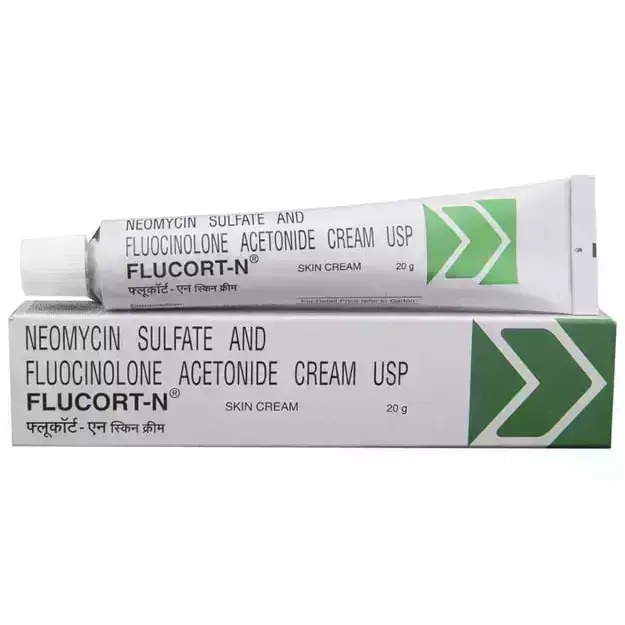
Flucort N Cream
Previous product
Flucort Cream 20gm (Fluocinolone)
A$34.66 A$63.54Price range: A$34.66 through A$63.54
Next product
Flucort C Cream (Fluocinolone/Ciclopirox)
A$25.99 A$72.20Price range: A$25.99 through A$72.20
A$43.32 A$80.86Price range: A$43.32 through A$80.86
In Stock
In Stock
Flucort N Cream
| Pack Size | Price | Quantity | Add To Cart | |
|---|---|---|---|---|
| 6 Tube/s | A$43.32 | |||
| 9 Tube/s | A$63.54 | |||
| 12 Tube/s | A$80.86 | |||
| Want to order in bulk / B2B price? Send Inquiry | ||||
×
Sorry!! Out of Stock
Sorry! Flucort N Cream is out of stock
Please click below to view other similar medications.
View All Fluocinolone/Neomycin Products

Offer You Can't Resist
Free Shipping
Enjoy Free Shipping on Orders above AUD304 (USD199)
Estimate Shipping :
24 July - 31 July
38
Good customer service
Outstanding customer service and reliable delivery. A smooth shopping experience from start to finish
 Australia
June 26, 2026
Last Updated on March 23, 2026

Description
Flucort-N Cream: Uses, Benefits, and Safety Tips
Skin conditions can negatively impact not only your physical health but also your emotional well-being. From irritation, redness, and inflammation to persistent infections, a variety of skin issues require prompt, effective treatment. One of the most well-known prescription creams for various infections and inflammatory skin conditions is Flucort-N Cream. The cream is medicated and contains two active ingredients that fight both inflammation and bacteria, making it an effective treatment for specific dermatological conditions.
In this blog post, we’ll take a deeper study of the Flucort-N Cream — what it does and how it functions, what it contains, potential adverse effects, warnings, and the best way to utilize it safely.
What is Flucort-N Cream?
Flucort-N Cream is a topical medication used to treat inflammation-related skin disorders caused by bacterial infections. The cream is typically prescribed to treat conditions such as eczema, psoriasis, and dermatitis, as well as allergic skin infections. The cream is a combination medication, meaning it contains two active pharmaceutical ingredients that help control two aspects of inflammation.
This cream is for external use only and should be applied directly to the affected area.
Composition of Flucort-N Cream
Flucort-N Cream contains:
- Fluocinolone Acetonide (0.025%)
- Neomycin Sulphate (0.5%)
Let’s look at the function of each:
- Fluocinolone Acetonide:
It’s a moderate-strength corticosteroid that reduces inflammation, redness, and itching. It is effective by inhibiting the immune system, which causes inflammation. Fluocinolone can be effective in treating eczema-related symptoms, allergic reactions, and skin rashes. - Neomycin Sulphate:
It is a general-purpose antibiotic that inhibits bacterial proliferation on the skin. It’s used to treat or prevent skin irritation caused by scratching and to treat bacterial infections already present in the affected area.
By combining an anti-inflammatory drug with an antibiotic, Flucort targets two key elements of dermatological conditions: infection control and symptom relief.
Common Uses of Flucort-N Cream
Flucort-N Cream It is employed for treating:
- Eczema (especially if infected)
- Contact dermatitis
- Seborrheic dermatitis
- Psoriasis with secondary bacterial infection
- Infected insect bites or stings
- Allergic skin conditions
- Localized skin infections due to scratching
It’s not designed to treat fungal or viral infections, except as directed by a medical professional.
How to Use Flucort-N Cream
Using Flucort-N Cream correctly is key to its efficacy and safety.
Step-by-step instructions:
- Dry and clean the affected area before applying.
- Spread a small amount of cream over the affected area.
- Massage it into your skin until it’s fully absorbed.
- Clean your hands immediately after application, unless your hands are already clean.
- Avoid covering the site with a bandage unless your physician has advised you to do so.
Your healthcare provider determines the dosage and duration based on the severity of the illness.
Important: The cream is intended for temporary use only for 1 to 2 weeks, unless directed otherwise. In the long run, it can result in dangerous negative side effects.
Benefits of Flucort-N Cream
- Dual-action formula – The combination of an antibiotic and a steroid provides complete treatment.
- Fast relief – Rapidly decreases redness, itching, and swelling.
- Prevents bacterial growth – Particularly useful in cases of the possibility of getting sick.
- Improves skin condition – when used properly, it can help restore healthy skin.
Possible Side Effects
Like other medicines, Flucort-N Cream may cause negative side effects, particularly when it is used improperly or over long periods of time.
Common side effects:
- Skin irritation
- Burning or stinging sensation at the site
- Dryness or peeling
Less common but serious side effects:
- Thinning of the skin
- Stretch marks
- Acne-like eruptions
- Delayed wound healing
- Allergic reactions such as rash or swelling
- The systemic absorption can lead to hormonal changes (rare; however, it is possible to experience hormonal effects with long-term treatment)
If you experience a serious reaction, stop using the cream and contact your physician immediately.
Who Should Not Use Flucort-N Cream?
Avoid using Flucort-N Cream if you:
- Are you allergic to fluocinolone, neomycin, or other components of the cream
- Are you suffering from untreated skin infections such as chickenpox, herpes, or herpes
- Have active fungal infections
- Do not apply it to broken skin or open wounds that are large (unless otherwise advised)
- If you are pregnant or nursing (consult your physician before using)
Precautions and Safety Tips
- Do not use on your groin, face, or underarms unless prescribed by an experienced doctor.
- Beware of contact with your eyes, mouth, and mucous membranes.
- Children are more sensitive to topically applied corticosteroids; this should be done only under medical supervision.
- Do not take more than seven to 14 weeks without medical supervision.
- Applying it to large areas of skin under occlusive dressings may increase absorption and increase the risk of adverse effects.
- Apply it to your skin if there is no infection or inflammation. It’s a medicated cream, not a moisturizing agent.
What to Do in Case of Overuse or Accidental Ingestion?
If you apply too much cream, remove any excess. Excessive use of the cream on your skin may cause thinning or other adverse effects over time.
If Flucort-N has been ingested accidentally, you should seek medical attention immediately. While it’s not common to happen, the ingestion of oral drugs can cause serious adverse effects.
Storage Instructions
- Keep at ambient temperatures (below 25°C).
- Make sure the tube is tightly shut.
- Stay out of the reach of children and pets.
- Don’t freeze.
Final Thoughts
Flucort-N Cream can be a highly effective treatment for skin inflammation caused by bacterial infection. When combined with steroids and antibiotics, this cream provides rapid, effective relief from itching, redness, and infections. Like other medicated creams, it should be applied carefully under a physician’s supervision.
Don’t self-medicate or keep taking Flucort-N for longer than the recommended duration. Skin is a delicate organ susceptible to irritation, so misuse of topically applied steroids or antibiotics can lead to complications that are more difficult to manage.
Additional Information
| Manufacturer | Glenmark Pharmaceuticals Ltd |
|---|---|
| Pharmaceutical | Cream |
| Strength | 0.025% + 0.5% |
| Pack Size | 6 Tube/s, 9 Tube/s, 12 Tube/s |
Related products






Recently Viewed
Reviews
There are no reviews yet.