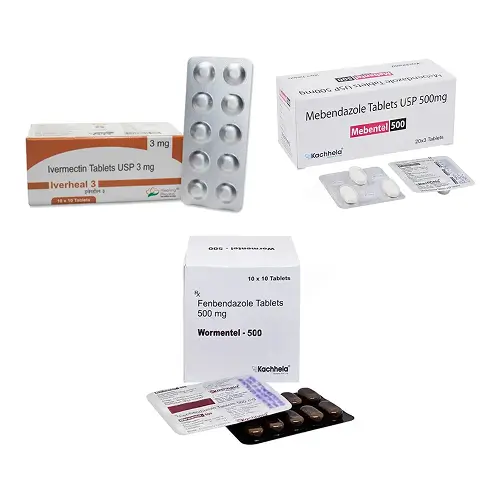
Fenbendazole 500+Mebendazole 500+Ivermectin 3
Previous product
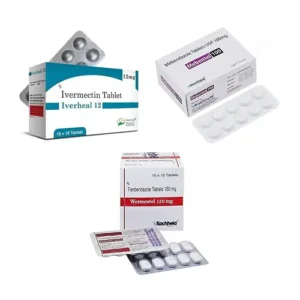
Fenbendazole 150+Mebendazole 100+Ivermectin 12
$109.00 $317.00Price range: $109.00 through $317.00
Next product
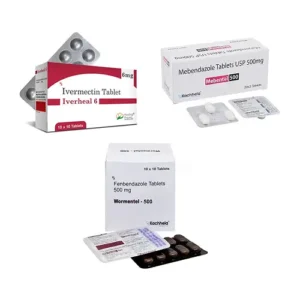
Fenbendazole 500+Mebendazole 500+Ivermectin 6
$129.00 $377.00Price range: $129.00 through $377.00
$129.00 $377.00Price range: $129.00 through $377.00
In Stock
In Stock
Fenbendazole 500+Mebendazole 500+Ivermectin 3
| Pack Size | Price | Quantity | Add To Cart | |
|---|---|---|---|---|
| 1 Pack | $129.00 | |||
| 2 Pack/s | $252.00 | |||
| 3 Pack/s | $377.00 | |||
| Want to order in bulk / B2B price? Send Inquiry | ||||
×
Sorry!! Out of Stock
Sorry! Fenbendazole 500+Mebendazole 500+Ivermectin 3 is out of stock
Please click below to view other similar medications.
View All Fenbendazole Products
Offer You Can't Resist
Free Shipping
Enjoy Free Shipping on Orders above AUD304 (USD199)
Estimate Shipping :
08 June - 15 June
50
Professional service
Professional service from start to finish. Secure packaging, authentic products, and excellent customer care.
 Australia
May 28, 2026
Last Updated on March 07, 2026

Description
Infections caused by parasites in humans and animals can cause serious problems. A broad spectrum of antiparasitic drugs is often required for effective treatment. This combination of Fenbendazole 500 mg + Mebendazole 500 mg + Ivermectin 3 mg is designed to fight a variety of parasitic diseases. This blog discusses safety concerns, the mechanism of action, as well as common questions regarding this triple combination.
What is Fenbendazole 500 + Mebendazole 500 + Ivermectin 3?
Three powerful antiparasitic drugs are combined in this combination:
- Fenbendazole (500 mg): Fenbendazole is a benzimidazole-class anthelmintic that inhibits the formation of parasite microtubules, disrupting energy metabolic processes primarily in intestinal nematodes.
- Mebendazole (500 mg): Mebendazole is also a benzimidazole. It works in a similar way to Fenbendazole. However, its efficacy can vary depending on the parasite. This drug is used for a wide range of intestinal parasites.
- Ivermectin (3 mg): This macrocyclic antiparasitic is effective against many internal and external parasites, causing them to paralyze through its neural effects.
The combination of three antiparasitic drugs in this formulation provides a powerful parasite-controlling formula, particularly for veterinary applications.
How Do These Drugs Work?
Fenbendazole and Mebendazole
Mebendazole and fenbendazole both belong to the family of benzimidazoles. They act primarily through binding to beta tubulin in parasites to inhibit microtubule multimerization. The microtubules in cells are crucial for cell structure and are also essential to nutrient absorption, reproduction, as well as cell growth. This disruption causes the parasite to starve, eventually killing it.
Both have similar mechanisms but differ in their absorption, metabolism, and spectrum. Combining them may be effective for resistant parasites or infections with mixed resistance.
Ivermectin
Ivermectin targets chloride glutamate channels, which are found in parasites. This causes an increase in chloride ions to enter nerve and muscle tissues. Paralysis and death result from this. This is especially effective on nematodes and mites.
Why Combine Fenbendazole, Mebendazole, and Ivermectin?
Combining these three methods is a way to increase efficacy by targeting parasites in a wide range of ways:
- Broader Parasite Coverage: Fenbendazole and mebendazole target gastrointestinal worms like roundworms, whipworms, and hookworms. Ivermectin is effective against internal and external nematodes, as well as parasites that are not covered by benzimidazoles.
- Combat Resistance: Globally, parasite resistance is on the rise. The combination of drugs that have different mechanisms of action can help prevent or delay the development and spread of resistance.
- Comprehensive Treatment: Useful in animals and populations that have a mixed parasite burden or a heavy one.
- Cost and Convenience: Combination products simplify treatment plans and decrease labor.
Common Uses
The main use of this triple combination in veterinary medicine is to:
- Livestock Parasites: Cattle, sheep, goats, and pigs suffering from gastrointestinal worms, lungworms, liver flukes, lice, and mange mites.
- Pets: Under veterinary supervision, it can be used to treat parasites that are resistant or have a mixture of infections in cats and dogs.
- Wildlife and Zoo Animals: To control parasites in controlled environments.
Always use under veterinary supervision for appropriate dosing and treatment intervals.
Dosage and Administration
Dosage can vary based on the type, weight, and severity of the disease. It is essential to follow the directions from your vet.
- Administration by oral means is popular, but injectable forms are also available.
- The “500” of fenbendazole or mebendazole usually means mg/dose or unit of the formulation.
- Ivermectin with a 3 mg dose is typically a standard amount for a dose unit.
Dosing correctly ensures efficient removal of parasites and also reduces toxic effects.
Safety Considerations
- Species Sensitivity: Certain dog breeds (e.g., Collies, Shepherds) have a high degree of sensitivity to ivermectin and can suffer serious neurological issues.
- Pregnancy: Be cautious or stay clear of while pregnant, unless instructed by a doctor.
- Withdrawal Times: When consuming animals for food, be sure to strictly adhere to the withdrawal times prior to the consumption of milk or other meat.
- Adverse Effects: Most of the time, mild. There is a possibility of digestive upsets or allergic reactions. The risk of overdose is neurological.
- Interactions: Discuss with your veterinarian any other medicines to prevent dangerous interactions.
Benefits of the Triple Combination
- The treatment is effective against an array of parasites, all in just one application.
- Aids in reducing parasite burden, which improves animal health as well as efficiency.
- Reducing the need for multiple treatments.
- It can help to delay the appearance of strains resistant to drugs.
Common Misconceptions
- “Fenbendazole and mebendazole do the same job.”
They’re alike; however, they’ve slight differences, which allow them to be effective. - “Higher doses increase effectiveness.”
The overdose of a drug is harmful and should not be suggested. - “Safe for all animals.”
Consult a veterinarian before administering medication, particularly in the case of animals or breeds with sensitivity.
FAQ: Fenbendazole 500 + Mebendazole 500 + Ivermectin 3
Q1: Can I use this combination in my pet dog?
A1: Perhaps, but only with supervision of a vet. Pets may be allergic to ivermectin. The doses prescribed for dogs differ in comparison to livestock.
Q2: How often should I treat my animals with this medication?
A2: The frequency of treatment is based on the parasite severity, type of animal, and veterinary recommendations. The routine deworming schedules differ according to the region of operation and management.
Q3: Is this safe during pregnancy?
A3: Talk to your veterinarian. The safety of a species is contingent on the timing of drugs during pregnancy.
Q4: Can parasites develop resistance to this triple combination?
A4: The risk of resistance is present in all antiparasitic medications. Combining medicines can help to reduce the risk, but it doesn’t eliminate it.
Q5: Are there side effects to watch for?
A5: Watch for signs like vomiting, diarrhea, lethargy, or neurological symptoms (tremors, seizures). Consult a veterinarian promptly in the event of any.
Q6: Can humans take this combination?
A6: No, The formulation here is only for use in veterinary medicine. Human treatment for antiparasitic issues requires various doses of drugs as that are prescribed by a doctor.
Final Thoughts
The combination of Fenbendazole 500 + Mebendazole 500 + Ivermectin 3 provides a highly effective instrument in the field of veterinary parasitology, providing broad-spectrum control of parasites with different modes of action. This is particularly beneficial for managing multiple parasite infections and reducing the risk of developing resistance.
Make sure to use these medicines in a responsible manner and under the supervision of a veterinarian. The proper usage of the medication ensures the well-being and efficiency of your pets and helps to ensure healthy practices for managing parasites.
Additional Information
| Manufacturer | Healing Pharma, India, Kachhela Medex Pvt.Ltd |
|---|---|
| Pharmaceutical | Tablet/s |
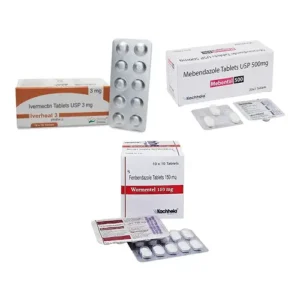
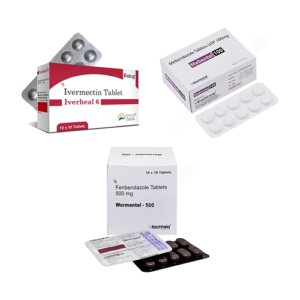
| Tablet/s | Wormentel 500mg (Fenbendazole) = 60 Pills, Mebentel 500mg (Mebendazole) = 60 Pills, Iverheal 3mg (ivermectin) = 60 Pills |
Related products

Recently Viewed