Fenbendazole 500+Mebendazole 100
Previous product

Fenbendazole 500+Mebendazole 500
$63.00 $179.00Price range: $63.00 through $179.00
Next product
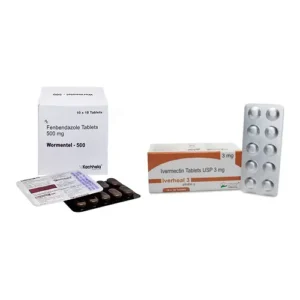
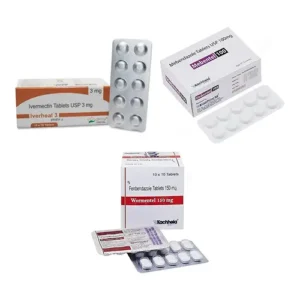
Fenbendazole 500+Ivermectin 3
$87.00 $251.00Price range: $87.00 through $251.00
$47.00 $131.00Price range: $47.00 through $131.00
In Stock
In Stock
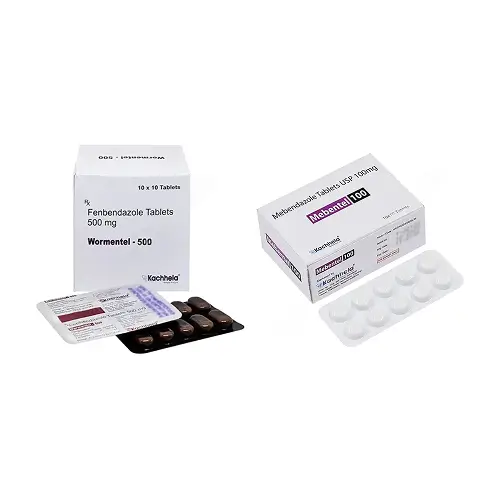
Fenbendazole 500+Mebendazole 100
| Pack Size | Price | Quantity | Add To Cart | |
|---|---|---|---|---|
| 1 Pack | $47.00 | |||
| 2 Pack/s | $88.00 | |||
| 3 Pack/s | $131.00 | |||
| Want to order in bulk / B2B price? Send Inquiry | ||||
Offer You Can't Resist
Free Shipping
Enjoy Free Shipping on Orders above AUD304 (USD199)
Estimate Shipping :
08 June - 15 June
39
Last Updated on March 07, 2026

Description
Recent years have seen the antiparasitic medicines Fenbendazole and Mebendazole attract attention, not only due to their primary treatment of parasites but also due to their possible roles in other health ailments, such as certain types of cancer. Particularly, the mix of 500 mg Fenbendazole and Mebendazole 100 mg has been gaining traction within some circles of alternative health, which has led to questions on their effectiveness, uses, and safety.
The following article will explain the drugs involved as well as how they operate, and the latest research findings, as well as security considerations, as well as answer many of the questions that are asked most often.
What are Fenbendazole and Mebendazole?
Fenbendazole 500 mg
Fenbendazole can be described as a broad-spectrum benzimidazole antiparasitic medicine that is mainly used for veterinary purposes. It is highly efficient against all kinds of intestinal parasites like whipworms, roundworms, hookworms, as well as some tapeworms found on animals.
Although the dosage of 500 mg is typically found in formulations for animals, other health professionals have pondered this dosage for use in humans; however, Fenbendazole isn’t FDA-approved for human use.
Mebendazole 100 mg
Mebendazole is a benzimidazole antiparasitic that is extensively used in human beings. It’s FDA-approved for the treatment of commonly occurring intestinal worm infections such as whipworms or roundworms, as well as pinworms and hookworms.
A 100 mg of Mebendazole is usually part of a prescribed treatment regimen. It is typically taken once or twice a day over a period of 3 days based on the type of infection.
How Do These Drugs Work?
Both Mebendazole and Fenbendazole are part of the benzimidazole family and act by interrupting the ability of parasites to sustain the essential functions of cells:
- Targeting Tubulin: They attach to β-tubulin, an important protein involved in microtubule development, which parasites depend on to maintain their structural integrity as well as nutrient absorption.
- Blocking Energy Production: Inhibiting glucose absorption, the drugs deprive organisms of energy, ultimately taking them out.
It is interesting to note that this method, which disrupts microtubules, is what has led researchers to investigate these drugs that have the potential to stop tumor cell growth, since microtubules also play a role in cancer cell division.
Why Are People Interested in the Fenbendazole 500 mg + Mebendazole 100 mg Combination?
Potential Anti-Cancer Properties
Anecdotal evidence and preliminary lab studies have indicated that benzimidazole medications may have anti-tumor properties. In the process of disrupting microtubules, they could:
- Halt cancer cell division
- Trigger cancer cell death
- Increase the sensitivity of tumors to chemotherapy
Mebendazole has been researched in greater detail for its properties and has shown promise in research situations against tumors in the brain, lung cancer, brain tumors, and melanoma. Fenbendazole is not as well-studied for humans, has the same structure and mechanisms.
A few proponents think that mixing Fenbendazole 500 mg and Mebendazole 100 mg may enhance the effects of both drugs, but it is a speculation without solid clinical studies.
Current Scientific Evidence
Fenbendazole
- Studies on cells and animals show Fenbendazole’s capability to block the growth of cancer.
- There are no human clinical trials that have been completed or are currently available to verify the efficacy of this drug or its safety for cancer patients.
- The reports are based on anecdotal sources, but do not have the scientific proof needed to validate them.
Mebendazole
- In progress clinical trials to determine its use in the treatment of glioblastoma and colorectal cancer, and many more.
- Studies in the lab have shown that it could slow the growth of tumors and works together with chemotherapy.
- The FDA has approved parasite infections, but it is not yet approved for the treatment of cancer.
Safety and Side Effects
Fenbendazole 500 mg
- In general, animals are safe; however, human safety information is not as reliable.
- The potential adverse effects (based upon the usage of animals) could include vomiting, nausea, or diarrhea, and nausea.
- Long-term human effects are not known, and off-label usage can pose risks.
Mebendazole 100 mg
- Common side effects: abdominal pain, diarrhea, rash.
- Rare serious effects: liver inflammation, allergic reactions.
- Most often, they are well-accepted in short courses.
Important: The security of mixing the two drugs, particularly in these dosages, is not confirmed. If you take them without medical supervision, you could lead to toxic effects.
Legal and Regulatory Status
- Mebendazole 100 mg has been approved by the FDA for use by humans and is an antiparasitic.
- Fenbendazole has been approved only for use by veterinarians in the U.S. and many countries.
- The use of Fenbendazole by humans isn’t permitted on the label and can be dangerous or illegal without medical supervision.
Dosage and Administration
- Fenbendazole 500 mg: Humans do not officially prescribe dosages for veterinary use; doses differ by the animal and its condition.
- Mebendazole 100 mg: The typical dose is 100 mg once a day over 3 days for the human population for parasitic diseases.
If you are considering using these medications outside of the approved use, you should always talk to an expert in healthcare.
Summary
Fenbendazole 500 mg in combination with Mebendazole 100 mg is an antiparasitic duo drug that has been getting attention for its non-traditional functions. Both of them disrupt microtubules in parasites and demonstrate some early clinical anti-cancer properties in lab studies; however, their use together for humans has not been clinically accepted or well-studied.
If you are interested in using these drugs intended for non-approved purposes, including cancer treatment, you must approach the subject cautiously, focus on safety, and explore possible options with qualified doctors.
Frequently Asked Questions (FAQ)
Q1: Can Fenbendazole 500 mg and Mebendazole 100 mg be safely taken together?
There’s no well-established clinical guideline for the use of these drugs together in humans. Combining them with no medical supervision may increase the chance of adverse reactions such as liver toxicity.
Q2: Is Fenbendazole 500 mg approved for human use?
No. Fenbendazole has been approved to be use in veterinary medicine. The use of it in humans is unregulated and off-label.
Q3: Can this combination cure cancer?
No evidence has been found to support the cure of cancer using this treatment. These are experiments in this sense and ought not to be substituted for conventional cancer treatment.
Q4: What are the common side effects of these drugs?
- Fenbendazole: nausea, vomiting, diarrhea (based on animal data)
- Mebendazole: abdominal discomfort, diarrhea, rash
Q5: Where can I get Fenbendazole 500 mg and Mebendazole 100 mg?
Mebendazole needs a prescription in many nations. Fenbendazole is marketed as a medicine for veterinary use. Human use of Fenbendazole could be restricted by law.
Q6: Are there ongoing clinical trials for these drugs in cancer?
Yes, but mainly to treat Mebendazole that is currently being evaluated for colon and head cancers. The human trials of Fenbendazole are rare.
Q7: What precautions should I take if considering these drugs?
Speak with your physician before visiting your healthcare provider. Do not self-medicate, particularly with the use of veterinary medicines. Check for any adverse effects and the liver’s function when using.
Final Thoughts
Fenbendazole 500 mg and Mebendazole 100 mg are effective antiparasitic medicines with intriguing possibilities in the field of oncology research. Their off-label usage in humans is still an experiment, and there are no known dangers or advantages. Always consider safety first. Rely on the scientific research, and seek out medical advice for any new treatment options.
Additional Information
| Manufacturer | Healing Pharma, India, Kachhela Medex Pvt.Ltd |
|---|---|
| Pharmaceutical | Tablet/s |
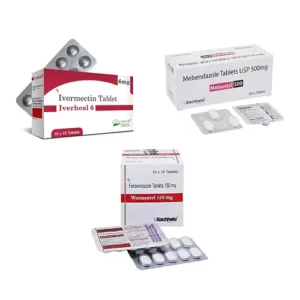
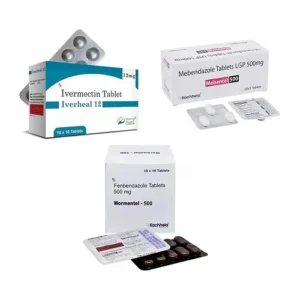
| Tablet/s | Wormentel 500mg (Fenbendazole) = 60 Pills, Mebentel 100mg (Mebendazole) = 60 Pills |
Related products


Recently Viewed