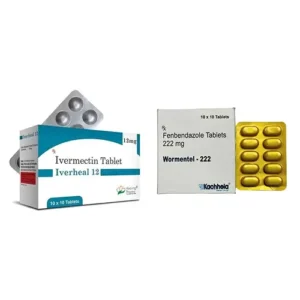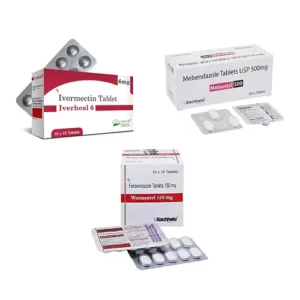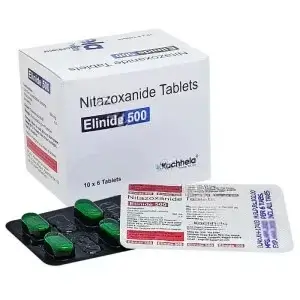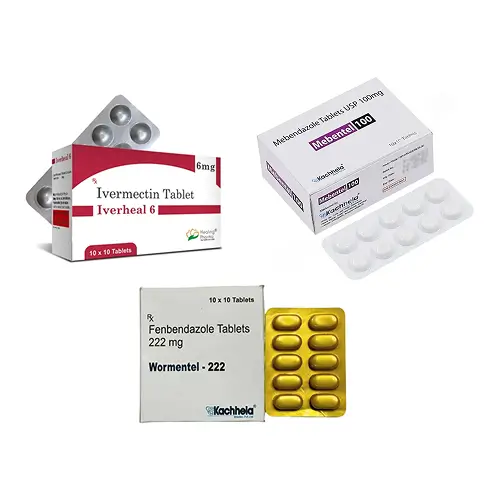
Fenbendazole 222+Mebendazole 100+Ivermectin 6
Previous product
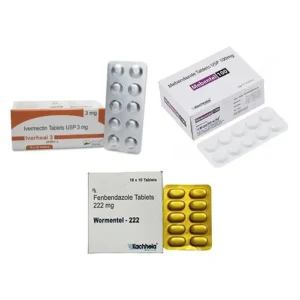
Fenbendazole 222+Mebendazole 100+Ivermectin 3
$100.00 $290.00Price range: $100.00 through $290.00
Next product
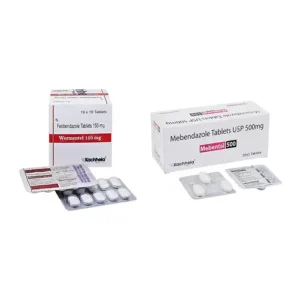
Fenbendazole 150+Mebendazole 500
$47.00 $131.00Price range: $47.00 through $131.00
$106.00 $308.00Price range: $106.00 through $308.00
In Stock
In Stock
Fenbendazole 222+Mebendazole 100+Ivermectin 6
| Pack Size | Price | Quantity | Add To Cart | |
|---|---|---|---|---|
| 1 Pack | $106.00 | |||
| 2 Pack/s | $206.00 | |||
| 3 Pack/s | $308.00 | |||
| Want to order in bulk / B2B price? Send Inquiry | ||||
Offer You Can't Resist
Free Shipping
Enjoy Free Shipping on Orders above AUD304 (USD199)
Estimate Shipping :
07 June - 14 June
21
Best quality
Quality medicines at reasonable prices. Delivery was faster than expected, and everything arrived in perfect condition.
 Australia
May 24, 2026
Last Updated on March 07, 2026

Description
Introduction
Anti-parasitic drugs have gained popularity in recent years. Drugs such as Fenbendazole, Mebendazole, and Ivermectin – once relegated only to anti-helminthic or veterinary purposes – have attracted attention because of their wider applications. This combination therapy, whether it is for cancer research or resistance to parasites, has generated a lot of buzz.
But what happens when these three medications–Fenbendazole 222 mg, Mebendazole 100 mg, and Ivermectin 6 mg–are combined? What is the scientific opinion? What is the science behind it?
We’ll look into the effects of each drug individually, and then at their combination.
-
What is Fenbendazole?
Fenbendazole a type of benzimidazole anthelmintic used most often in veterinary medicine for treating gastrointestinal parasites in animals. The drug is structurally identical to Mebendazole. It works by preventing the parasite from forming microtubules, which are vital for cell survival and function.
Common Uses:
- Hookworms
- Roundworms
- Whipworms
- Tapeworms (limited efficacy)
Off-Label Interest:
- Although there is no solid clinical evidence, recent anecdotal reports and research suggest that the drug may have anti-cancer properties.
-
What is Mebendazole?
Mebendazole is a member of the same class as Fenbendazole. It has been used for several years in humans and is often considered the first-line treatment for intestinal worms.
Common Uses:
- Pinworms
- Whipworms
- Hookworms
- Roundworms
How It Works:
Mebendazole prevents parasite cells from forming microtubules, effectively starving the cells to death.
-
What is Ivermectin?
Ivermectin has a wide spectrum of anti-parasitic properties. For decades, it has been used to treat:
- Strongyloidiasis
- River blindness (Onchocerciasis)
- Scabies
- Head lice
The parasite is killed by paralysis induced by the binding of glutamate to chloride channels in nerve and muscle tissues of invertebrates.
Other Uses:
- COVID-19 (controversial and unapproved use)
- Rosacea and other skin conditions
- Antiviral properties and potential anti-inflammatory properties
Why Combine Fenbendazole, Mebendazole, and Ivermectin?
The concept of combining anti-parasitic medications is nothing new. It is done in veterinary medicine and human medicine to:
- Cover a wider range of parasites
- Prevent resistance
- Improve efficacy
The three drugs in this example attack parasites slightly differently and could, in theory, produce synergistic effects.
Theoretical Benefits:
- Broad-spectrum coverage: There are many different worms and their stages
- Different mechanisms of action: Reduction of the risk of resistance
- Potential off-label synergy: Although not proven, the anti-inflammatory and anti-cancer properties
Example Scenario:
Under medical supervision, a patient who has a persistent parasitic infection or heavy parasite load that is not responding to a single drug therapy can be treated using a combination of drugs to improve the chances of elimination.
Safety and Concerns
Here’s where it gets tricky.
-
Drug Interactions
- Combining medications can lead to interactions. This is especially true if the drugs are being processed by the liver.
- Ivermectin may interact with certain neurological drugs.
- Fenbendazole has not been approved by the FDA for use in humans. However, it is used as a research tool.
-
Toxicity
- These drugs can cause side effects of neurological nature or symptoms of the gastrointestinal tract when taken in high or prolonged dosages.
- Mebendazole is closely related to Fenbendazole. They may either compete or increase each other’s effects.
-
Lack of Clinical Evidence
- There have been few human clinical trials combining all three drugs.
- It is not recommended to self-medicate with veterinary formulas.
Dosing and Administration
| Medication | Typical Dose in Humans | Route | Frequency |
| Fenbendazole | ~222 mg/day (off-label) | Oral | 3 days on, 4 days off (cycle) |
| Mebendazole | 100 mg twice daily | Oral | 3 days (depends on condition) |
| Ivermectin | ~6 mg (based on weight) | Oral | Single dose or repeated |
⚠️ Note: The following is not intended to be a guide for treatment. Consult your doctor before using or combining these medications.
Research and Off-Label Use
Fenbendazole is being discussed in online cancer forums and in anecdotal accounts for its possible use:
- Glioblastoma
- Lung cancer
- Colorectal cancer
The claims made are not FDA-approved, and there have been no large-scale human trials. Some animal models and some in vitro tests have been promising.
Mebendazole showed antitumor effects during lab tests, especially in the disruption of cell division.
In vitro, Ivermectin showed some antiviral and anti-inflammatory characteristics; however, human data are inconsistent and controversial.
Final Thoughts
Combining Fenbendazole with Mebendazole and Ivermectin is not recommended. It is a scientifically intriguing idea, but there are not enough clinical studies to support it for off-label use.
It is illegal and dangerous to use veterinary medication for human consumption without the supervision of a physician.
FAQ: Fenbendazole 222 mg + Mebendazole 100 mg + Ivermectin 6 mg
Q1: Is this combination safe for humans?
A: No combination of the three drugs is approved for use by humans. Self-medication is not safe and can be dangerous.
Q2: Can I take these drugs together to treat cancer?
A: The FDA has not approved these drugs for the treatment of cancer. There are some lab reports and anecdotal accounts, but there are no large-scale human trials. Speak to a cancer specialist.
Q3: What are the side effects?
A: Ivermectin can cause nausea, diarrhea, and liver toxicity. Other side effects may include dizziness, rash, or neurological symptoms.
Q4: Can I buy Fenbendazole online for personal use?
A: Fenbendazole, also known as Fenbendazole, is an animal drug. It is not recommended to buy and consume it without medical supervision.
Q5: Is there scientific proof these drugs work better together?
A: There is no strong evidence that using all three together for standard indications will be more effective than using each separately.
Q6: What is the difference between Fenbendazole and Mebendazole?
A: Mebendazole and Fenbendazole are chemically identical; however, Mebendazole has been approved by the FDA for use in humans, while Fenbendazole is mainly used in veterinary medicine.
Conclusion
Combining Fenbendazole 222 mg, Mebendazole 100 mg, and Ivermectin 6 mg may have theoretical advantages in the treatment of parasites; however, it is not without risks. While some of the early findings are promising, it is important to make clinical decisions based on evidence and under supervision by healthcare professionals.
Additional Information
| Manufacturer | Healing Pharma, India, Kachhela Medex Pvt.Ltd |
|---|---|
| Pharmaceutical | Tablet/s |
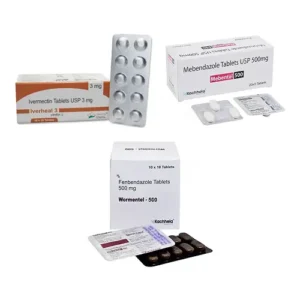
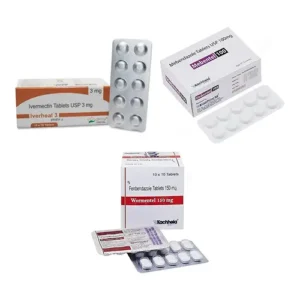
| Tablet/s | Wormentel 222mg (Fenbendazole) = 60 Pills, Mebentel 100mg (Mebendazole) = 60 Pills, Iverheal 6mg (ivermectin) = 60 Pills |
Related products