
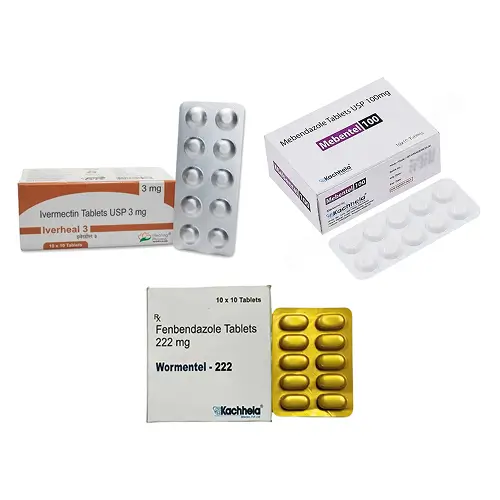
Fenbendazole 222+Mebendazole 100+Ivermectin 3
Previous product
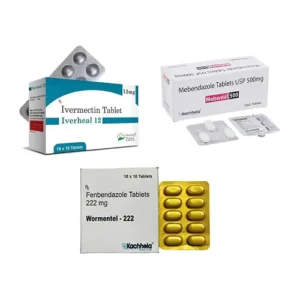
Fenbendazole 222+Mebendazole 500+Ivermectin 12
A$193.50 A$566.05Price range: A$193.50 through A$566.05
Next product
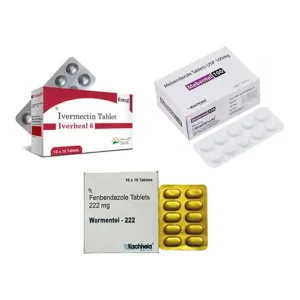
Fenbendazole 222+Mebendazole 100+Ivermectin 6
A$153.06 A$444.75Price range: A$153.06 through A$444.75
A$144.40 A$418.76Price range: A$144.40 through A$418.76
In Stock
In Stock
Fenbendazole 222+Mebendazole 100+Ivermectin 3
| Pack Size | Price | Quantity | Add To Cart | |
|---|---|---|---|---|
| 1 Pack | A$144.40 | |||
| 2 Pack/s | A$280.14 | |||
| 3 Pack/s | A$418.76 | |||
| Want to order in bulk / B2B price? Send Inquiry | ||||
Offer You Can't Resist
Free Shipping
Enjoy Free Shipping on Orders above AUD304 (USD199)
Estimate Delivery :
21 September - 28 September
38
Very easy to order
I have been struggling with staying focused and maintaining productivity for years, particularly during long workdays. After researching various options, I decided to give Modalert 100 MG a try, and I can confidently say it has been a game-changer for me.
 Australia
February 11, 2025
Response from Modalertaustralia
Thank you for sharing your experience! We’re glad to hear Modalert 100 MG has helped support your focus and productivity during long days. Feedback like this means a lot to us and to others considering their options. Please continue to use the medication as directed, and feel free to reach out if you ever need assistance.
Last Updated on March 07, 2026

Description
Introduction
Recently, the mixture comprising Fenbendazole (222 mg), Mebendazole (100 mg), and Ivermectin (3 mg) has garnered increasing interest in medical and veterinary circles. These three compounds were initially developed and licensed for use as antiparasitics in both the human body and animals. The three drugs are being examined in light of their potential effects across a range of areas, including the controversial use in treating cancer and for chronic diseases.
This blog explores what each chemical does and the reason behind mixing the two, and also what research is currently saying about their effectiveness, as well as security.
What Are These Medications?
-
Fenbendazole (222 mg)
- Class: Benzimidazole antihelminthic
- Common Use: Most commonly used as a veterinary medicine treatment for parasitic worm infections in cattle, dogs, and other animal species.
- Mechanism of Action: The microtubules in parasites are inhibited by disrupting the cellular process and the metabolism of energy. This leads to the death of parasites.
Although it is not FDA-approved to be used by humans in many nations, a few anecdotal or preliminary studies have generated curiosity about its anticancer effects and made it the subject of informal off-label testing.
-
Mebendazole (100 mg)
- Class: Benzimidazole antihelminthic (human-approved)
- Common Use: Treats roundworms, whipworms, hookworms, and pinworms in humans.
- Mechanism: Very similar to Fenbendazole—targets microtubule formation, making it a potent inhibitor of cell division in parasites.
Mebendazole is approved by the FDA and is on the WHO listing of essential medications. Much like Fenbendazole, there are studies that suggest the possibility of anticancer effects, specifically by reducing the growth rate of specific cancer cells in an in vitro model.
-
Ivermectin (3 mg)
- Class: Macrocyclic lactone
- Common Use: Treats onchocerciasis (river blindness), scabies, strongyloidiasis, and lice in humans.
- Mechanism: Binds to glutamate-gated channels found in muscle and nerve cells of vertebrates. It leads to paralysis and eventual death in the parasite.
Ivermectin is also examined in relation to its antioxidant, anti-inflammatory, and anti-cancer capabilities in the laboratory, but the majority of the research conducted is in its early stages.
Why Combine These Three?
-
Broad-Spectrum Parasite Elimination
Each drug targets one of the mechanisms that are slightly different or a spectrum of parasites. If they are combined:
- Fenbendazole and Mebendazole treat an array of intestinal worms.
- Ivermectin also protects against external parasites as well as nematodes such as Strongyloides.
-
Potential Synergistic Effects
All three have shown microtubule-disrupting or cell division-blocking capabilities. For the field of cancer research, these characteristics may theoretically work in tandem in stopping the growth of tumors. But the majority of information is derived from research conducted in vitro and the animal model, and not from large-scale human studies.
-
Interest in Cancer Adjuvant Therapy
Certain proponents who are not on the label believe the following combination may:
- Inhibit angiogenesis (formation of new blood vessels that feed tumors)
- Promote apoptosis (cell death in cancer cells)
- Reduce inflammation and oxidative stress
But, at present, there’s no regulatory approval or any consensus to support their usage for oncology, outside of experimental settings.
Safety and Side Effects
Fenbendazole
- Most animals tolerate it well.
- The human body is not well-studied; however, excessive doses for long periods can alter liver function or create GI signs.
Mebendazole
- Nausea, vomiting, abdominal pain, and rare liver toxicity at high or prolonged doses.
- Teratogenic studies on the study of teratogenicity in animals are not advised during pregnancy.
Ivermectin
- Dizziness, pruritus, rash, and, in rare cases, neurological effects like confusion or seizures—especially at high doses.
- It is generally safe for short-term use, controlled by a doctor.
Caution: Mixing antihelminthic medications increases the chance of interactions with drugs, toxicity, as well as burden on the liver. Always seek the advice of a certified medical professional before beginning any medication.
Controversies and Considerations
- Off-label and Unapproved Use:
Fenbendazole isn’t licensed for use in humans. The application of the drug as a treatment is mostly apocryphal (popularized through”Joe Tippens’ Protocol “Joe Tippens Protocol”) as it lacks solid, research-based evidence. - Lack of Human Clinical Trials:
There are some promising lab studies, but human trials are mostly in their very early stages, which means that security, efficacy, as well as dosing have not been established. - Drug Resistance Concerns:
The misuse or overuse of antiparasitics may result in resistance to parasites and render these medications useless for people who truly require these medications.
FAQ: Fenbendazole + Mebendazole + Ivermectin
Q1: Can I take Fenbendazole as a human?
Fenbendazole, a drug that is not permitted for human consumption, although some reported instances have been reported of personal experiments. It is not advised without medical supervision.
Q2: Is this combination safe?
There is no research that has been conducted on the risk of this triple mix on humans. Each drug comes with a unique safety profile; mixing the two could stress liver function and create a higher risk for side effects.
Q3: Can this treat cancer?
There’s insufficient evidence that these medications will cure cancer. A few lab studies suggest that they may have anti-tumor properties; however, clinical trials are not conclusive. Utilizing these treatments as a substitute for established treatments could cause harm.
Q4: Can Ivermectin kill viruses?
Certain in-vitro studies have indicated antiviral effects that Ivermectin may possess (e.g., in COVID-19 studies); however, the effects don’t translate into treatment for humans in safe doses.
Q5: Are there drug interactions?
Yes. The drugs may be in a relationship with other drugs or with each other via liver metabolism (CYP450 channels). Make sure to consult with your doctor prior to taking them together.
Q6: What’s the difference between Fenbendazole and Mebendazole?
They both function similarly. Fenbendazole primarily serves as a veterinary drug, and Mebendazole has been licensed for human use. They have different dosages, and their metabolism is somewhat different.
Q7: Can I take this combo for parasites?
If you suspect that you have a parasite illness, get tested first. Mebendazole and Ivermectin are both the most common human antiparasitic treatments; however, Fenbendazole isn’t recommended in the absence of supervision.
Conclusion
The mix of Fenbendazole 222 mg + Mebendazole 100 mg + Ivermectin 3 mg is an effective mix of anti-parasitic drugs that have multiple mechanisms of action, and interesting experimental applications. While lab research shows promise–particularly for cancer inhibition–real-world evidence is limited, and the use of these drugs outside approved indications carries risks.
Always, self-medicating and not consulting a doctor self-medicating without a professional can cause serious problems. If you’re contemplating any non-approved or experimental treatments, be sure to discuss the issue with a certified healthcare provider.
Additional Information
| Manufacturer | Healing Pharma, India, Kachhela Medex Pvt.Ltd |
|---|---|
| Pharmaceutical | Tablet/s |
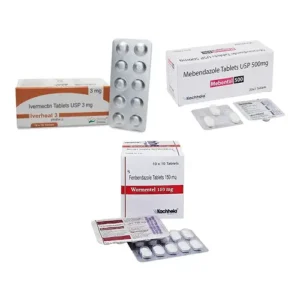
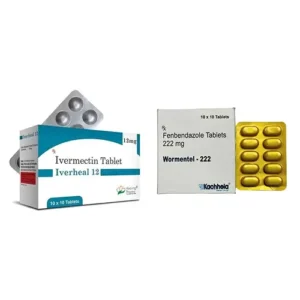
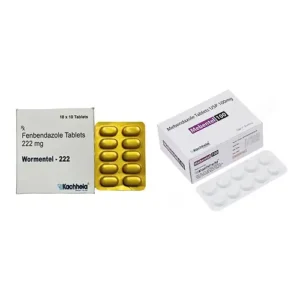
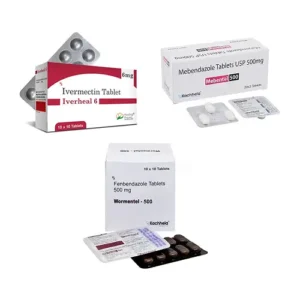
| Tablet/s | Wormentel 222mg (Fenbendazole) = 60 Pills, Mebentel 100mg (Mebendazole) = 60 Pills, Iverheal 3mg (ivermectin) = 60 Pills |
Related products

Recently Viewed
