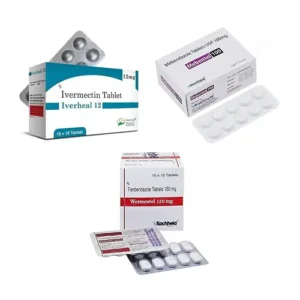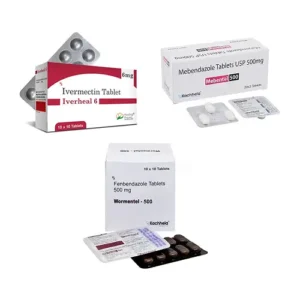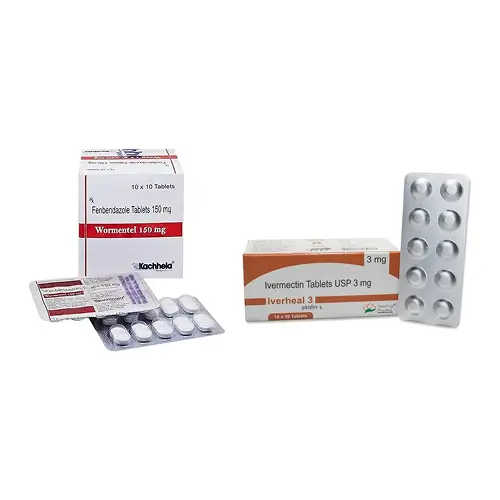
Fenbendazole 150+Ivermectin 3
Previous product
Fenbendazole 150+Mebendazole 100
A$31.00 A$83.00Price range: A$31.00 through A$83.00
Next product
Fenbendazole 150+Ivermectin 6
A$77.00 A$221.00Price range: A$77.00 through A$221.00
A$71.00 A$203.00Price range: A$71.00 through A$203.00
In Stock
In Stock
Fenbendazole 150+Ivermectin 3
| Pack Size | Price | Quantity | Add To Cart | |
|---|---|---|---|---|
| 1 Pack | A$71.00 | |||
| 2 Pack/s | A$136.00 | |||
| 3 Pack/s | A$203.00 | |||
| Want to order in bulk / B2B price? Send Inquiry | ||||
Offer You Can't Resist
Free Shipping
Enjoy Free Shipping on Orders above AUD304 (USD199)
Estimate Delivery :
13 September - 20 September
49
Fast Support
Customer support was excellent. My questions were answered promptly and the team was very helpful throughout the process. The order was handled efficiently and professionally
 Australia
August 15, 2026
Last Updated on February 25, 2026

Description
Overview
Fenbendazole 150mg + Ivermectin 3mg is an antiparasitic broad-spectrum combination that is used to control and treat both external and internal parasites within animals. It’s recommended to treat dogs, cats, cattle, goats, and horses in accordance with veterinary advice.
This formulation is dual-action and targets various kinds of parasites, including roundworms, hookworms, whipworms, and tapeworms, and externe mites, providing a simple, efficient solution to large or mixed infestations.
The combo provides a safe and effective deworming method that’s commonly used by veterinarians across Australia.
What is it?
Ivermectin and Fenbendazole are two antihelmintic agents that have distinct mechanisms:
- Fenbendazole (150mg): An antiparasitic benzimidazole that hinders energy metabolism in parasites. This leads to their demise. It is a target for intestinal worms as well as specific tapeworms.
- Ivermectin (3mg): A macrocyclic lactone that paralyzes and kills parasites via binding to glutamate-gated channels. Very effective against mites, insects, and larvae migrating.
Together, they give extensive protection for both the nematodes and ectoparasites all in one dose.
Common Uses in Animals
Veterinarians can recommend this mixture to:
- Intestinal nematode infestations (e.g., roundworm, whipworm, hookworm)
- Tapeworm infections (some species)
- Lungworms
- Mange (sarcoptic or demodectic)
- Mite infestations
- Bots in horses
- Heartworm prevention (in some protocols)
It is essential to speak with the vet before using it, particularly to ensure exact weight-based dosage as well as to prevent uninformed or off-label administration for vulnerable breeds or species.
Dosage and Administration Chart
| Animal Type | Typical Dose* | Frequency | Route | Notes |
| Dogs | Based on body weight (per 10kg) | Single dose or 3-day course | Oral tablet | Be cautious when using it in breeds that herd. Some breeds may require deworming on a regular basis. |
| Cats | Veterinary direction only | As advised | Oral tablet | The cat is more sensitive to Ivermectin, and the dosage should be exact. |
| Cattle | 1 tab per 150kg (adjust as per vet) | As needed or seasonal | Oral/bolus | A deworming program every 3 to 6 months is typical for animals in the pasture. |
| Goats/Sheep | As per weight and veterinary guidance | Periodic | Oral/tablet | Use of extra-labels is common, but be sure to observe time limits for withholding if the use of food. |
| Horses | As advised, depending on weight | Deworming rotation | Oral paste/tab | Resistance to Fenbendazole is rising. Follow the advice of your vet. |
* The dosage is determined by the species, the weight of the body, and the degree of infection. The oversight of veterinary doctors is essential.
Key Benefits
- Broad-spectrum antiparasitic protection
- Oral administration is easy to do
- It is effective against GI as well as tissue parasites
- Suitable for use in deworming programs
- It could be as part of a rotating parasite control plan
- Aids in reducing environmental contamination caused by parasite eggs. Helps reduce environmental contamination by parasites.
Safety and Precautions
- Avoid using for very young, pregnant, or sick animals unless it is directed by an animal veterinarian
- Do not use in collies or the herding breeds (e.g., Australian Shepherds and Border Collies) due to Ivermectin-related sensitivity
- Mix with any other antiparasitics unless directed by a doctor
- Check for reactions to allergens, particularly with high parasite numbers (due to their death)
- The correct form for a species. Certain formulations are specific to a species
A sign of an overdose or an adverse reaction could include:
- Drooling, vomiting, or diarrhea
- Lethargy or weakness
- Ataxia (wobbly gait), especially in dogs
- Tremors or seizures (rare)
Contact your veterinarian immediately if you experience any serious signs.
Side Effects
A majority of pets tolerate the drug very well. However, side effects are possible:
Mild side effects:
- Temporary diarrhoea
- Lethargy after dosing
- Reduced appetite for 1–2 days
Serious but rare:
- Sensory symptoms of the nervous system in breeds that are sensitive
- An extremely allergic reaction due to the parasite’s die-off
- Intoxication due to an overdose or improper use
Monitoring your animal carefully after the administration is recommended, particularly when the animal is first administered.
Storage and Handling
- Keep it in a dry and cool location at a temperature of 30°C or less.
- Stay clear of the sun and humidity
- Be sure to keep away from pets and children
- Don’t use products that are expired
- Make sure to reseal used packing promptly
Environmental and Public Safety
A proper use of the product helps to keep parasites from spreading to other animals, and lowers the risk of infection in zoonotic animals (especially roundworms and hookworms in cats and dogs).
Do not throw away empty tablets into the water source. Use according to the local guidelines for veterinary care or councils.
Summary Chart
| Feature | Detail |
| Active Ingredients | Fenbendazole 150mg + Ivermectin 3mg |
| Medication Type | Oral antiparasitic |
| Use | Internal and external parasite control |
| Animals | Dogs, cats, horses, goats, cattle (vet-guided) |
| Common Parasites Targeted | Roundworms, whipworms, mites, bots |
| Prescription Required | Usually, yes (in Australia) |
| Frequency of Use | One-time or rotational as advised |
| Safe for All Breeds? | No – caution in herding dogs & small animals |
Frequently Asked Questions
- What is Fenbendazole + Ivermectin used for?
It’s used for the treatment of a wide range of intestinal worms and mites, and other worms that can be found on animals. The product protects with dual actions with a single formulation. - Can I give this combination to puppies or kittens?
Only when under strict veterinary supervision. Animals in their early years require precise dosages and could be more sensitive. - Is it safe for all dog breeds?
No. Breeds such as Collies, Australian Shepherds, and Shelties might possess a genetic defect (MDR1) that causes them to be vulnerable to Ivermectin. - How long does it take to work?
Most parasites start dying within 24 to 48 hours of the administration. Complete clearance can take a couple of days. - Can I use it as a regular dewormer?
Yes, in conjunction with other treatments to reduce resistance. Always adhere to the deworming protocol of your vet. - Does this combination treat tapeworms?
Fenbendazole is a treatment for certain kinds (e.g., Taenia); however, it does not treat Dipylidium caninum. It is possible that you will require praziquantel to achieve complete tapeworm elimination. - Should I fast my animal before giving the tablet?
There is no need to fast. However, it can be given with food to lessen stomach upset if needed. - Are there any withdrawal times for food-producing animals?
Yes. Be sure to observe the withdrawal times of sheep, goats, as well as cattle, if they produce either meat or milk. Consult a vet for exact times. - Can I crush the tablet for easier dosing?
It is only necessary if the formula allows. Certain tablets coated with a coating should not be crushed. Consult your veterinarian for alternative options for suspensions and pastes. - Can it prevent heartworm in dogs?
Ivermectin can help fight heartworm larvae. However, this combination is not a replacement for a specific prevention of heartworms.
Final Thoughts
Fenbendazole 150mg + Ivermectin 3mg is an effective, multi-targeted deworming treatment that can be used to treat the skin and intestinal parasites in a variety of animal species. It is a reliable choice for managing veterinary parasites, specifically in the agricultural and rural areas in Australia.
Be sure to administer the treatment under the supervision of a vet and follow the weight-based dosage, and stay on top of the calendar of deworming for your pet to maintain long-term health and the prevention of parasites.
Additional Information
| Manufacturer | Healing Pharma, India, Kachhela Medex Pvt.Ltd |
|---|---|
| Pharmaceutical | Tablet/s |
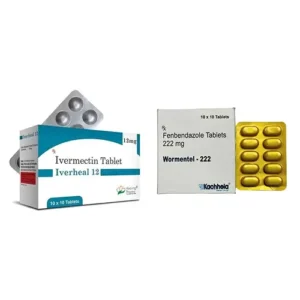
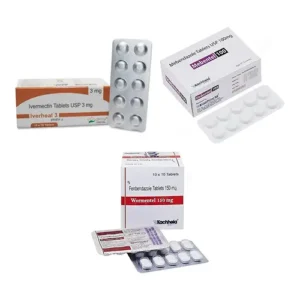
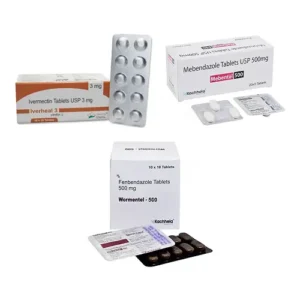
| Tablet/s | Wormentel 150mg (Fenbendazole) = 60 Pills, Iverheal 3mg (ivermectin) = 60 Pills |
Related products