
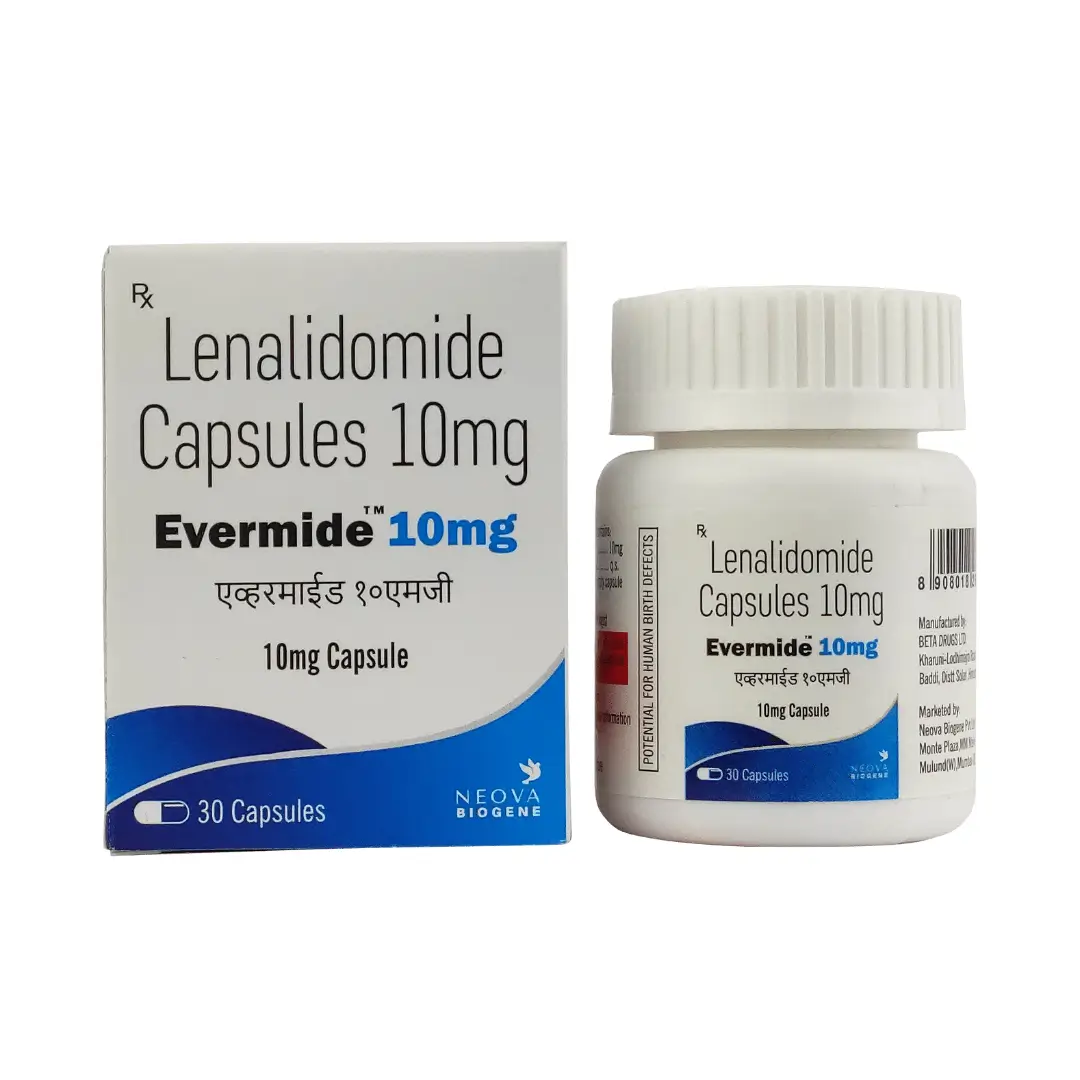
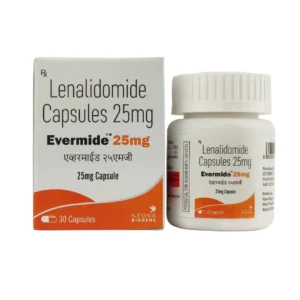
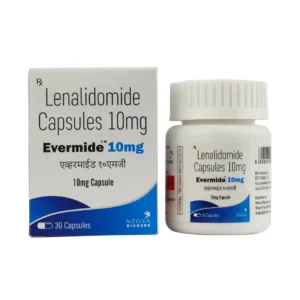
Evermide 10mg (Lenalidomide)
Previous product

Cetigal 120mg (Cetilistat)
A$86.64 A$257.03Price range: A$86.64 through A$257.03
Next product
Dayvigo 5mg (Lemborexant)
A$60.65 A$166.06Price range: A$60.65 through A$166.06
A$132.85 A$363.89Price range: A$132.85 through A$363.89
In Stock
In Stock
Evermide 10mg (Lenalidomide)
| Pack Size | Price | Quantity | Add To Cart | |
|---|---|---|---|---|
| 30 Capsule/s | A$132.85 | |||
| 60 Capsule/s | A$252.70 | |||
| 90 Capsule/s | A$363.89 | |||
| Want to order in bulk / B2B price? Send Inquiry | ||||
×
Sorry!! Out of Stock
Sorry! Evermide 10mg (Lenalidomide) is out of stock
Please click below to view other similar medications.
View All Lenalidomide Products
Offer You Can't Resist
Free Shipping
Enjoy Free Shipping on Orders above AUD304 (USD199)
Estimate Shipping :
18 July - 25 July
30
Last Updated on December 06, 2025

Description
Evermide 10mg, which contains Lenalidomide, the main ingredient Lenalidomide is an effective medicine used to treat blood cancers as well as diseases. Lenalidomide is part of a category of medicines that are known as immunomodulatory substances, which is a targeted treatment that enhances the immune system in order to combat cancerous cells.
Evermide is now a major factor in the treatment of conditions like myeloma, myelodysplastic syndromes (MDS), and specific forms of lymphoma. Its ability to not just destroy cancer cells, but also increase the immune system, can be a useful treatment option in oncology today.
In this post on this blog, we’ll look at the nature of Evermide 10mg does what it does, how it works, as well as when and how it’s administered, the possible negative effects, safety precautions, and answers to the most frequently asked queries.
What is Evermide 10mg (Lenalidomide)?
Evermide is the name used for Lenalidomide, an emulsification of thalidomide that has a higher efficiency and fewer side effects. Lenalidomide functions as an immune modulator, which means it affects the activity of the immune system, making it more effective in combating cancerous cells.
It is characterized by several modes that work:
- Anti-cancer effect directed by triggering the death of cancer cells (apoptosis)
- By preventing the development of blood vessels (angiogenesis) that nourish tumors
- Improving immune cells like T cells, as well as natural killer cells, can better combat cancer
Indications: When is Evermide Used?
The dosage of 10mg Evermide is used to treat:
- Multiple Myeloma:
Utilized in conjunction with dexamethasone and other medications to treat patients who have been diagnosed with or relapsed/refractory myeloma. An illness that affects blood cells found in bone Marrow. - Myelodysplastic Syndromes (MDS):
It is especially beneficial for patients suffering from deletion 5q, a chromosomal anomaly, in which case Evermide aids in increasing blood count and decreasing the requirement for transfusions. - Mantle Cell Lymphoma:
Sometimes, it is used in patients with relapsed or failed mantle lymphoma that has been treated previously. - Other hematologic malignancies:
In clinical trials or under expert supervision.
How Does Lenalidomide Work?
Lenalidomide’s actions are complex and complex, with multiple facets. It combines:
- Immunomodulation: It activates T cells as well as the natural killer (NK) cells in order to eliminate cancerous cells.
- Anti-inflammatory effects: Reducing inflammatory signals that could aid in the growth of tumors.
- Anti-angiogenic effects: Stops the growth of blood vessels that are essential to support the survival of tumors.
- Direct cytotoxic effects: The triggers cause cancerous cells to die by programmed cell death.
Together, these steps can reduce the risk of developing cancer as well as enhance the outcomes of patients.
Dosage and Administration
Typical Dosage:
- The most common dosage will be 10 mg twice each day for 21 days, followed by 7 consecutive days (28-day course). But the dosage may differ depending on the indication, the kidney function, or the tolerance of patients.
- The need for dose adjustments is often necessary to treat side effects or impairment of kidney function.
Administration Guidelines:
- Use Evermide at the same time each day.
- Take tablets whole, with or without food.
- Don’t crush or chew tablets.
- Be sure to follow the schedule of your doctor closely.
Important Monitoring During Treatment
Since Evermide can affect blood cells as well as the immune system, consistent surveillance is essential:
- Complete blood counts (CBC): For a check of low Red blood cell count (anemia) or white blood cells (neutropenia), or the presence of platelets (thrombocytopenia).
- Kidney and liver function tests
- Blood pressure monitoring
- Tests for pregnancy in women who are pregnant with a risk of birth defects
- Check for any signs of infection or blood clots other complications
Side Effects of Evermide 10mg
Common Side Effects:
- Fatigue
- Diarrhea or constipation
- Rash or skin reactions
- Nausea and vomiting
- Low blood counts (anemia, neutropenia, thrombocytopenia)
- Swelling of hands or feet (edema)
- Peripheral neuropathy (tingling or numbness in hands or feet)
Serious Side Effects (Require Immediate Attention):
- Blood clots (deep vein thrombosis or pulmonary embolism)
- Severe allergic reactions (rash, swelling, difficulty breathing)
- Severe infections
- Liver problems (jaundice, dark urine)
- Tumor lysis syndrome (rapid breakdown of cancer cells causing metabolic disturbances)
If you are experiencing chest discomfort, sudden breathing problems, as well as pain, swelling of the legs, or any other troubling symptoms, you should seek urgent treatment immediately.
Precautions and Warnings
- Pregnancy: Lenalidomide is extremely Teratogenic (causes serious birth defects). The strictest pregnancy prevention strategies (including contraception) must be followed by females and males during treatment as well as following.
- Blood clots: The patient may be advised to take blood thinners in order to lower the risk.
- Infections: Since the immune system has been in decline, stay away from illnesses and report any signs of infection or fever promptly.
- Kidney impairment: Adjusting dosages may be required.
- Regular lab tests: It is vital to track blood counts and organ functions.
Drug Interactions
Lenalidomide can be a drug that interacts with other drugs, such as:
- Blood thinners (anticoagulants): Increased bleeding risk.
- Other chemotherapy or immunosuppressive agents
- Drugs affecting kidney function
Make sure you inform your physician of all medications, even prescription and over-the-counter medications.
Frequently Asked Questions (FAQs)
-
How long do I need to take Evermide?
The length of treatment varies based on the condition and responses. Certain patients are on it for years or even months with continuous surveillance.
-
Can Evermide cure multiple myeloma?
There is no cure for it, but it helps manage the disease as well as prolong remission. It can also increase the quality of living.
-
What should I do if I miss a dose?
Take the medication as soon as you remember, the next day. Don’t take two doses.
-
Is Evermide safe during pregnancy?
No. Evermide can cause severe birth defects and should never be taken during pregnancy.
-
Can I take Evermide with other medications?
Under strict medical supervision to avoid any interactions.
-
What if I develop a rash?
It is not uncommon to see mild rashes, but consult your doctor if it gets worse or is followed by any other signs.
-
Does Evermide cause hair loss?
Thinning hair can happen, but it is rarer than the more traditional chemotherapy.
-
How do I reduce the risk of blood clots?
Take your physician’s guidance and follow the recommendations of your doctor, including blood thinners, keeping physically active, and drinking plenty of fluids.
Conclusion
Evermide 10mg (Lenalidomide) is an effective immune-modulatory medication that has enhanced treatments for patients suffering from multiple myeloma, myelodysplastic disorders, as well as certain lymphomas. Its distinctive mechanism assists in attacking cancerous cells while also enhancing the immune system.
Due to the risk of serious adverse effects such as blood clots or birth defects, Evermide is recommended to be used under strict medical supervision, with frequent monitoring. Patients must adhere to the dosing regimens, observe safety guidelines, and report any negative reactions promptly.
Related products








Recently Viewed


Reviews
There are no reviews yet.