
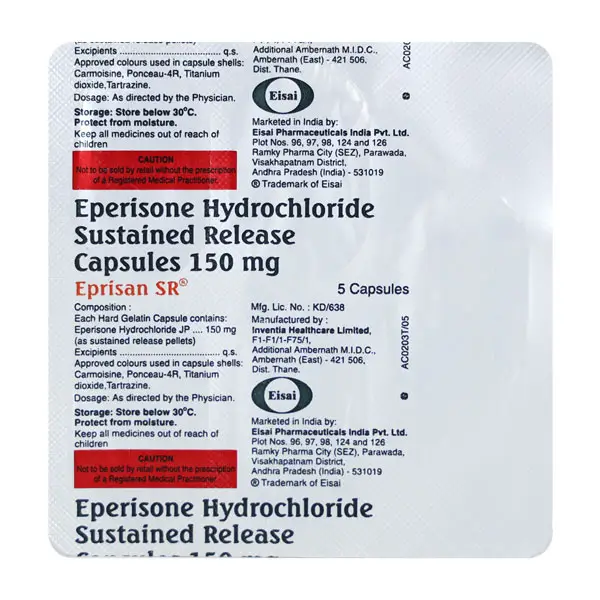
Eprisan 150mg (Eperisone)
Previous product
Eprisan 50mg (Eperisone)
$22.50 $42.50Price range: $22.50 through $42.50
Next product
Pletoz 100mg (Cilostazol)
$22.50 $53.75Price range: $22.50 through $53.75
$48.00 $106.25Price range: $48.00 through $106.25
Out of Stock
Out of Stock
Eprisan 150mg (Eperisone)
| Pack Size | Price | Quantity | Add To Cart | |
|---|---|---|---|---|
| 30 Capsule/s | $48.00 | |||
| 60 Capsule/s | $75.00 | |||
| 90 Capsule/s | $106.25 | |||
| Want to order in bulk / B2B price? Send Inquiry | ||||
×
Sorry!! Out of Stock
Sorry! Eprisan 150mg (Eperisone) is out of stock
Please click below to view other similar medications.
View All Eperisone Products

Offer You Can't Resist
Free Shipping
Enjoy Free Shipping on Orders above AUD304 (USD199)
28
Fast dispatch
I have ordered multiple times and always receive excellent service. Fast dispatch, reliable tracking, and great support.
 Australia
May 21, 2026
Last Updated on December 05, 2025

Description
Introduction
The stiffness and pain in the muscles are typical symptoms associated with various muscle and musculoskeletal disorders. Eprisan 150mg, which contains Eperisone Hydrochloride, the main ingredient Eperisone Hydrochloride, is a centrally-acting muscle relaxant that can help relieve these symptoms. Eperisone is gaining not only in the United States but also internationally due to its effectiveness and ease of use for pain and muscle spasms.
This blog offers a thorough overview of Eprisan 150mg, what it is, how it operates, and what it is used for, the dosage, warnings, possible adverse effects, and solutions to the most frequently sought-after questions.
What is Eprisan 150mg?
Eprisan 150mg is a prescribed medication with Eperisone hydrochloride as an anti-muscle relaxant, which acts in the central nervous system. It is typically prescribed for treating stiffness in muscle spasms, pain, and tension caused by conditions like cervical spondylosis and lumbar spondylosis or post-stroke spasticity. various orthopedic or neurological disorders.
In contrast to traditional relaxation drugs, Eperisone offers a distinct mechanism of action that not only soothes muscles it also enhances blood flow and lessens discomfort without creating substantial anxiety.
How Does Eperisone Work?
Eperisone relaxes muscles of the skeletal system through various methods:
- Centrally Acting Muscle Relaxant: It affects the spinal cord as well as the brain to decrease the activity of motor nerves. This aids in relieving muscle contractions.
- Vasodilatory Effect: The dilation of blood vessels occurs within the muscles of the skeletal, improving blood flow and decreasing the pain that is that is caused by low circulation of blood.
- Pain Modulation: It blocks abnormal reflexes and pain transmission within the nervous system’s central nerves, which makes it very effective in chronic pain disorders.
This combination makes Eprisan extremely effective for the treatment of muscle-related ailments without relaxing the patient.
Uses of Eprisan 150mg
Eprisan is usually prescribed for the following situations:
- Cervical spondylosis
- Lumbar spondylosis
- Post-stroke muscle spasticity
- Muscle pain or spasms caused by neurological conditions
- Post-operative recovery involving muscle pain
- Lower back pain
- Shoulder stiffness or frozen shoulder
- Cerebral palsy-related spasticity (in some cases)
Doctors might also recommend Eprisan off-label to treat other ailments that cause neuralgia or muscle tightness and fibromyalgia, based on the severity of symptoms experienced by patients and their responses to treatment.
Dosage and Administration
Typical Dosage:
- Adult doses are typically 150 mg Eperisone a day, which is in a single dose or broken down into smaller dosages (e.g., 50 mg 3 times a day or 75 mg twice daily).
- Eprisan 150mg tablets can be consumed following meals to reduce the chance of stomach upset.
Important Notes:
- The precise dosage and time are dependent on the condition of the patient, as well as weight, age, and the response to treatments.
- It is vital to adhere to prescription instructions from your physician and never self-medicate or change the dosage without medical guidance.
Side Effects of Eprisan 150mg
Eperisone It is usually well tolerated; nevertheless, like all medicines can cause adverse reactions in some people.
Common Side Effects:
- Dizziness or lightheadedness
- Nausea or upset stomach
- Headache
- Fatigue
- Dry mouth
- Drowsiness (less common compared to other muscle relaxants)
Rare but Serious Side Effects:
- Allergic reactions (rash, itching, swelling, difficulty breathing)
- Severe drop in blood pressure
- Liver enzyme elevation
If serious reactions are observed, medical attention should be sought right away.
Precautions and Warnings
Before starting Eprisan 150mg, inform your doctor about:
- Liver or kidney problems
- Allergic reactions to medications
- Pregnancy or breastfeeding status
- Other medications you are currently taking, especially CNS depressants, antispasmodics, or blood pressure medicines
Special Populations:
- It is not advised to use children’s toys except as directed by a doctor.
- Be cautious when using this medication in older patients, due to the possibility of sensitization to adverse consequences.
Avoid driving or operating equipment until you understand what the effects of this medication are on you, particularly if you are feeling dizzy or sleepy following the use of the medication.
Interactions with Other Drugs
Eperisone may interact with:
- CNS depressants (e.g., benzodiazepines, opioids)
- Antihypertensive drugs (may enhance the blood pressure-lowering effect)
- Alcohol (can increase the risk of dizziness or drowsiness)
Be sure to give your doctor all the medications or supplements you’re taking to stay clear of unwanted interactions.
Duration of Treatment
The length of time treatment using Eprisan is dependent on the condition that is causing it. For acute spasms of muscles and spasms, a brief duration (a few days or weeks) might be adequate. For chronic ailments such as spasticity after a stroke or spondylosis, more long-term therapy may be necessary under the supervision of a medical professional. A regular assessment by a medical professional who is prescribing the treatment is required in order to evaluate the effects and adverse effects of the continuous treatment.
Storage Instructions
- Keep it in a cool, dry location below 30°C.
- Be sure to keep away from youngsters.
- Don’t use the medicine after the date it expires.
FAQs About Eprisan 150mg
-
Is Eprisan 150mg safe for long-term use?
Eprisan can be taken long-term under the supervision of a medical professional, particularly when it is used to treat chronic illnesses such as the post-stroke spondylosis or spasticity. Monitoring by a medical professional is essential to look for any possible adverse effects, specifically on the liver and kidneys.
-
Can I take Eprisan with painkillers or NSAIDs?
Yes, Absolutely, Eprisan will often be used in conjunction with painkillers, such as paracetamol and NSAIDs like ibuprofen to improve the relief of pain. Always consult with your doctor prior to mixing medications.
-
Does Eprisan cause drowsiness?
Eperisone produces significantly less sedation than the other muscle relaxants. Some people might have a mild feeling of drowsiness or dizziness, especially in the initial stages of treatment.
-
Can Eprisan be used during pregnancy or breastfeeding?
It is difficult to determine the effectiveness of Eperisone when pregnant or lactating. This medication should only be utilized when necessary and authorised by a doctor who is able to evaluate the benefits and risks.
-
How quickly does Eprisan start working?
A majority of patients feel relief in the first few days of beginning Eprisan. In chronic cases, it could take up to about 1-2 weeks of consistent use before you can see the benefits fully.
-
Is Eprisan addictive?
No, it’s not true; Eperisone doesn’t have any addictive potential. It doesn’t affect opioid receptors, and it doesn’t cause dependence on long-term usage.
-
What should I do if I miss a dose?
If you are unable to take the dose, get the dose as soon as you remember. If the time is near the time of your next dose, then skip the missed dose. Don’t double doses to compensate for missing tablets.
Conclusion
Eprisan 150mg (Eperisone) is an effective medicine to treat muscle spasms, stiffness, and pain, without the large effects of sedation that are often found in traditional muscle relaxants. Its distinctive mechanism of action is suitable for many muscular and neuromuscular conditions. Though generally legal, it’s important to use the medication under medical supervision and notify any nebulous manifestations or consequences.
Related products


Recently Viewed

Reviews
There are no reviews yet.