
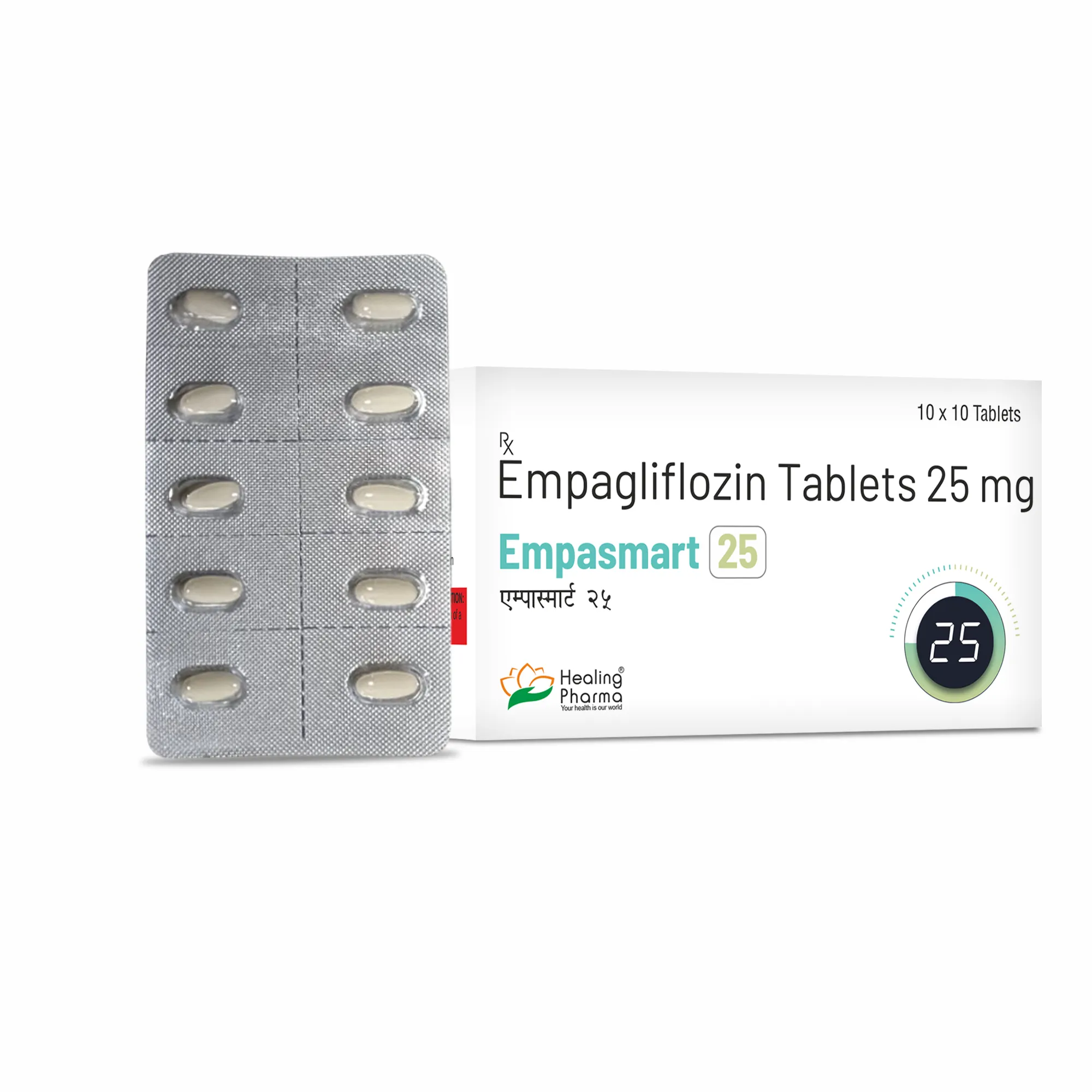
Empasmart 25mg (Empagliflozin)
Previous product
Empasmart 10mg (Empagliflozin)
A$63.00 A$166.60Price range: A$63.00 through A$166.60
Next product
Coviqueen 200mg (Hydroxychloroquine Sulfate)
A$112.00 A$322.00Price range: A$112.00 through A$322.00
A$84.00 A$201.60Price range: A$84.00 through A$201.60
In Stock
In Stock
Empasmart 25mg (Empagliflozin)
| Pack Size | Price | Quantity | Add To Cart | |
|---|---|---|---|---|
| 100 Tablet/s | A$84.00 | |||
| 200 Tablet/s | A$147.00 | |||
| 300 Tablet/s | A$201.60 | |||
| Want to order in bulk / B2B price? Send Inquiry | ||||
×
Sorry!! Out of Stock
Sorry! Empasmart 25mg (Empagliflozin) is out of stock
Please click below to view other similar medications.
View All Empagliflozin Products

Offer You Can't Resist
Free Shipping
Enjoy Free Shipping on Orders above AUD304 (USD199)
Estimate Shipping :
07 June - 14 June
44
Customer service
Customer service was responsive and medicines arrived in perfect condition
 Australia
May 19, 2026
Last Updated on December 05, 2025

Description
Empasmart 25mg is a prescription drug that contains Empagliflozin, which is an innovative oral antidiabetic drug that belongs to the group of SGLT2 inhibitors (Sodium-Glucose Co-Transporter 2 inhibitors). It’s used to treat the condition known as type 2 diabetes mellitus (T2DM) and is also a major factor in helping improve the cardiovascular as well as renal outcomes for patients at high risk.
In this article on this blog, we discuss the essential information you should learn about Empasmart 25mg, from its mechanism of action as well as its medical benefits and dosage to the cautions, possible side effects, and much more.
What Is Empasmart 25mg (Empagliflozin)?
Empasmart 25mg is the brand name formulation of Empagliflozin, available as 25 mg tablets. It’s intended to regulate blood sugar levels for people suffering from Type 2 Diabetes, especially those with the issue of insulin resistance or who may be at risk for heart problems.
Although it’s not designed for patients with type one diabetes or diabetes ketoacidosis, empagliflozin can be beneficial in many treatment areas, and has been an essential component of contemporary cardiometabolic and diabetes medical.
How Empagliflozin Works: Mechanism of Action
Empagliflozin functions in the manner of blocking its SGLT2 (sodium-glucose co-transporter) protein in the kidneys. The protein is responsible for the reabsorption of glucose back into the bloodstream after filtering urine.
By blocking SGLT2:
- More glucose is excreted through urine
- Blood sugar levels are reduced
- Caloric loss occurs, contributing to weight loss
- The slight reduction of blood pressure could be seen because of a mild diuretic effect
The unique mechanism of this is not dependent on insulin, which makes it especially useful for patients with insulin resistance.
Therapeutic Indications of Empasmart 25mg
-
Type 2 Diabetes Mellitus (T2DM)
Empasmart is recommended for adults who suffer from T2DM as:
- Monotherapy (If metformin is not tolerable or is contraindicated)
- Add-on therapy (that contain metformin, sulfonylureas, insulin, DPP-4 inhibitors, or metformin)
It aids in lowering both the postprandial and fasting blood sugar levels and improves HbA1c levels while reducing chronic complications associated with the disease.
-
Cardiovascular Risk Reduction
Clinical trials, such as EMPA-REG’s Outcome, have shown that empagliflozin:
- It reduces the risk of heart attack and death
- It reduces the likelihood of hospitalizations for heart failure
- It is beneficial to patients suffering from already established cardiovascular diseases
-
Chronic Kidney Disease (CKD)
Recent research suggests that SGLT2 inhibitors can delay the development of kidney disease and even in diabetic patients who are not. Empagliflozin is now a component of treatment for patients who suffer from the condition known as diabetic kidney disease or albuminuria.
-
Heart Failure with Reduced Ejection Fraction (HFrEF)
Empagliflozin has also been recognized as a safe way to reduce the chance of hospitalization for patients with heart disease. patients. It is useful even for non-diabetic patients.
Dosage and Administration
Recommended Dosage:
- Starting dose: 10 mg once daily
- Maximum dose: 25 mg once daily (Empasmart 25mg)
Patients can begin treatment as low as 10 mg and increase to 25mg depending on their Glycemic goals, tolerance, and the general clinical picture.
How to Take:
- Drink orally once a day in the early morning, either without or with food
- Drink the entire bottle of water and swallow it whole. Don’t chew or crush.
- Keep hydrated, particularly in summer or while taking diuretics
Benefits of Empasmart 25mg
- Reduces HbA1c levels effectively (up to 0.7–1.0%)
- Helps promote weight reduction (2-3 kg on average)
- This causes a slight reduction in blood pressure systolic
- Protects kidney function
- Lowers the risk of cardiovascular deaths and hospitalization because of heart failure
- A low risk of hypoglycemia in the absence of the use of insulin or the sulfonylureas
This makes it a popular second- or third-line treatment, especially for patients suffering from comorbid ailments.
Side Effects of Empasmart (Empagliflozin)
Although generally tolerated, Empasmart may have some negative results.
Common Side Effects:
- Increased urination (polyuria)
- Genital mycotic infections (e.g., yeast infections)
- Urinary tract infections (UTIs)
- Thirst (due to dehydration)
- Mild hypotension (drop in blood pressure)
- Nausea or fatigue
Less Common but Serious:
- Ketoacidosis (even in type 2 diabetes)
- Fournier’s gangrene (a rare genital infection)
- Acute kidney injury (mainly in dehydrated individuals)
- Fracture risk (minor risk increase in some populations)
Patients must be instructed to drink enough fluids and notify any unusual signs, including abdominal pain, anxiety, or labored breathing.
Precautions and Warnings
Not for Type 1 Diabetes or DKA
Empasmart shouldn’t be taken for patients suffering from type 1 diabetes or who have a family history of ketoacidosis in diabetics.
Renal Impairment
- Not recommended if eGFR < 30 ml/min/1.73m²
- Keep track of kidney function regularly for every patient
Volume Depletion
Be cautious when using this medication in patients who are elderly or people taking diuretics, since it can result in dehydration and lower blood pressure.
Infections
Check for any signs of urinary tract and genital infections. A good hygiene routine and education for patients will reduce the chance of contracting them.
Drug Interactions
Empagliflozin has no drug-drug interactions. However, caution must be used with:
- Diuretics: It can increase hypotension and dehydration
- Insulin or sulfonylureas: Higher risk of developing hypoglycemia
- Lithium: It could affect the levels of lithium in serum
- Other antidiabetic agents: Monitor blood sugar closely
Be sure to inform your doctor of the current medications, including herbal supplements and other over-the-counter medications.
Empagliflozin vs. Other Antidiabetic Drugs
| Feature | Empagliflozin | Metformin | DPP-4 Inhibitors |
| Hypoglycemia risk | Low | Low | Low |
| Weight effect | Loss | Neutral/Loss | Neutral |
| Cardiovascular benefit | Yes (Strong) | Some evidence | Minimal |
| Kidney protection | Yes | Moderate | Not significant |
| Mechanism | Renal glucose excretion | Reduces hepatic glucose | Enhances insulin action |
Empagliflozin is becoming more popular among those with heart or renal risk, which makes it the best choice for many circumstances.
Storage and Handling
- Keep it at 15 to 30 degrees Celsius. Keep away from humidity and temperatures
- Place the blister in the original package or in a container
- Make sure that the items are out of the reach of young children
- Don’t use it past the expiration date
Frequently Asked Questions (FAQs)
-
Can Empasmart be used with insulin?
Yes, it is true; however, that it could increase the likelihood of hypoglycemia. Therefore, insulin dosages might require adjustment.
-
How long does it take to work?
Control of blood sugar levels improves after one to two weeks; however, the benefits to the kidneys or cardiovascular health are longer-lasting.
-
Does Empasmart cause weight loss?
Yes, many patients have reported losing 2-3 kilograms of weight, particularly when it is combined with a healthier way of life.
-
Can non-diabetics use Empagliflozin?
Yes, for certain ailments, including heart conditions and CKD, under medical control.
Conclusion
Empasmart 25mg (Empagliflozin) is a contemporary, multi-benefit treatment for patients suffering from type 2 diabetes as well as the comorbidities of renal or cardiovascular disease. It provides more than glucose control. It improves the quality of life as well as protects the kidneys. It also aids in weight loss and eases the burden of hospitalization.
Additional Information
| Active Ingredient: | Empagliflozin |
|---|---|
| Indication: | Type 2 Diabetes |
| Manufacturer: | Healing Pharma, India |
| Packaging: | 10 Tablets in 1 Strip |
| Strength: | 25mg |
| Delivery Time: | 7 To 15 days |
Related products









Recently Viewed





Reviews
There are no reviews yet.