
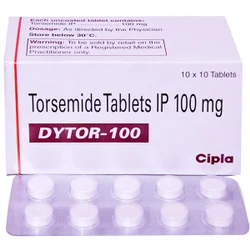
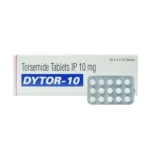
Dytor 100mg (Torasemide)
Previous product
Aldactone 100mg (Spironolactone)
A$56.00 A$154.00Price range: A$56.00 through A$154.00
Next product
Aldactone 50mg (Spironolactone)
A$42.00 A$112.00Price range: A$42.00 through A$112.00
A$71.40 A$162.40Price range: A$71.40 through A$162.40
In Stock
In Stock
Dytor 100mg (Torasemide)
| Pack Size | Price | Quantity | Add To Cart | |
|---|---|---|---|---|
| 30 Tablet/s | A$71.40 | |||
| 60 Tablet/s | A$113.40 | |||
| 90 Tablet/s | A$162.40 | |||
| Want to order in bulk / B2B price? Send Inquiry | ||||
×
Sorry!! Out of Stock
Sorry! Dytor 100mg (Torasemide) is out of stock
Please click below to view other similar medications.
View All Torasemide Products
Offer You Can't Resist
Free Shipping
Enjoy Free Shipping on Orders above AUD304 (USD199)
Estimate Shipping :
08 June - 15 June
47
Last Updated on December 01, 2025

Description
Edema or fluid retention is a frequent problem that can be associated with a variety of medical conditions, like kidney disease, heart failure, and liver cirrhosis. Controlling excess fluid efficiently is essential to alleviate symptoms like inflammation, shortness of breath, or high blood pressure. Dytor 100mg is a drug that contains an active component, Torasemide, which is a potent diuretic commonly utilized to treat the symptoms.
In this post, we’ll explore the details of what Dytor 100mg means, what it is, how it works, and what it does, the benefits and dosage, as well as side effects, and the most important warnings.
What is Dytor 100mg?
Dytor is the brand name for the medication Torasemide. It is an ointment loop diuretic which helps the body to eliminate excessive salt and water through a rise in urine production. The dose of 100 mg is quite a high dosage, and is usually used for cases of severe excess fluid.
How Does Dytor 100mg Work?
Torasemide is a drug that acts on the kidneys, specifically on the loop of Henle within the renal nephron. It inhibits the sodium-potassium-chloride co-transporter, which reduces the reabsorption of sodium and chloride ions. This means that more sodium and water are eliminated in urine.
This process reduces the amount of fluid within the body, reduces blood pressure, and reduces swelling and congestion caused by kidney failure, heart or liver disease.
Conditions Treated with Dytor 100mg
- Congestive heart failure (CHF): It reduces the amount of fluid and helps with breathing.
- Edema: Caused by kidney disorders such as liver cirrhosis or other causes.
- Hypertension (high blood pressure): It can be used in conjunction with other narcotics.
- Other medical conditions that require diuresis.
Benefits of Dytor 100mg
- Effective fluid removal: It quickly reduces the retention of fluids.
- Improves breathing: Inducing a reduction in fluid levels in your lungs when you suffer from heart failure.
- Controls blood pressure: Aids in managing hypertension.
- Once-daily dosing: The device is easy to use and increases adherence.
- Long duration of action: Gives a continuous diuretic effect.
- Better bioavailability: Compared to diuretics from other brands.
How to Use Dytor 100mg
- Follow the prescription as directed by your physician.
- Usually, once a day, either with or without food.
- Suck the tablet completely and drink plenty of water.
- Avoid skipping doses or stopping them without consulting your physician.
- Be aware of your weight and symptoms frequently to determine your effectiveness.
Dosage
- The dose that is typical varies depending on the type of condition and its severity.
- In the case of heart failure or edema for heart failure or edema, the initial dosage may be reduced, and adjustments of up to 100mg when needed.
- In the case of hypertension, doses that are lower generally work.
- Your physician will customize the dosage according to your personal demands.
Possible Side Effects
Though generally harmless, Dytor 100mg can cause adverse effects. These include:
Common Side Effects:
- Increased urination
- Dehydration
- Electrolyte imbalances (low potassium, sodium)
- Dizziness or lightheadedness
- Headache
Less Common Side Effects:
- Muscle cramps or weakness
- Nausea
- Rash or itching
- Increased blood sugar or uric acid levels
Serious Side Effects (Rare):
- Severe dehydration
- Kidney problems
- Allergic reactions
- Hearing loss (rare, usually with very high doses)
Inform your doctor of any unusual signs or adverse reactions to your doctor immediately.
Precautions and Warnings
- Tell your physician whether you suffer from liver or kidney disease.
- Monitor electrolytes: Every month, blood tests are conducted to determine the sodium and potassium levels are vital.
- Avoid dehydration: Make sure you drink enough fluids unless directed otherwise.
- Take care if you’re you are breastfeeding or pregnant. Talk about the risk with your physician.
- Beware of excessive drinking because it may cause the effects of dizziness, for instance.
- Inform your physician about every medication you take in order to prevent interactions.
Drug Interactions
Dytor may interact with:
- Other blood pressure medications
- Lithium
- Digoxin
- NSAIDs (e.g., ibuprofen)
- Corticosteroids
- Diabetes medications
- Other diuretics
Make sure you inform your physician about any medications and supplements that you consume.
Lifestyle Tips to Support Treatment
- Eat a low-sodium diet in order to decrease water retention.
- Check your weight every day to spot the changes in fluids in the early stages.
- Do not sit or stand for prolonged periods of time.
- Keep a balanced and healthy diet that is rich in potassium, unless you are restricted.
- Follow-ups are scheduled regularly, and you will be able to take a lab test.
When to See a Doctor
- When swelling gets worse or expands.
- Signs of dehydration (dry mouth, extreme thirst, confusion).
- Muscle weakness or irregular heartbeat.
- Severe dizziness or fainting.
- Allergic reactions (rash, itching, swelling).
Conclusion
Dytor 100mg (Torasemide) is an efficient and extensively used diuretic, which plays an important role in regulating problems with fluid overflow, including heart disease, edema, and hypertension. Its powerful action and length make it an effective treatment under the guidance of a physician.
If you’re experiencing signs that you are experiencing fluid retention, speak with your physician to find out the appropriateness of Dytor 100mg can be used to treat your condition. If you use it correctly and monitor your progress, Dytor can help improve the symptoms you experience and improve your overall health.
Related products



Recently Viewed

Reviews
There are no reviews yet.