
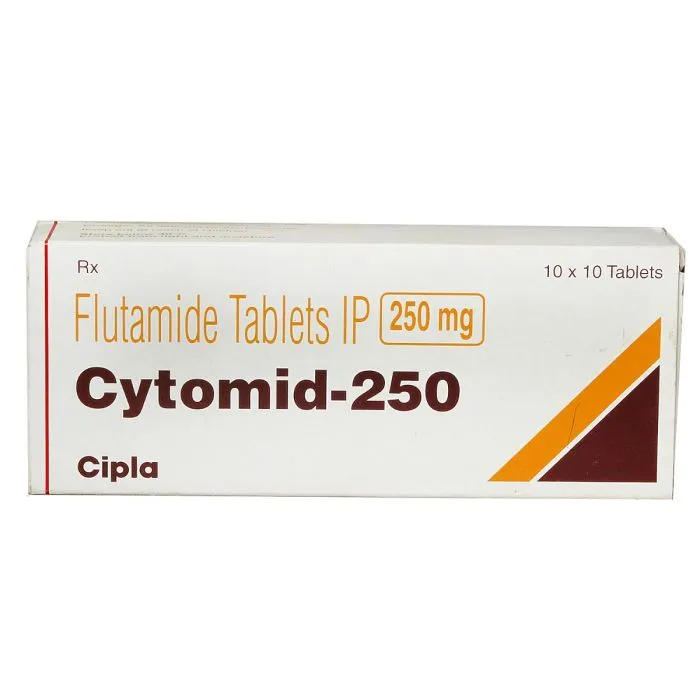
Cytomid 250mg (Flutamide)
Previous product
Thalix 100mg (Thalidomide)
$79.00 $230.00Price range: $79.00 through $230.00
Next product
Minirin Melt 120mcg (Desmopressin)
$61.00 $170.00Price range: $61.00 through $170.00
$13.00 $37.00Price range: $13.00 through $37.00
Out of Stock
| Manufacturer | Cipla Inc |
Out of Stock
Cytomid 250mg (Flutamide)
| Pack Size | Price | Quantity | Add To Cart | |
|---|---|---|---|---|
| 30 Tablet/s | $13.00 | |||
| 60 Tablet/s | $25.00 | |||
| 90 Tablet/s | $37.00 | |||
| Want to order in bulk / B2B price? Send Inquiry | ||||
×
Sorry!! Out of Stock
Sorry! Cytomid 250mg (Flutamide) is out of stock
Please click below to view other similar medications.
View All Flutamide Products
Offer You Can't Resist
Free Shipping
Enjoy Free Shipping on Orders above AUD304 (USD199)
35
Smooth ordering process
Smooth ordering process and helpful customer support. Everything was handled professionally from start to shipment
 Australia
August 12, 2026
Last Updated on November 29, 2025

Description
Androgen Blocker for Advanced Prostate Cancer Management
Cytomid 250 mg Tablets that contain Flutamide are an oral non-steroidal androgen which is prescribed for treating prostate cancer in men of all ages. It does this through blocking the effect of testosterone in males (androgens) that fuel the development of prostate tumors.
Sometimes, Cytomid is used in conjunction or in combination with LHRH antagonists or surgical castration. Cytomid is a crucial component of hormone therapy regimens at both the beginning as well as advanced stages of prostate cancer. The oral form is easy to use in the privacy of your home with medical supervision.
What Is Cytomid?
Cytomid is an androgen antagonist that is non-steroidal. It is used for androgen deprivation treatment (ADT). Its active component, Flutamide, is a selective blocker of the androgen receptors within prostate cells. It also blocks dihydrotestosterone and testosterone (DHT) from increasing the growth of cancer.
Though it doesn’t reduce testosterone levels, it blocks androgens’ binding and causes therapeutic benefits in prostate cancers with hormone sensitivities.
At-a-Glance: Cytomid 250mg
| Property | Details |
| Active Ingredient | Flutamide 250mg |
| Form | Oral tablet |
| Drug Class | Non-steroidal anti-androgen |
| Primary Use | Hormonal treatment of prostate cancer |
| Strength | 250mg per tablet |
| Administration | Oral – usually 3 times per day |
| Prescription Status | Schedule 4 (Prescription Only) |
| Combination Use | Often with LHRH agonists or orchiectomy |
| Typical Course | Long-term, often lifelong therapy |
| Country Availability | Available in Australia via prescription |
How Does Flutamide Work?
Flutamide is an androgen receptor antagonist. It fights testosterone and DHT to block similar receptors found in prostate cancer cell lines. By blocking these hormones, Cytomid:
- The treatment slows or even stops the growth of cancer
- Reducing prostate size in hormone-sensitive cancer
- Delays progression to castration-resistant prostate cancer (CRPC)
Flutamide is commonly used as the initial phase of hormone treatment, specifically in conjunction with the hormone luteinising (LHRH) analogs to help prevent flare-ups of testosterone.
Conditions Treated with Cytomid
| Condition | Why Cytomid Is Used |
| Prostate Cancer (locally advanced or metastatic) | Growth of tumours triggered by estrogen and blocks |
| Post-orchiectomy (surgical castration) | Keeps androgen suppression |
| LHRH Agonist Co-Therapy | The hormone prevents the surge in testosterone that occurs at first. |
| Hormone-Refractory Cases | In select patients suffering from biochemical but not relapse |
How to Take Cytomid 250mg
Important: Be sure to follow your physician or oncologist’s directions precisely.
General Guidelines:
- Usual dose: 250mg 3 times a day (every eight hours)
- You can take it whether or not you want to eat
- Take tablets whole and drink water
- Keep the treatment going even if the symptoms get better, unless it is advised to cease
Cytomid may be initiated in the days before LHRH injections and is continued with these injections.
Treatment Timeline
- Initial hormonal response: 2–4 weeks
- PSA levels decrease: The measurement is taken within a couple of months.
- Ongoing benefit: The monitor is monitored by Imaging, PSA, or signs and symptoms that last for months or even years
Prostate cancer is rarely curable using only hormonal therapy; however, Cytomid could substantially delay the progression of the disease and enhance your quality of life.
Monitoring & Lab Tests
Regular monitoring is essential:
- Liver function tests (Flutamide can cause hepatotoxicity)
- Prostate-specific antigen (PSA)
- Testosterone levels
- Renal function in older adults
- Signs of gynecomastia or breast tenderness
Side Effects & Risks
Common Side Effects:
- Breast tenderness or enlargement
- Hot flushes
- Decreased libido or erectile dysfunction
- Gastrointestinal upset (nausea, diarrhoea)
- Fatigue or drowsiness
Serious (Less Common):
- Liver toxicity (monitor ALT, AST)
- Anaemia or blood abnormalities
- Interstitial pneumonitis (rare)
- Rash or skin reactions
Contact your doctor if you notice jaundice, dark urine, persistent nausea, or severe fatigue.
Precautions & Contraindications
- It is not recommended for use with the eyes of children or women
- Don’t take it if you are sensitive to flutamide or any other anti-androgens.
- Eliminate the consumption of alcohol in treatment to lessen the stress on your liver.
- Do not advise those who have existing liver issues
Storage Instructions
- Keep it in storage at or below 25°C
- Retain the original packaging
- Be safe from sunlight and humidity
- Make sure that the items are out of the reach of young children
Frequently Asked Questions (FAQs)
-
What is Cytomid 250mg used for?
Cytomid is a component of hormonal therapy to treat prostate cancer, specifically when it is metastatic or advanced.
-
How does Cytomid differ from other prostate cancer drugs?
It’s a receptor blocker but not a suppressor of hormones. It stops androgens from acting on the body, and LHRH Agonists lower the production of hormones.
-
Can Cytomid be used on its own?
Rarely. Most effective is when it’s used in conjunction with LHRH antagonists or following the procedure of orchiectomy.
-
Is Cytomid a form of chemotherapy?
No. This is hormone therapy, but not the cytotoxic type of chemotherapy. It functions through altering hormonal signalling.
-
Does Cytomid lower testosterone?
No. It blocks testosterone’s effect; however, it doesn’t decrease the levels of testosterone. This is why it’s often paired with LHRH medicines.
-
What are the long-term effects of taking Cytomid?
Long-term, common effects include sexual disorder, fatigue, and the sensation of hot flushes. Monitoring of the liver is crucial when using it for a long time.
-
Can I drink alcohol while on Cytomid?
The best option is to stay clear of or reduce alcohol. Alcohol and Cytomid are processed by the liver. They can also raise the risk of toxicity.
-
Will Cytomid cure prostate cancer?
No. It is a treatment for prostate cancer by reducing its growth. It’s a part of the palliative therapy or treatment for disease control.
-
How will I know if it’s working?
Your physician will keep track of the levels of PSA as well as run scans and track any clinical manifestations.
-
Is there an alternative to Cytomid?
Yes. Other options include the bicalutamide, enzalutamide, and newer androgen receptor antagonists. Your doctor will customize treatment to suit your specific needs.
Final Thoughts
Cytomid 250mg (Flutamide) plays an essential role in the management of prostate cancer that is advanced in particularly when utilized in conjunction with other therapies that suppress hormones. It doesn’t work by depressing testosterone levels, but instead it works by stopping its function on a cellular level and slowing the progression of cancer, and easing symptoms.
Additional Information
| Pack Size | 30 Tablet/s, 60 Tablet/s, 90 Tablet/s |
|---|
Related products

Reviews
There are no reviews yet.