
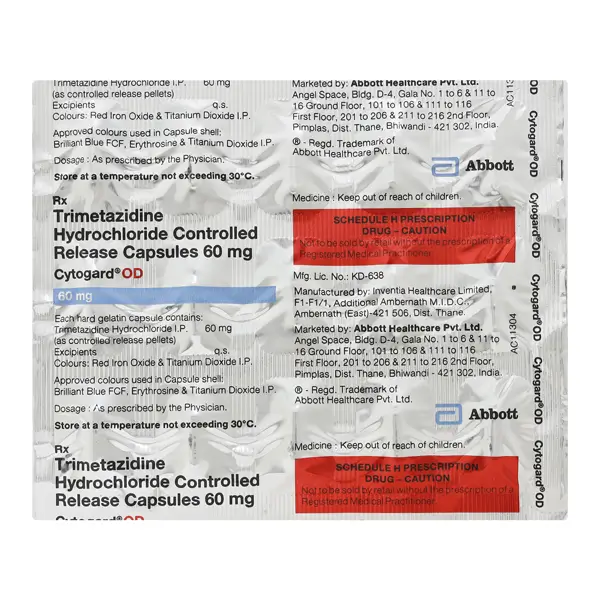
Cytogard 60mg (Trimetazidine)
Previous product
Cytoflu 500mg (Flucytosine)
A$173.60 A$488.60Price range: A$173.60 through A$488.60
Next product
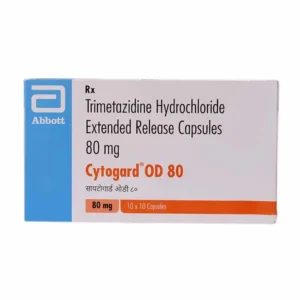
Cytogard 80mg (Trimetazidine)
A$60.20 A$156.80Price range: A$60.20 through A$156.80
A$60.20 A$156.80Price range: A$60.20 through A$156.80
In Stock
In Stock
Cytogard 60mg (Trimetazidine)
| Pack Size | Price | Quantity | Add To Cart | |
|---|---|---|---|---|
| 30 Capsule/s | A$60.20 | |||
| 60 Capsule/s | A$109.20 | |||
| 90 Capsule/s | A$156.80 | |||
| Want to order in bulk / B2B price? Send Inquiry | ||||
×
Sorry!! Out of Stock
Sorry! Cytogard 60mg (Trimetazidine) is out of stock
Please click below to view other similar medications.
View All Trimetazidine Products

Offer You Can't Resist
Free Shipping
Enjoy Free Shipping on Orders above AUD304 (USD199)
Estimate Shipping :
07 June - 14 June
28
Fast dispatch
I have ordered multiple times and always receive excellent service. Fast dispatch, reliable tracking, and great support.
 Australia
May 21, 2026
Last Updated on November 28, 2025

Description
Enhancing Heart Efficiency Without Affecting Blood Pressure
Cytogard 60mg, which contains Trimetazidine dihydrochloride, is a metabolism-based anti-anginal drug utilized for treating persistent unstable angina pectoris–chest discomfort caused by decreased circulation of blood towards the heart. In contrast to conventional heart medication, which reduces heart rate or blood pressure, Cytogard operates at a cellular scale and improves the heart’s performance in times of stress or exercise.
Cytogard is commonly prescribed throughout Australia as well as Europe to patients suffering from chest discomfort related to the heart that requires the long-term control of symptoms without altering the blood pressure.
What Is Cytogard 60mg?
Cytogard 60mg is a source of Trimetazidine is an exceptional Cytoprotective drug that helps to support the heart’s functioning during times of low oxygen levels. It doesn’t affect the flow of coronary blood, but instead optimizes the way that the heart utilizes energy and allows it to perform more effectively when under stress or exercise.
It’s commonly utilized as an adjunct therapy to those who have angina, despite other medications for heart disease, such as beta blockers and calcium channel blockers.
Cytogard 60mg – Product Summary
| Feature | Description |
| Active Ingredient | Trimetazidine dihydrochloride 60mg |
| Drug Class | Metabolic anti-anginal |
| Form | Prolonged-release oral tablet |
| Primary Use | Stable angina pectoris |
| Onset of Action | Within a few days |
| Prescription Required | Yes |
| Australian Availability | Yes (on prescription) |
| Recommended Age | Adults (not for children) |
| Dosing Frequency | Twice daily (every 12 hours) |
| Storage | Below 25°C; dry, dark place |
How Does Trimetazidine Work?
Trimetazidine aids heart muscle cells in keeping the energetic metabolism under low oxygen levels. In contrast to altering circulation, it keeps ATP production (cellular energy) and guards against intracellular acidosis as well as oxidative stress.
Key Actions:
- Keeps the balance of metabolism in cardiac cells
- Reduces intracellular calcium overload
- Reduces the frequency of chest pain as well as its intensity
- Enhances the endurance of exercise
Clinical Uses of Cytogard
Cytogard 60mg is typically used as a longer-term treatment for stable angina pectoris. Additionally, it could be helpful when used in off-label ways within Australia.
Main Indications:
- Chronic stable angina
- For patients who have healthy blood pressure and heart rate
- In cases where beta blockers and Nitrates do not work, they are generally avoided.
- To enhance the living quality and the level of physical activity
How to Take Cytogard 60mg
Be sure to follow your physician’s guidelines.
- Drink the entire glass of water — be careful not to crush or chew.
- Consume two tablets daily, normally in the morning and at night.
- You should take a look at your medication at regular times throughout the day to maximize the effect.
Typical Dosing:
| Condition | Dose |
| Stable Angina | 60mg twice daily |
Do not exceed the prescribed dose. Inadequate doses can reduce the efficiency over time.
When to Expect Results
| Timeframe | Effect |
| Within 2–5 days | The frequency of chest pain episodes |
| 1–2 weeks | Improved endurance during exercise |
| 4 weeks+ | Increased life expectancy with continuous usage |
Contrary to beta blockers or nitrates, Trimetazidine does not alleviate acute attacks of angina–it is preventive and not curative.
Who Should Use Cytogard?
Cytogard is suitable for:
- Adults who are diagnosed with persistent stable angina
- Patients who can’t tolerate the excessive doses of beta blockers or calcium antagonists
- Patients who have regular blood pressure and require additional treatment
- Patients in need of longer-term treatment without further lowering the heart rate
It should not be recommended for use in situations of emergency, as it is not recommended for use with young people or adolescents.
Safety Profile & Warnings
Cytogard offers a high safety rating, particularly since it doesn’t alter the heart rate, blood pressure, or the respiratory system. But some safety precautions must be taken.
Do Not Use If:
- You suffer from Parkinson’s disease, or you have a movement disorder
- You are suffering from an extreme kidney impairment
- You are pregnant or breastfeeding (unless deemed essential)
Caution:
- For patients who are elderly (dose adjustments may be necessary)
- Beware of driving if you are experiencing the symptoms of dizziness or drowsiness.
Potential Side Effects
Cytogard is very well-tolerated by the majority of people. However, like other medications, there are side effects that can occur.
Common Side Effects:
- Headache
- Nausea or indigestion
- Weakness or fatigue
- Dizziness
Rare but Serious:
- Tremors or balance issues
- Gait instability (mimicking Parkinsonism)
- Skin rash or allergic reaction
Consult your physician if strange movement or signs of a worsening condition develop.
Storage Instructions
- Storage at or below 25°C
- Place your home in a dry, cool place and away from direct sunlight
- Stay away from pets and children
- Use only after the expiry date on the packaging
Frequently Asked Questions (FAQs)
-
What is Cytogard 60mg used for?
Cytogard can be employed to reduce chest discomfort (angina) in patients with stable coronary artery disease. It assists the heart to function better in times of emotional stress or physical strain.
-
How is it different from other heart medications?
Contrary to beta blockers and Nitrates, Cytogard isn’t able to lower heart rate or blood pressure. It enhances the use of energy by cells and is therefore safer for people suffering from blood pressure issues.
-
How long before I feel better?
It is possible to see a decrease in angina attacks in as little as 2 to 5 days and a steady increase in endurance and fitness within a few weeks.
-
Can I take Cytogard with other heart medications?
Yes. The medication is usually used alongside other cardio-related drugs, particularly in cases where monotherapy doesn’t suffice to manage signs.
-
Does Cytogard treat heart attacks?
No. Cytogard is a preventive and not a cure for a coronary event that has occurred in the past. Cytogard does not alleviate the chest pain after it begins.
-
Is it safe to take long-term?
Yes. Cytogard is intended specifically for continuous, long-term usage in patients with stable angina. Cytogard can be tolerated for long durations.
-
What if I miss a dose?
You should take it as soon as you remember, or until it’s time to take the next dose. Don’t take more than one dose.
-
Can elderly patients take Cytogard?
Yes, but be sure to exercise beware. Seniors are more vulnerable to neuro-related side effects and, therefore, should be on the lookout for signs.
-
Does Cytogard affect blood pressure?
No. It doesn’t significantly affect the heart rate or blood pressure; this is one of the main advantages of this drug.
-
Can I drive while taking Cytogard?
The majority of people do, however, if you notice an unsteadiness or drowsiness, be cautious about driving or working with machines.
Final Thoughts
Cytogard 60mg (Trimetazidine) offers a distinctive way of treating chronic and stable angina–working on the cellular level of the heart instead of altering blood pressure or flow. It is ideal for patients who require constant control of symptoms, particularly those who are taking other medicines that can cause adverse side effects or provide inadequate relief.
Additional Information
| Active Ingredient: | Trimetazidine |
|---|---|
| Indication: | Chest Pain (Angina) |
| Manufacturer: | Abbott India Pvt. Ltd. |
| Packaging: | 15 Capsules in 1 Strip |
| Strength: | 60mg |
| Delivery Time: | 7 To 15 days |
Related products





Reviews
There are no reviews yet.