
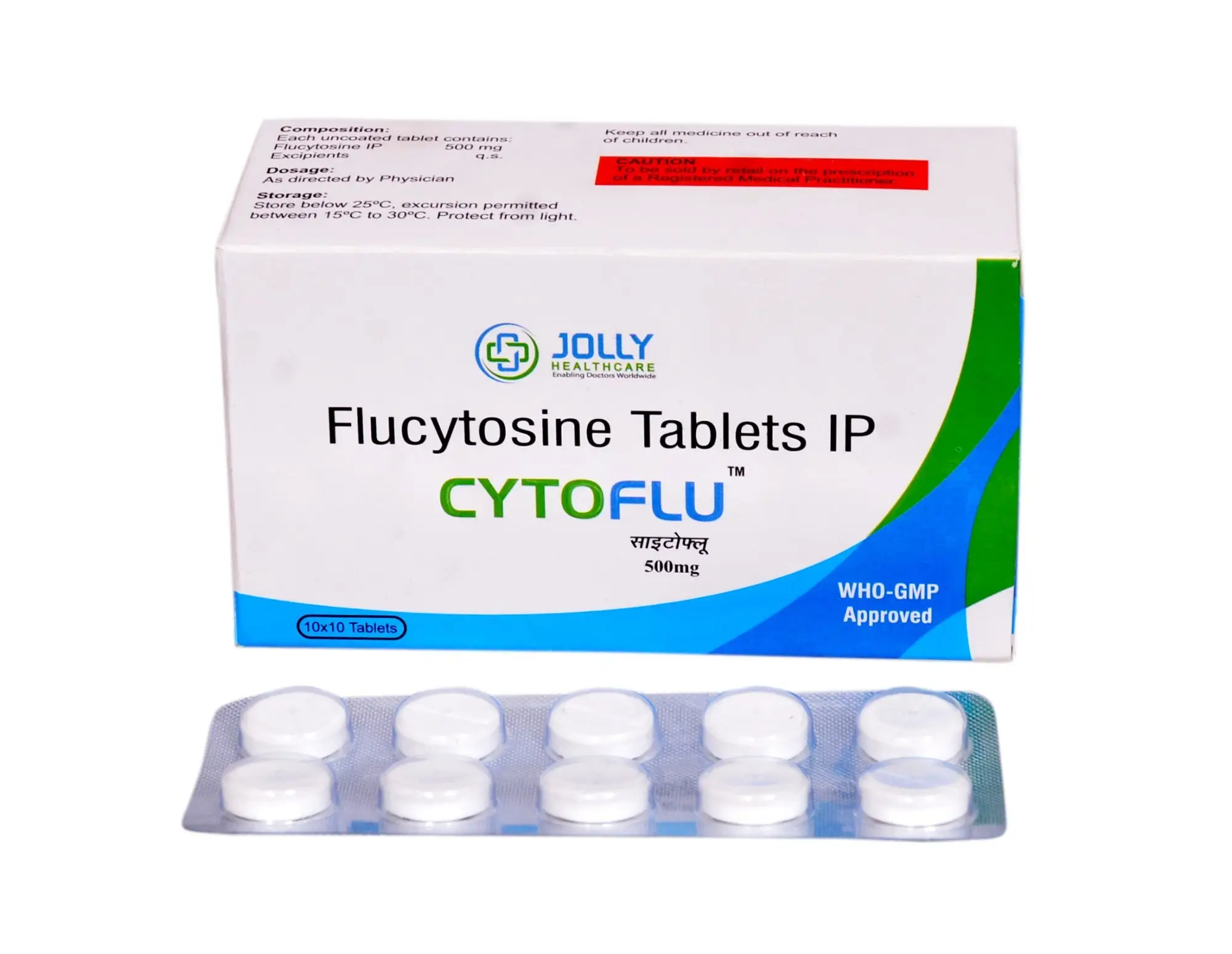
Cytoflu 500mg (Flucytosine)
Previous product
Cystopen 100mg (Pentosan Polysulfate)
A$86.80 A$152.60Price range: A$86.80 through A$152.60
Next product
Cytogard 60mg (Trimetazidine)
A$60.20 A$156.80Price range: A$60.20 through A$156.80
A$173.60 A$488.60Price range: A$173.60 through A$488.60
In Stock
In Stock
Cytoflu 500mg (Flucytosine)
| Pack Size | Price | Quantity | Add To Cart | |
|---|---|---|---|---|
| 30 Tablet/s | A$173.60 | |||
| 60 Tablet/s | A$336.00 | |||
| 90 Tablet/s | A$488.60 | |||
| Want to order in bulk / B2B price? Send Inquiry | ||||
×
Sorry!! Out of Stock
Sorry! Cytoflu 500mg (Flucytosine) is out of stock
Please click below to view other similar medications.
View All Flucytosine Products

Offer You Can't Resist
Free Shipping
Enjoy Free Shipping on Orders above AUD304 (USD199)
Estimate Shipping :
07 June - 14 June
48
Fast dispatch
I have ordered multiple times and always receive excellent service. Fast dispatch, reliable tracking, and great support.
 Australia
May 21, 2026
Last Updated on November 28, 2025

Description
Antifungal Support for Life-Threatening Fungal Infections
Cytoflu 500mg contains antifungal medicine Flucytosine that is utilized as a component of a combination treatment for the treatment of serious fungal diseases like cryptococcal meningitis and Candida diseases. In combination with antifungals that include Amphotericin B, Cytoflu enhances effectiveness and prevents resistance to serious mycoses.
This oral antifungal is often recommended within the hospital setting and under the careful supervision of specialists in infectious diseases.
What Is Cytoflu?
Cytoflu is the name used to describe Flucytosine, an artificial chemical that is a fluorinated analog of cytosine. It acts by disabling fungal DNA and the synthesis of proteins, and thereby stopping the reproduction and growth of the fungi.
In contrast to the common topical antifungals and simple treatments, Flucytosine is reserved for serious fungal infections, typically for immunocompromised patients, like patients with cancer, HIV/AIDS, or after organ transplantation.
Fast Facts – Cytoflu 500mg Overview
| Feature | Description |
| Active Ingredient | Flucytosine 500mg |
| Drug Class | Antifungal (pyrimidine analogue) |
| Form | Oral tablet |
| Typical Use | Life-threatening fungal infections |
| Common Pairing | Amphotericin B |
| Administration | Every 6 hours (QID) |
| Target Organisms | Candida, Cryptococcus species |
| Onset of Action | Within 1–2 days (lab-confirmed) |
| Prescription Required | Yes |
| Storage | Below 25°C, in original container |
How Cytoflu (Flucytosine) Works
Flucytosine is absorbed by fungal cells before being transformed to 5-fluorouracil, which is a chemical that hinders the replication of DNA as well as the synthesis of proteins. Fungal cells are able to slow down their growth and ultimately die.
It will not directly kill fungi, which is why it is almost always employed in conjunction with another drug (e.g., Amphotericin B), which causes damage to the fungal cell wall, making it more likely to allow Flucytosine to enter and work inside the body.
Indications for Use
Cytoflu 500mg is a component of combination therapy in the treatment of:
- Cryptococcal meningitis (particularly in HIV-positive people)
- Systemic candidiasis
- Candiduria (urinary tract fungal infections)
- Candida endocarditis (rare but severe)
- Fungal infection in immunocompromised and neutropenic patients
It should not be intended for use in the common case of skin and nail fungal infections because it’s too powerful and specialized for these conditions.
How to Take Cytoflu 500mg
- Standard Dosage: 100-150 mg/kg/day, divided into doses every 6 hours
- Route: Oral
- Duration: The typical duration is 2-6 weeks, based on severity
- With Food: Can be taken along during meals to help reduce GI stomach upset
Dosage and duration have to be adjusted when patients suffer from kidney disease. Regular monitoring is vital.
Timeline of Effects
| Period | What to Expect |
| First 48 hours | Antifungal action begins (lab cultures may show improvement) |
| Week 1 | Symptom reduction (fever, confusion, headache in meningitis) |
| Week 2–4 | Stabilisation of the infection, continuous clearing of the fungal infection |
| 6+ weeks | The long-term phase of eradication, the follow-up CSF or blood culture |
Note: Results heavily depend on treatment combination as well as the patient’s immune condition.
Benefits of Cytoflu 500mg
- ✅ Highly effective in CNS fungal infections
- ✅ Combines synergistically with Amphotericin B
- ✅ Oral formulations with the ability to reach throughout the system
- ✅ A lot of people use it extensively in the cryptococcal meningitis guidelines
- ✅ Monitoring is available through the levels of therapeutic drugs
Side Effects and Precautions
Common Side Effects
- Nausea and vomiting
- Diarrhoea
- Skin rash
- Elevated liver enzymes
Serious (But Rare)
- Bone marrow suppression (anaemia, leukopenia, thrombocytopenia)
- Hepatotoxicity
- Kidney function changes (especially with Amphotericin B)
Special Considerations
- Renal impairment: Requires strict dose adjustment
- Pregnancy: Only use in the event of life-threatening infections—Category D
- Liver disease: Close monitoring needed
- Drug levels: Might require monitoring of therapeutic drugs (TDM)
- Do not consume the consumption of alcohol in the course of treatment to avoid an increase in stress on the liver
Storage Instructions
- Keep the temperatures below 25°C
- Guard against heat and moisture
- Maintain the original packaging
- Use only after the expiry date
- Make sure that the items are out of Children’s reach
10 Common Questions About Cytoflu 500mg (Flucytosine)
-
What is Flucytosine used to treat?
It’s used for treating serious fungal infections in the system and infections that cause severe systemic fungal disease, particularly Cryptococcal Meningitis and invasive candidiasis, generally in immunocompromised patients.
-
Is Cytoflu effective on its own?
It’s not often. The majority of the time, it is utilized together in conjunction with Amphotericin B since monotherapy could cause the development of rapid resistance.
-
Why is Flucytosine not used for minor fungal infections?
It’s not suitable for most fungal conditions and is a risk of bone marrow suppression as well as liver toxicities. This makes it a good choice only for invasive or severe ailments.
-
How long does it take to work?
The first signs of improvement can be observed in 2 to 3 days. However, full-on treatment could be several weeks, according to the extent and immunity status.
-
What are the signs of toxicity?
A low white cell count or anemia, bleeding, or indications of distress in the liver (jaundice or dark urine) are all signs that should be reported right away.
-
Is Cytoflu safe in pregnancy?
It’s not suggested in the absence of absolute necessity due to animal research that has shown the possibility of harm to fetuses. Always speak with an expert in infectious diseases.
-
Can I drink alcohol while taking Flucytosine?
Beware of alcohol because it could cause a risk of liver damage and interactions, particularly when combined in conjunction with other antifungals.
-
Is it available in Australia?
Yes, it is true that Cytoflu can be purchased on prescription and is usually available through pharmacy chains or specialist online medical services.
-
Do I need regular blood tests?
Yes. Kidney function, liver function, and the count of blood cells should be checked regularly in the course of the treatment.
-
How is it different from Fluconazole or Itraconazole?
Cytoflu (Flucytosine) is used to treat chronic or systemic illnesses and is not appropriate for mild fungal infections. It is different and works as an integral part of the combination protocol, different from other drugs.
Final Thoughts
Cytoflu 500mg (Flucytosine) is an effective antifungal agent that is suited for serious infections such as meningitis caused by cryptococcal as well as systemic candidiasis. Though it’s not recommended for daily fungal diseases, its use is essential when it comes to situations that are life-threatening and, in particular, when it is used together with amphotericin B.
Additional Information
| Active Ingredient: | Flucytosine |
|---|---|
| Indication: | Severe Infections Caused by Fungus |
| Manufacturer: | Jolly Healthcare |
| Packaging: | 10 Tablets in Strip |
| Strength: | 500mg |
| Delivery Time: | 7 To 15 days |
Related products






Reviews
There are no reviews yet.