
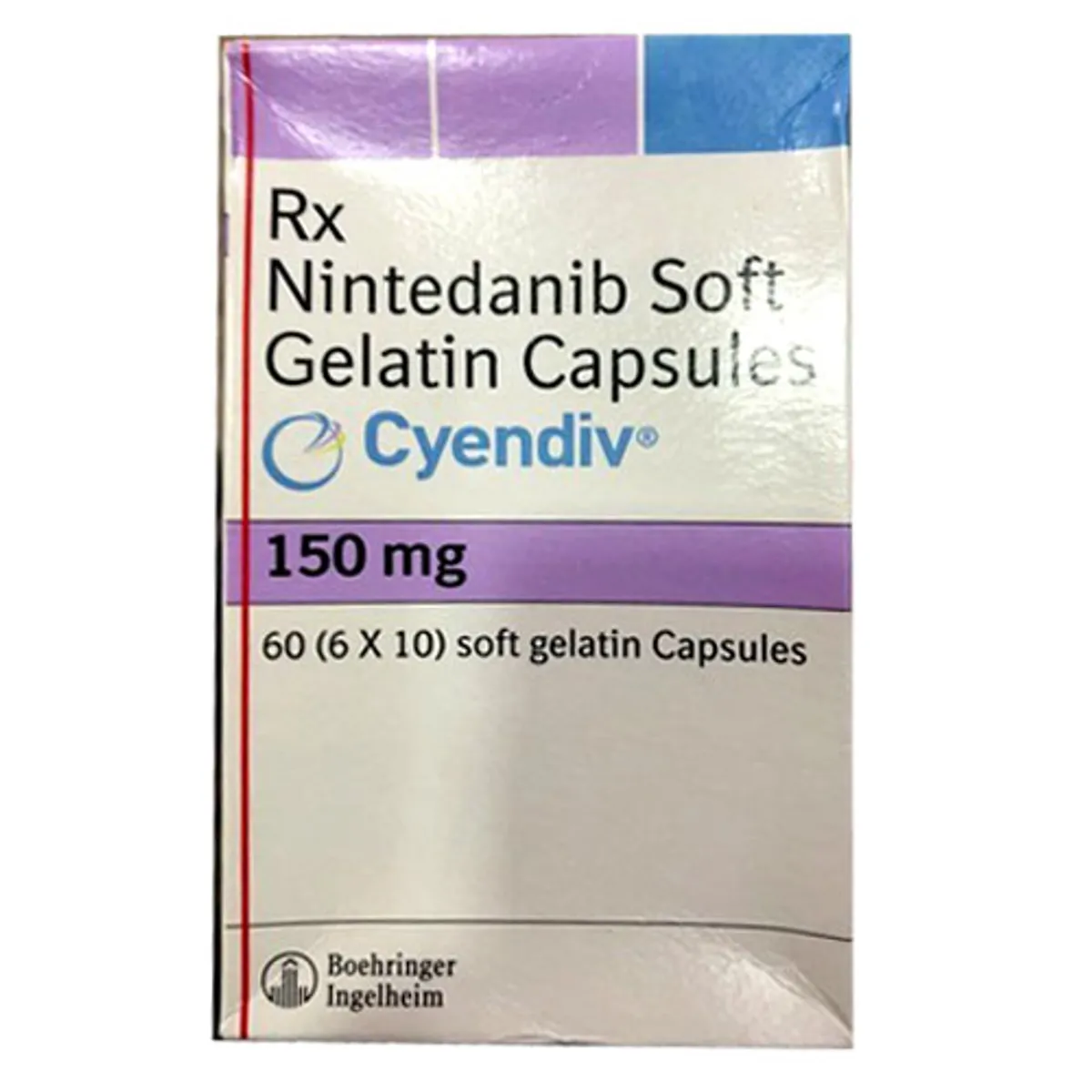
Cyendiv 150mg (Nintedanib)
Previous product
Cyendiv 100mg (Nintedanib)
A$310.46 A$823.08Price range: A$310.46 through A$823.08
Next product

Cytoblastin 10mg (Vinblastine Sulphate)
A$21.66 A$45.13Price range: A$21.66 through A$45.13
A$953.04 A$2,310.40Price range: A$953.04 through A$2,310.40
In Stock
In Stock
Cyendiv 150mg (Nintedanib)
| Pack Size | Price | Quantity | Add To Cart | |
|---|---|---|---|---|
| 10 Capsule/s | A$953.04 | |||
| 20 Capsule/s | A$1,570.35 | |||
| 30 Capsule/s | A$2,310.40 | |||
| Want to order in bulk / B2B price? Send Inquiry | ||||
×
Sorry!! Out of Stock
Sorry! Cyendiv 150mg (Nintedanib) is out of stock
Please click below to view other similar medications.
View All Nintedanib Products

Offer You Can't Resist
Free Shipping
Enjoy Free Shipping on Orders above AUD304 (USD199)
Estimate Shipping :
19 July - 26 July
29
Last Updated on November 28, 2025

Description
Lung conditions such as Idiopathic Pulmonary Fibrosis (IPF) and Interstitial Lung Disease (ILD) can be devastating in their progression, life-altering, and even fatal. If you have a patient diagnosed with one of the conditions mentioned above, Cyendiv 150mg (generic name: Nintedanib) can help stop the progress of the disease as well as keep lung function in check as well as improve the long-term outcome.
The in-depth blog will explain the basics of what Cyendiv is what it is, how it functions, and who it’s intended for, and what to expect when being treated. It’s written in an easy and patient-friendly manner.
What is Cyendiv 150mg (Nintedanib)?
Cyendiv 150mg is a prescription medication that contains Nintedanib, which is a specific anti-fibrotic and anti-inflammatory medicine.
It is used to treat:
- Idiopathic Pulmonary Fibrosis (IPF)
- Chronic Fibrosing Interstitial Lung Diseases (ILDs) with a progressive phenotype
- Systemic Sclerosis-associated ILD (SSc-ILD)
Cyendiv is a member of a family of medicines called TKIs (TKIs), which inhibit certain enzymes that are involved in the process of tissue scarring (fibrosis).
How Does Nintedanib Work?
Nintedanib inhibits and targets numerous receptor tyrosine-kinases that play a role in lung fibrosis as well as inflammation:
- Fibroblast growth factor receptors (FGFRs)
- Vascular endothelial growth factor receptors (VEGFRs)
- Platelet-derived growth factor receptors (PDGFRs)
Through blocking these pathways, Nintedanib can slow the formation of scars within the lungs, which can help keep breathing in check and slow the process of lung damage.
Important: It will not treat the condition or reverse the damage that is already present. The benefits of it are decreasing the rate of deterioration.
What Conditions Does Cyendiv Treat?
✅ Idiopathic Pulmonary Fibrosis (IPF)
An ongoing, progressive disease in which lung tissue gets thicker and stiffer, with no apparent reason.
✅ Progressive Fibrosing ILDs
An assortment of chronic lung diseases with scarring patterns that is similar to IPF and IPF, which get worse over the course of time.
✅ Systemic Sclerosis-Associated ILD (SSc-ILD)
A consequence of Scleroderma, in which fibrosis can affect the lungs.
Benefits of Cyendiv 150mg
✔️ Reduces lung function (measured using FVC – the forced vital capacity)
✔️ Delays disease progression
✔️ Daily oral capsules that are taken once to make it easy to use
✔️ Improves long-term respiratory outcomes
✔️ Approved by TGA, FDA, EMA for multiple lung fibrosis indications
Dosage and Administration
Standard dose:
- 150 mg taken orally every two days (every 12 hours for a minimum of)
How to take it:
- Consume along with your food (to decrease stomach upset or nausea)
- Consume the capsule completely not chew or crush the capsule – don’t crush or chew.
- If you are unable to take a dosage, skip and continue the same way (do not do double doses)
When Does It Start Working?
Cyendiv doesn’t act immediately. Cyendiv is not a treatment for symptom relief but rather a control of disease progression. It is most effective over the course of 6 to 12 months and includes:
- Slower decline in FVC
- Reduction in the severity of acute flare-ups
- Greater preservation of lung volume through the course of
Lung function tests regularly conducted can help monitor its efficiency.
Side Effects of Cyendiv 150mg
As with many other medications for the system, Cyendiv could cause side effects. The majority of them are digestive; however, some could be severe.
Common Side Effects
(Typically, in the initial few weeks of treatment)
| Symptom | Tips for Management |
| Diarrhoea | Stay hydrated, use anti-diarrhoeals |
| Nausea/vomiting | Take with food, small frequent meals |
| Abdominal pain | Report if persistent or severe |
| Loss of appetite | Eat nutrient-dense small meals |
| Headache or fatigue | Usually mild and transient |
Serious Side Effects
(less common, require immediate attention)
- Liver enzyme elevation (hepatotoxicity)
- Bleeding risk
- Thromboembolism (blood clots)
- Gastrointestinal perforation (rare)
- Impaired wound healing
Monitoring While on Cyendiv
Due to the potential impact on the liver and risk of bleeding, periodic tests are necessary:
| Test | Frequency |
| Liver Function Tests (LFTs) | Baseline, then every month for 3 months, and then every 3 months. |
| Full Blood Count (FBC) | Every 3–6 months |
| Clotting Profile (if needed) | Before surgery, or for high-risk patients |
Additionally, report any signs of liver problems: Dark color of the skin, yellowing urine, and fatigue that is extreme fatigue.
Precautions and Contraindications
Don’t avoid using Cyendiv if you:
- Are sensitive to Nintedanib or its excipients
- Have moderate to severe liver impairment
- Are pregnant or planning pregnancy (Nintedanib is teratogenic)
- Have active bleeding disorders
Use with caution if you:
- Are on blood thinners (e.g., warfarin, apixaban)
- Recently had major surgery
- Have a history of GI ulcers or perforation
- Have cardiovascular disease
The women who are pregnant must utilize the most effective contraceptives throughout and during minimum 3 months following the cessation of treatment.
Drug Interactions
Cyendiv can be metabolized through CYP enzymes and is transported through P-glycoprotein–it could interact with:
- Ketoconazole, erythromycin, ritonavir – may increase Nintedanib levels
- Rifampin, phenytoin – may reduce its effectiveness
- Anticoagulants (e.g. warfarin) – may increase bleeding risk
Be sure to inform your physician of the use of any medications that you take, which includes supplements as well as natural remedies.
Cyendiv vs. Esbriet (Pirfenidone)
Both are approved to be used for treatments for IPF and can be prescribed either in conjunction or as a stand-alone treatment with specialist treatment.
| Feature | Cyendiv (Nintedanib) | Esbriet (Pirfenidone) |
| Class | Tyrosine kinase inhibitor | Anti-fibrotic, anti-inflammatory |
| Dosing | 150 mg twice daily | Titrated to 801 mg three times daily |
| Main Side Effect | Diarrhoea, liver enzymes | Nausea, rash, photosensitivity |
| Food Considerations | Take with food | Must be taken with food |
| Use in ILDs | Approved for more ILDs | Approved mainly for IPF |
The pulmonologist you consult with may suggest one, based on the condition, your presence of comorbidities, and your tolerance.
Storage and Handling
- Keep it in storage at a temperature below 25°C
- Store inside the original blister until you are ready to use it.
- Avoid crushing or breaking the capsules
- Stay away from pets and children.
Frequently Asked Questions (FAQs)
Q: Can Cyendiv cure my lung disease?
A: No, It’s not, but it could reduce the rate of progress and keep lung function in check when it’s initiated early.
Q: Can I drink alcohol while on Cyendiv?
A: In small amounts, it is acceptable. However, excess alcohol may cause liver toxicity. Make sure to consult your physician.
Q: What if I miss a dose?
A: Take the missed dose off and keep taking the dose according to your schedule. Avoid taking double doses.
Q: How long do I need to take Cyendiv?
A: A majority of patients stay on long-term treatment after treatment unless they are not able to tolerate or are ineffective. A regular check-up with your lung doctor is crucial.
Q: Is Cyendiv covered by the PBS in Australia?
A: Yes, Cyendiv has indeed been subsidised through the PBS for patients suffering from IPF or ILDs with progressive fibrosing. Talk to your doctor to get access.
Cyendiv 150mg at a Glance
| Attribute | Detail |
| Active Ingredient | Nintedanib |
| Strength | 150 mg capsule |
| Indications | IPF, ILDs, SSc-ILD |
| Class | Tyrosine kinase inhibitor |
| Dosing | 150 mg twice daily |
| Route | Oral |
| Onset of Benefit | 3–6 months |
| Common Side Effects | Diarrhoea, nausea, LFT changes |
| Monitoring Needed | Yes – LFTs, FBC, INR if needed |
| Pregnancy Category | Contraindicated |
Final Thoughts
Cyendiv 150mg (Nintedanib) is an essential tool for the treatment of fibrosing lung diseases. While not curative, it helps many patients breathe better, live longer, and slow down disease progression–especially when started early and taken consistently.
Additional Information
| Manufacturer | Boehringer Ingelheim India Pvt.Ltd |
|---|---|
| Pharmaceutical | Capsule/s |
| Strength | 150mg |
| Pack Size | 10 Capsule/s, 20 Capsule/s, 30 Capsule/s |
Related products



Recently Viewed

Reviews
There are no reviews yet.