
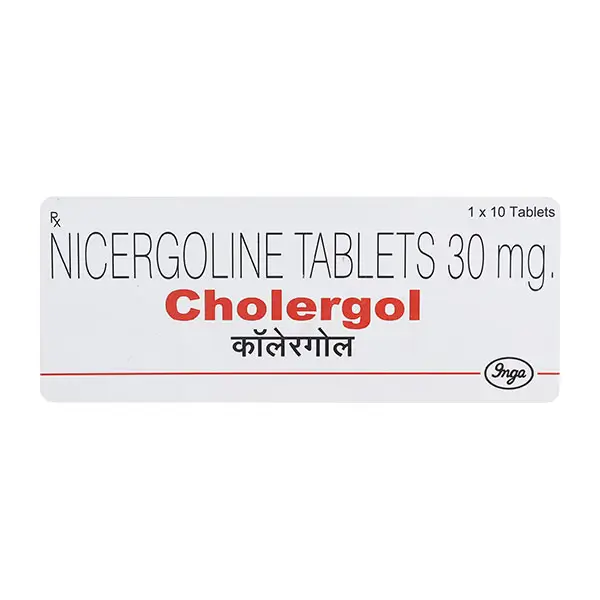
Cholergol 30mg (Nicergoline)
Previous product
Zhewitra 60mg (Vardenafil)
A$122.74 A$226.71Price range: A$122.74 through A$226.71
Next product

Xylocaine Jelly (Lidocaine)
A$8.66 A$47.65Price range: A$8.66 through A$47.65
A$63.54 A$167.50Price range: A$63.54 through A$167.50
In Stock
In Stock
Cholergol 30mg (Nicergoline)
| Pack Size | Price | Quantity | Add To Cart | |
|---|---|---|---|---|
| 30 Tablet/s | A$63.54 | |||
| 60 Tablet/s | A$115.52 | |||
| 90 Tablet/s | A$167.50 | |||
| Want to order in bulk / B2B price? Send Inquiry | ||||
×
Sorry!! Out of Stock
Sorry! Cholergol 30mg (Nicergoline) is out of stock
Please click below to view other similar medications.
View All Nicergoline Products
Offer You Can't Resist
Free Shipping
Enjoy Free Shipping on Orders above AUD304 (USD199)
Estimate Shipping :
20 July - 27 July
43
Last Updated on November 27, 2025

Description
Introduction
Cholergol 30 mg is a source of Nicergoline, a drug designed to increase the circulation of blood in the brain. It is often used to treat cognitive decline dementia, as well as other disorders that are caused by a decrease in cerebral blood flow.
What is Nicergoline?
Nicergoline is an ergot-derived chemical that functions as an alpha-1 receptor antagonist. It dilates blood vessels, particularly in the brain, increasing the flow of blood and oxygen to the brain’s tissue. This improves cognitive abilities, memory, as well as mental alertness.
Indications: When is Cholergol Used?
Nicergoline is used to treat:
- Cerebral vascular insufficiency: Signs of anxiety, memory loss, or confusion. Headaches, headaches, and even dizziness can occur, caused by a decrease in cerebral blood flow.
- Vascular dementia: Improve symptoms associated with the deficiency of cerebral circulation.
- Alzheimer’s disease: It is sometimes used as a supplement therapy for supporting the brain’s function.
- Peripheral vascular diseases: A few times, this is done to help improve circulation and flexibility in the extremities.
How Does Nicergoline Work?
Nicergoline blocks alpha-1 adrenergic receptors in blood vessels, which leads to vasodilation (widening of blood vessels). It increases blood flow, particularly in small blood vessels and capillaries of the brain. This increases the flow of oxygen and nutrients. Nicergoline is also a neuroprotective agent that may enhance metabolism and neuron function within the brain.
Dosage and Administration
- The standard dosage for Cholergol (Nicergoline) can be as high as 30 mg once a day, usually split into two or more dosages.
- Tablets are best taken in their entirety and with or without food.
- The duration of treatment varies based on the situation and the response, but it usually lasts between a couple of weeks and months.
Common Side Effects
Nicergoline is usually well-tolerated. However, some patients might be affected by:
- Nausea or stomach upset
- Headache
- Flushing or warmth sensation
- Dizziness
- Hypotension (low blood pressure) is a common occurrence, particularly if getting up fast
- Allergic skin reactions (rare)
Precautions and Warnings
- Take care when using this medication in patients who have hypertension or who are at risk of having lower blood pressure.
- Avoid or use cautiously in patients suffering from bleeding disorders or who are receiving anticoagulant treatment.
- It is not recommended to have a baby during pregnancy or breastfeeding, unless it is clearly necessary.
- Tell your physician about any possible interactions with other medications.
Contraindications
- Hypersensitivity is a known condition. Nicergoline or derivatives of ergot.
- Heart conditions that are severe, such as arrhythmias and bradycardia.
- Patients who are bleeding regularly or at risk of hemorrhage.
Drug Interactions
- It may enhance the effect of antihypertensive medications, leading to an increase in blood pressure.
- Beware when using anticoagulants and blood thinners.
- The interaction with other vasodilators can result in more side effects, such as hypotension or dizziness.
Use During Pregnancy and Breastfeeding
The safety of the product hasn’t been proven. Consult your physician before use.
What to Do If You Miss a Dose
You should take the dose missed immediately after you recall. If it’s near the time to take your next dose, do not take the missed dose. Don’t double your dose.
Storage
Keep at room temperature, far from direct light. Make sure that the storage area is out of reach for youngsters.
Summary
Cholergol 30mg tablet (Nicergoline) is prescribed to increase cerebral blood flow and improve cognitive functioning in patients suffering from cerebral vascular disorders. It does this by dilation of blood vessels and improving blood flow into the brain. It’s generally safe; however, it is subject to monitoring for adverse effects such as low blood pressure or fainting.
Additional Information
| Manufacturer | Inga Laboratories Pvt Ltd |
|---|---|
| Pharmaceutical | Tablet/s |
| Strength | 30mg |
| Pack Size | 30 Tablet/s , 60 Tablet/s , 90 Tablet/s |
Related products
Recently Viewed
Reviews
There are no reviews yet.